Where does the atmosphere stop?
TL;DR
Explore the layers of Earth's atmosphere, from the boundary layer to the exosphere, and learn how temperature, pressure, and different gases affect the formation of clouds and the conditions for sustaining life.
Transcript
the atmosphere surrounds us on the earth's surface the envelope of gases pulled down by earth's gravity here we are warm and can breathe comfortably but if we were to leave the surface behind steadily ascending through the atmosphere that won't be true for long for the first few hundred meters above the surface you are still in the boundary layer w... Read More
Key Insights
- 😶🌫️ Different cloud types form under specific conditions of pressure, humidity, and temperature.
- 🧍 The stratosphere stands out as a layer where temperature increases with altitude due to the presence of ozone.
- 😶🌫️ The mesosphere is poorly understood, and noctilucent clouds are found at its highest point.
- 🌄 The thermosphere experiences a significant temperature rise due to high-energy radiation from the sun.
Install to Summarize YouTube Videos and Get Transcripts
Explore YouTube Video Summarizer or Get YouTube Transcript Extractor
Questions & Answers
Q: How does air pressure and temperature change as we ascend through the Earth's atmosphere?
As we move higher in the atmosphere, air pressure decreases due to less gas overhead. However, in the stratosphere, temperature starts increasing with altitude because of the presence of ozone.
Q: Why can commercial jets fly smoothly in the stratosphere?
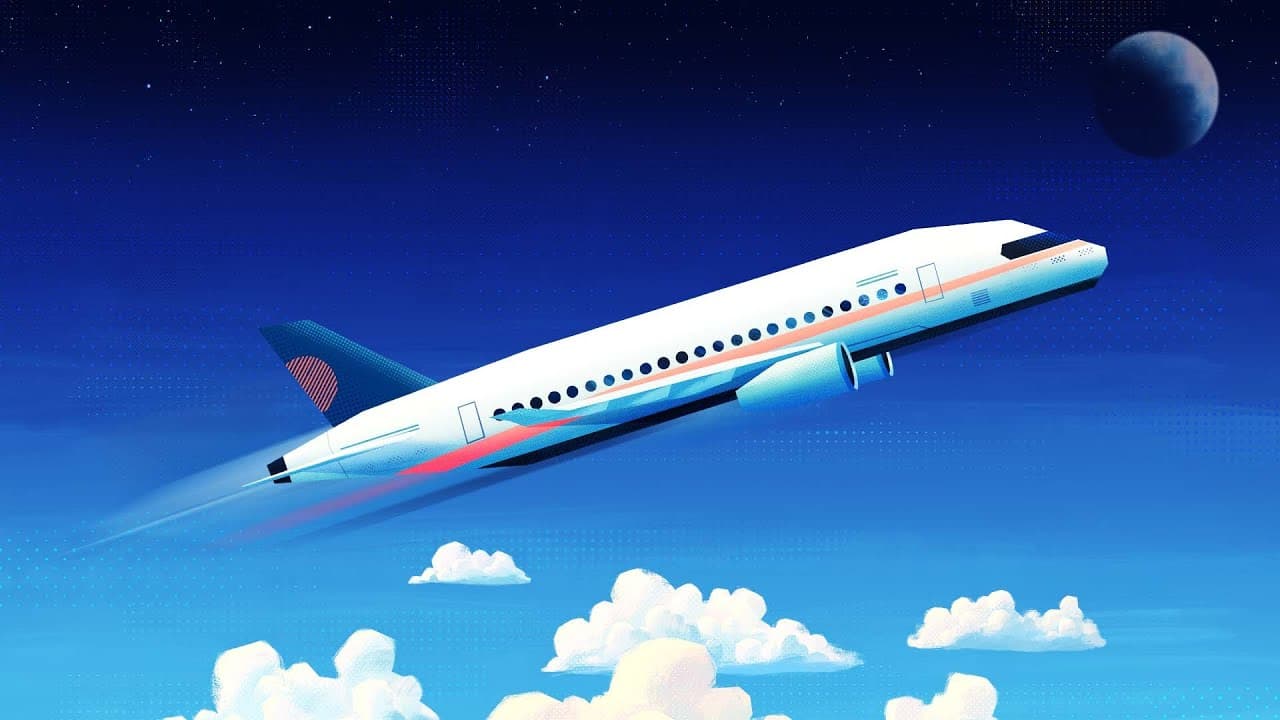
The stratosphere lacks turbulence because it gets warmer with altitude. This makes it an ideal and stable environment for commercial jets.
Q: What are noctilucent clouds, and where are they found?
Noctilucent clouds are the highest and least understood clouds found in the mesosphere. They are barely studied, earning the mesosphere the nickname "ignorosphere."
Q: How far does the atmosphere extend, and what is the final layer called?
The atmosphere extends to a few different points, but the definitive end is the exosphere. The exosphere is the most tenuous part, extending from the top of the thermosphere to at least 10,000 kilometers above the surface.
Summary & Key Takeaways
-
The Earth's atmosphere is composed of different layers, each with its own unique characteristics and conditions.
-
Cloud formation varies depending on factors such as pressure, humidity, and temperature.
-
The boundary layer, troposphere, stratosphere, mesosphere, thermosphere, and exosphere each have distinct properties and play a role in our understanding of atmospheric science.
Read in Other Languages (beta)
Share This Summary 📚
Summarize YouTube Videos and Get Video Transcripts with 1-Click
Try YouTube Summary with ChatGPT & Claude or YouTube Transcript Generator
Explore More Summaries from Simon Clark 📚




Summarize YouTube Videos and Get Video Transcripts with 1-Click
Try YouTube Summary with ChatGPT & Claude or YouTube Transcript Generator