Why Do People Quit and Return to Hobbies?
TL;DR
Quitting a hobby isn't always the end; it can be a pause before a comeback. Returning with a mindset of improvement rather than talent can lead to greater success. The key lesson is that discipline and consistency often outweigh talent, and quitting should be seen as a temporary break, not a final decision.
Transcript
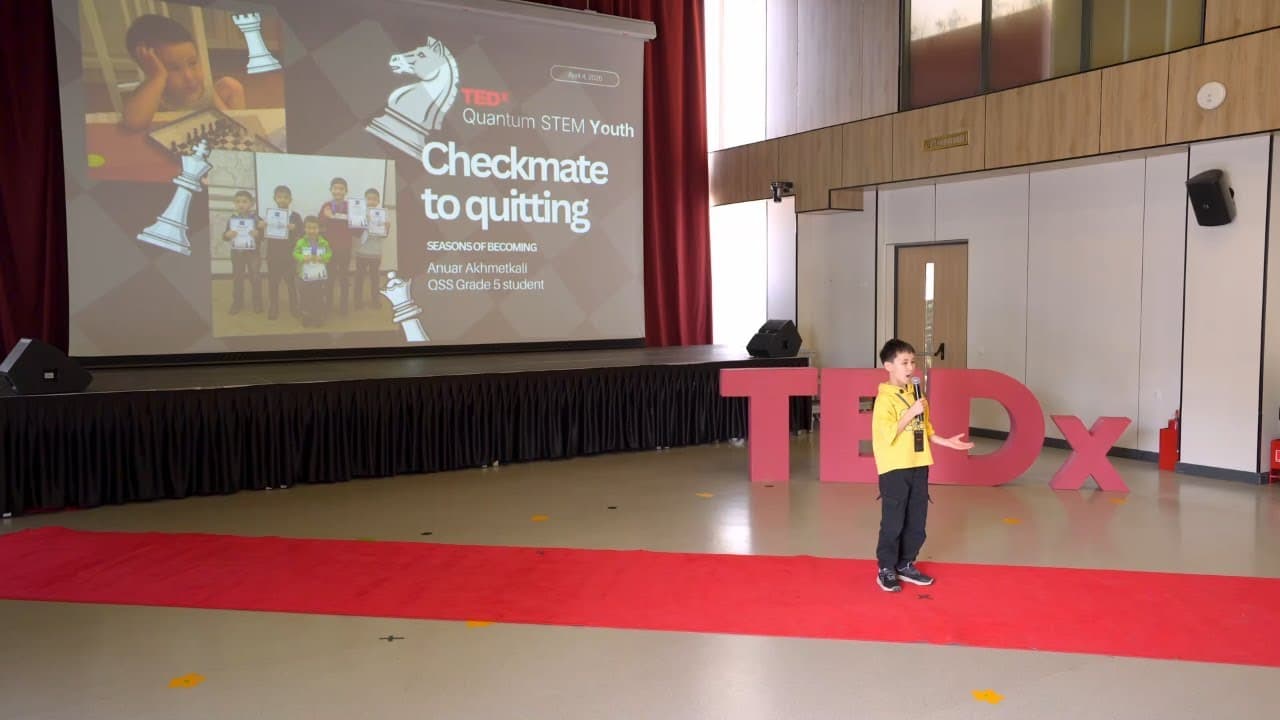
Have you ever quit something and told yourself you didn't really care about it anyway? Maybe it was football. Maybe it was piano. Maybe it was your job. Or maybe it was something else. You said it's fine. I didn't like it. I'm Anoir. I'm 10 years old and I've done something like that. I quit chess. But that's not the whole story. According to my mo... Read More
Key Insights
- Curiosity is a powerful motivator for learning and engagement.
- Talented individuals may feel pressured to maintain their identity through success.
- Quitting often stems from the fear of losing one's identity rather than the activity itself.
- Returning to a hobby with a focus on improvement rather than talent can lead to faster progress.
- Discipline and consistency are more crucial than talent in achieving success.
- Quitting should be viewed as a pause, not a permanent end.
- Champions are those who return and persist, not those who never quit.
- In life, as in chess, there's almost always another move to make.
Install to Summarize YouTube Videos and Get Transcripts
Explore YouTube Video Summarizer or Get YouTube Transcript Extractor
Questions & Answers
Q: Why do people quit hobbies?
People often quit hobbies due to a fear of losing their identity tied to being talented, or because losing feels worse than winning feels good. They may also perceive others improving faster, leading to feelings of inadequacy. Quitting becomes easier than facing the possibility of not being as special as they once thought.
Q: How can returning to a hobby be beneficial?
Returning to a hobby can be beneficial as it allows individuals to approach it with a mindset focused on improvement rather than proving talent. This shift in perspective can lead to faster progress and a deeper understanding of the activity. It emphasizes discipline and consistency over innate talent, fostering long-term success.
Q: What is the importance of discipline in achieving success?
Discipline is crucial for achieving success as it ensures consistent effort and practice, even when motivation wanes. Unlike talent, which can be fleeting, discipline builds skills over time and helps individuals overcome challenges. It instills a mindset of perseverance, which is essential for long-term achievement and personal growth.
Q: How does the fear of losing identity impact quitting?
The fear of losing identity impacts quitting by making individuals feel that their worth is tied to their success in a particular activity. When they experience setbacks, it feels like a loss of self, leading them to quit rather than face the possibility of not being special. This fear can prevent them from pursuing their passions fully.
Q: What lesson can be learned from returning to a hobby?
Returning to a hobby teaches the lesson that improvement and growth are more important than maintaining a perception of talent. It highlights the value of consistency and discipline, showing that setbacks are part of the journey. This approach encourages resilience and a focus on personal development rather than external validation.
Q: Why should quitting be seen as a pause rather than an end?
Quitting should be seen as a pause rather than an end because it allows individuals to take a break and reassess their motivations and goals. This perspective encourages them to return with renewed purpose and a focus on improvement. It emphasizes that setbacks are temporary and that there is always another opportunity to try again.
Q: How does consistency contribute to skill development?
Consistency contributes to skill development by ensuring regular practice and gradual improvement over time. It helps individuals build a strong foundation and refine their abilities through repeated effort. Consistency fosters discipline and resilience, enabling individuals to overcome challenges and achieve long-term success in their pursuits.
Q: What role does mindset play in returning to a hobby?
Mindset plays a crucial role in returning to a hobby as it determines how individuals approach challenges and setbacks. A growth mindset, focused on improvement and learning, encourages resilience and persistence. It helps individuals embrace the process of skill development rather than being fixated on proving talent, leading to greater success.
Summary & Key Takeaways
-
Quitting a hobby doesn't mean the end; it can be a pause before coming back stronger. Returning with a focus on improvement rather than talent can lead to greater success. The key takeaway is that discipline and consistency often outweigh talent, and quitting should be seen as a temporary break, not a final decision.
-
People often quit when they feel their identity is tied to their talent and fear losing it. However, returning with a mindset of improvement rather than maintaining a gifted status can lead to faster progress. The lesson is that discipline and consistency are more important than talent in achieving success.
-
Quitting isn't necessarily the end of a journey; it can be a strategic pause. Returning with a focus on self-improvement rather than proving talent can lead to significant progress. The main insight is that discipline and consistency are more crucial than inherent talent, and quitting should be a temporary step, not a final one.
Read in Other Languages (beta)
Share This Summary 📚
Summarize YouTube Videos and Get Video Transcripts with 1-Click
Try YouTube Summary with ChatGPT & Claude or YouTube Transcript Generator
Explore More Summaries from TEDx Talks 📚






Summarize YouTube Videos and Get Video Transcripts with 1-Click
Try YouTube Summary with ChatGPT & Claude or YouTube Transcript Generator