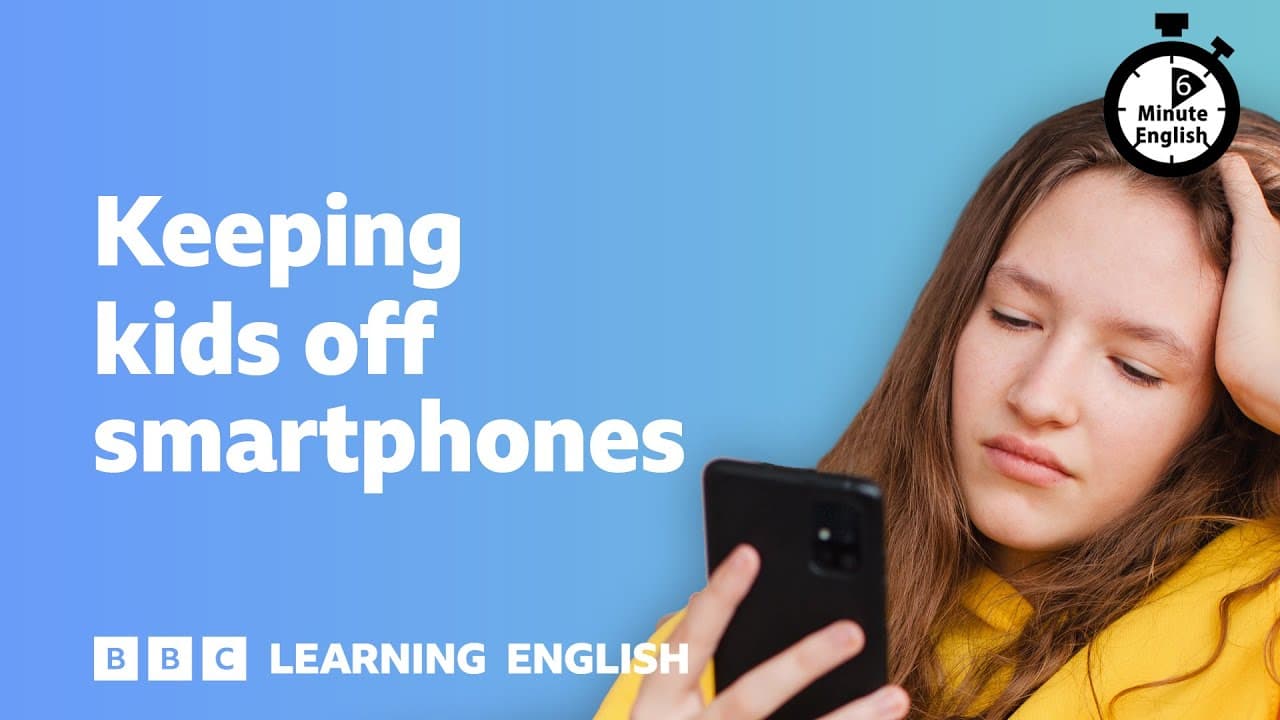
How Can Parents Keep Kids Off Smartphones?
TL;DR
Parents can keep their kids off smartphones by delaying their access until at least age 14 and avoiding social media until 16. The 'Smartphone Free Childhood' movement supports this by creating communities for families to promote face-to-face interactions, countering concerns about mental health effects linked to excessive screen time, which averages nine hours daily for American teenagers.
Transcript
Hello, this is 6 Minute English, from BBC Learning English. I'm Neil and I'm Beth. Can I ask you something, Beth? Beth? Hello Beth, are you listening? Oh sorry, Neil. I was, uh, checking my Instagram and Facebook and just sending this email. Done. Okay. What did you want? Well, I wanted to ask if you're getting addicted to your smartphone, but clea... Read More
Key Insights
- Smartphone addiction is a growing concern, especially among children, with potential negative effects on mental health and development.
- Girls spending more time on social media are more prone to anxiety and depression, highlighting the need for cautious smartphone use.
- Parents face a dilemma between giving children smartphones and the risk of social exclusion if they don't.
- The 'Smartphone Free Childhood' movement encourages delaying smartphone ownership and social media access for children.
- The movement has rapidly grown, with over 100,000 members in the UK and presence in 18 countries worldwide.
- The average American teenager spends approximately nine hours a day on screens, raising concerns about excessive screen time.
- Parents like Myra Anubi are conflicted about smartphone use, fearing both the content children might access and social isolation.
- The campaign promotes traditional face-to-face interactions among children, countering the digital trend.
Install to Summarize YouTube Videos and Get Transcripts
Explore YouTube Video Summarizer or Get YouTube Transcript Extractor
Questions & Answers
Q: What are the concerns regarding smartphone use among children?
Concerns about smartphone use among children include the potential for addiction, negative impacts on mental health such as increased anxiety and depression, and delayed brain development. Additionally, excessive screen time is linked to poor sleep patterns, and parents worry about children accessing harmful content online.
Q: What dilemma do parents face concerning children's smartphone use?
Parents face the difficult choice between allowing their children to have smartphones, which can lead to potential harm and addiction, and denying them, which may result in social isolation and exclusion from peer activities. This dilemma is exacerbated by the pressure to conform to societal norms where smartphones are prevalent among peers.
Q: What is the 'Smartphone Free Childhood' movement?
The 'Smartphone Free Childhood' movement was initiated by parents in the UK to support delaying smartphone ownership and social media access for children. It aims to promote healthier childhood development by encouraging face-to-face interactions and reducing the reliance on digital devices. The movement has gained significant traction, with a large community of supporters.
Q: How has the 'Smartphone Free Childhood' movement grown?
The movement has grown rapidly, starting with a small group of parents in the UK and expanding to over 100,000 members. It has also spread internationally, with groups forming in 18 countries, all advocating for a delay in children's smartphone use and promoting traditional social interactions among children.
Q: What is the average screen time for American teenagers?
American teenagers spend an average of nine hours a day on screens. This extensive screen time is concerning as it can lead to negative health impacts, including mental health issues and disrupted sleep patterns. The high screen time also highlights the challenge of managing digital consumption among youth.
Q: What are Myra Anubi's concerns about her daughter having a smartphone?
Myra Anubi is concerned about her nine-year-old daughter spending too much time on a smartphone, potentially accessing harmful content, and becoming addicted to social media. She worries about her daughter's exposure to inappropriate material and the possibility of excessive screen time affecting her well-being and development.
Q: Why do some parents feel pressured to give their children smartphones?
Parents feel pressured to give their children smartphones because of the societal norm where most peers have them. There is a fear that without a smartphone, children might feel left out, miss social interactions, and be excluded from group activities, making it challenging for parents to resist the trend.
Q: What alternatives does the 'Smartphone Free Childhood' movement offer to digital interactions?
The movement encourages traditional face-to-face interactions among children, providing a circle of friends for play and socialization without relying on digital devices. By delaying smartphone use, the movement aims to foster healthier social skills and personal connections, countering the trend of digital interaction dominance.
Summary & Key Takeaways
-
The podcast discusses the increasing concerns about smartphone addiction, particularly among children, and its potential negative effects on mental health and development. It highlights the dilemma parents face between allowing smartphone use and preventing social exclusion.
-
The 'Smartphone Free Childhood' movement, started by parents in the UK, advocates for delaying smartphone ownership and social media access among children. It has rapidly expanded, with groups forming globally, promoting traditional face-to-face interactions.
-
The discussion also covers the extensive screen time among American teenagers, averaging nine hours daily, and the challenges parents face in managing their children's smartphone use while maintaining social inclusion.
Read in Other Languages (beta)
Share This Summary 📚
Summarize YouTube Videos and Get Video Transcripts with 1-Click
Try YouTube Summary with ChatGPT & Claude or YouTube Transcript Generator
Explore More Summaries from BBC Learning English 📚
Summarize YouTube Videos and Get Video Transcripts with 1-Click
Try YouTube Summary with ChatGPT & Claude or YouTube Transcript Generator