Animal Liberation | Peter Singer and Lex Fridman
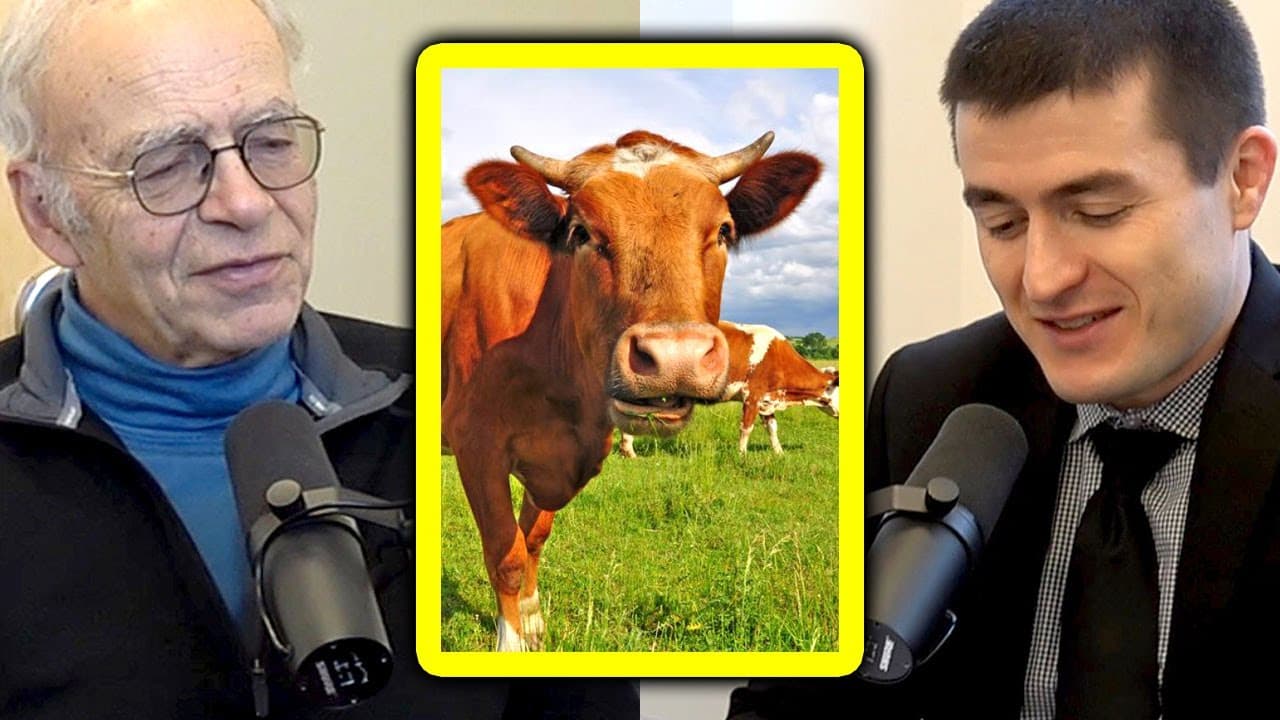
TL;DR
This content discusses the key ideas behind the book "Animal Liberation," focusing on the concept of speciesism and how it has led to unjust treatment of animals.
Transcript
if we can go back just briefly so 44 years ago like you mentioned 40 plus years ago you've written animal liberation the classic book that started that uh launched it was the foundation of the movement of animal liberation can you summarize the key set of ideas that underpin that book certainly the the key idea that underlies that book is the conce... Read More
Key Insights
- 🚱 "Animal Liberation" introduced the concept of speciesism, highlighting the bias against non-human beings' interests.
- 🧑🏭 The mistreatment of animals, such as factory farming and unnecessary research, stems from this speciesist perspective.
- 💁 Speciesism parallels other forms of bias, such as racism and sexism, where certain groups are prioritized at the expense of others.
- 👨🎨 The significance of pain and suffering should not be dependent on the species experiencing it, but rather recognized universally.
- 🧚 Peter Singer's book aims to challenge the prevailing speciesist mindset and advocate for fair treatment of animals.
- ☸️ Reconsidering our treatment of animals would require recognizing their interests and minimizing unnecessary harm.
- 🫵 The current view of animals as existing solely to serve human needs is ethically unjustified.
Install to Summarize YouTube Videos and Get Transcripts
Explore YouTube Video Summarizer or Get YouTube Transcript Extractor
Questions & Answers
Q: What is speciesism, and where did the term originate?
Speciesism is the bias against valuing the interests of non-human beings. The term was coined by Richard Ryder, an Oxford scholar who drew attention to experiments on chimpanzees. Peter Singer further developed and popularized the concept in his book, "Animal Liberation."
Q: How does speciesism compare to other forms of bias, such as racism and sexism?
Speciesism shares similarities with racism and sexism. Just as Europeans once dismissed the interests of Africans and men marginalized women, humans tend to prioritize their own species over animals. Singer contends that these biases are ethically unjustified and should be reconsidered.
Q: What are some examples of unjust treatment of animals caused by speciesism?
Speciesism has led to animals being confined in cramped factory farm conditions to maximize production efficiency. Animals are also subjected to unnecessary research experiments that are not crucial for human survival. Furthermore, various forms of entertainment and sports involve mistreating animals.
Q: How does Peter Singer argue against speciesism?
Singer argues that pain and suffering should be considered regardless of the species experiencing them. Just as the suffering of a human being is deemed unethical, the same should apply to animals. He suggests reevaluating our treatment of animals and giving their interests equal consideration.
Summary & Key Takeaways
-
The book "Animal Liberation" introduced the concept of speciesism, which refers to the bias against considering the interests of beings who are not human.
-
Speciesism has led to various forms of mistreatment against animals, such as confinement in factory farms and unnecessary research.
-
The author argues that the significance of pain and suffering should not be based on the species of the being, but rather should be universally recognized.
Read in Other Languages (beta)
Share This Summary 📚
Summarize YouTube Videos and Get Video Transcripts with 1-Click
Try YouTube Summary with ChatGPT & Claude or YouTube Transcript Generator
Explore More Summaries from Lex Clips 📚




Summarize YouTube Videos and Get Video Transcripts with 1-Click
Try YouTube Summary with ChatGPT & Claude or YouTube Transcript Generator