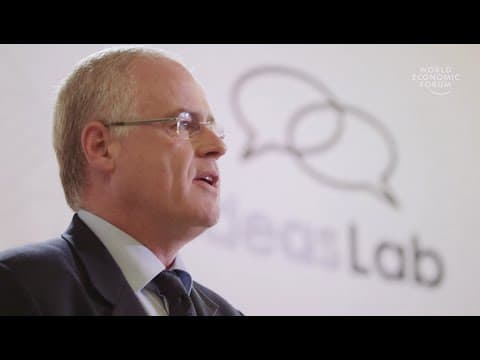
Towards a New Production Paradigm | Krystyn Van Vliet

TL;DR
Exploring the evolving landscape of production paradigms towards faster, customized, and digitally integrated manufacturing processes.
Transcript
I am an engineer so that means that with my colleagues I get to invent and make things I get to invent the way that we make materials I get to make products I get to make devices and what I've learned over the course of the years of inventing and making things is that I want what I make to impact the world but the world of production is changing ve... Read More
Key Insights
- 😚 Close integration of innovation, prototyping, and manufacturing is essential for successful production.
- 🌉 Bridging the gap in advanced manufacturing requires investments, workforce training, and public-private partnerships.
- 🤩 Public-private partnerships play a key role in advancing manufacturing technologies and creating sustainable ecosystems.
- ❓ Workforce training and skills development are crucial for adapting to evolving production paradigms.
- 🇩🇪 Germany's Fraunhofer Institutes and the UK's Catapult Innovation Centers are successful models of manufacturing partnerships.
- 🛄 The US National Network for Manufacturing Innovation aims to foster collaboration and synergy in advanced manufacturing technologies.
- 😌 The future of production lies in digital integration, customized processes, and rapid prototyping.
Install to Summarize YouTube Videos and Get Transcripts
Explore YouTube Video Summarizer or Get YouTube Transcript Extractor
Questions & Answers
Q: How is the production paradigm evolving towards faster and more customized processes?
The production paradigm is transitioning to faster and more customized processes by integrating innovation, prototyping, and manufacturing in close proximity, enabling rapid iteration and responsiveness to market demands.
Q: Why is it crucial for companies to bridge the gap in advanced manufacturing?
Bridging the gap in advanced manufacturing is essential as it allows for the development of profitable products and sustainable operations, requiring investments, workforce training, and public-private partnerships.
Q: What role do public-private partnerships play in advancing manufacturing technologies?
Public-private partnerships play a crucial role in advancing manufacturing technologies by fostering collaboration between governments, companies, and academia to create sustainable manufacturing ecosystems, driving innovation and economic growth.
Q: How can workforce training and skills development contribute to the future of production paradigms?
Workforce training and skills development are essential for the future of production paradigms as they enable a skilled workforce capable of adapting to new technologies, fostering innovation, and ensuring successful manufacturing operations.
Summary & Key Takeaways
-
Production is shifting towards faster, more customized, and digitally integrated processes.
-
Successful companies integrate innovation, prototyping, and manufacturing in close proximity for rapid iteration.
-
Bridging the gap in advanced manufacturing requires public-private partnerships and workforce training.
Read in Other Languages (beta)
Share This Summary 📚
Summarize YouTube Videos and Get Video Transcripts with 1-Click
Try YouTube Summary with ChatGPT & Claude or YouTube Transcript Generator
Explore More Summaries from World Economic Forum 📚
Summarize YouTube Videos and Get Video Transcripts with 1-Click
Try YouTube Summary with ChatGPT & Claude or YouTube Transcript Generator