Webroot vs Malware | Test
TL;DR
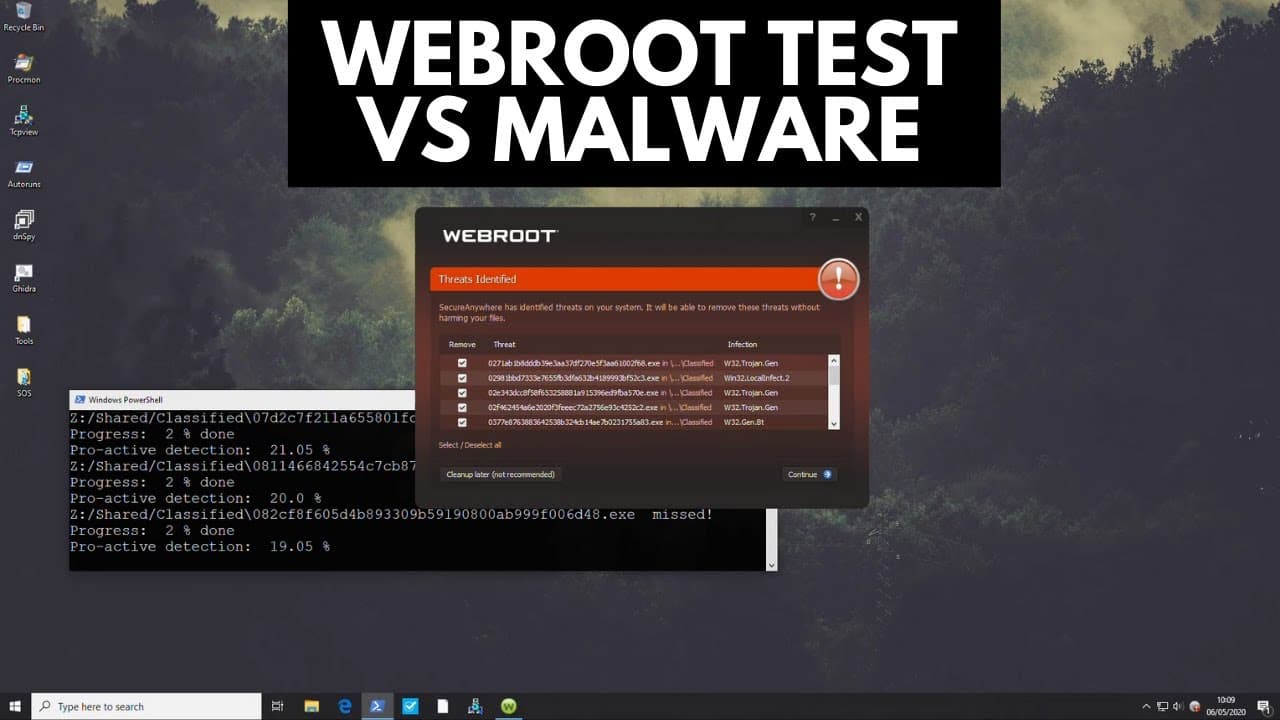
Webroot's SecureAnywhere product falls short in proactive protection and fails to effectively detect and block malware and ransomware attacks.
Transcript
hello and welcome to the PC security channel today we'll be taking a look at Webroot something I haven't done in a long while this is their secure anywhere product which I believe is their premium home product for users I do like the general design of the UI but the fonts look a bit dated it reminds me of Windows 7 for some reason that's just prefe... Read More
Key Insights
- 🎨 Webroot's SecureAnywhere product has an outdated UI design reminiscent of Windows 7.
- 🚫 The product offers multi-layered protection and enhanced heuristics for blocking threats.
- 🕵️ Reactively detecting and removing malware can result in data loss and compromised systems.
- 👊 Webroot's reactive protection is ineffective against ransomware attacks.
- 🎏 False positives are occasionally flagged, particularly with analysis tools.
- ❓ Webroot's product does not provide proactive detection and blocking of threats.
- 👊 The review suggests that Webroot may need to improve its product to effectively handle various malware and ransomware attacks.
Install to Summarize YouTube Videos and Get Transcripts
Explore YouTube Video Summarizer or Get YouTube Transcript Extractor
Questions & Answers
Q: Does Webroot's SecureAnywhere product have proactive protection against zero-day and persistent threats?
Yes, Webroot's SecureAnywhere product features Webroot infrared, a multi-layered protection engine that proactively blocks zero-day and advanced persistent threats.
Q: How does Webroot SecureAnywhere handle false positives?
Webroot SecureAnywhere occasionally flags analysis tools as false positives due to their use of encryption and certain functions. This is a common occurrence with AI-based detection engines.
Q: Can Webroot detect and remove malware effectively?
During testing, it was found that Webroot's reactive protection detected and removed malware after it had already infected files, resulting in data loss and a potentially compromised system.
Q: Is Webroot effective against ransomware attacks?
No, Webroot's reactive protection failed to block various well-known ransomware variants, allowing them to encrypt files and causing data loss for the user.
Summary & Key Takeaways
-
The reviewer takes a look at Webroot's SecureAnywhere product, noting the outdated UI design.
-
The product's advanced settings offer multi-layered protection and enhanced heuristics for blocking threats.
-
The testing reveals that Webroot's reactive protection is ineffective against malware and ransomware, failing to detect and block them in real-time.
Read in Other Languages (beta)
Share This Summary 📚
Summarize YouTube Videos and Get Video Transcripts with 1-Click
Try YouTube Summary with ChatGPT & Claude or YouTube Transcript Generator
Explore More Summaries from The PC Security Channel 📚


Summarize YouTube Videos and Get Video Transcripts with 1-Click
Try YouTube Summary with ChatGPT & Claude or YouTube Transcript Generator