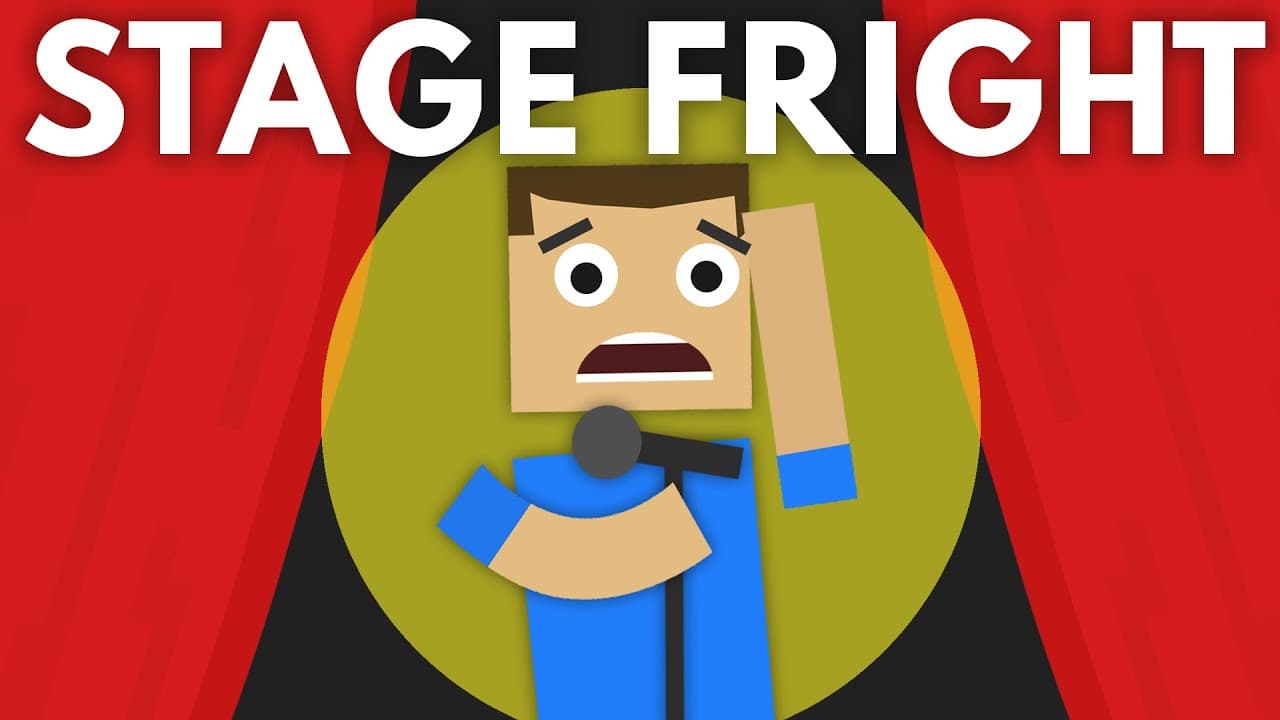
What Happens To Your Body During Stage Fright?
TL;DR
Learn about the science of stage fright, its symptoms, and ways to overcome it by rethinking anxiety as excitement.
Transcript
Hey there! Welcome to Life Noggin! Picture this. You spend all night preparing your presentation on the cultural impact of Pluto not being a planet anymore, But then, when it comes time to present to your classmates the next day, you get all nervous and freeze up, even if you try and imagine everyone in their underwear, there’s still a bajillion ey... Read More
Key Insights
- 😨 Stage fright, also known as performance anxiety, is a common fear that can impact a person's ability to perform in social settings.
- ❓ Symptoms of stage fright include rapid breathing, trembling, and a shaky voice.
- 🏃 Techniques to overcome stage fright include limiting caffeine intake, practicing calming exercises, and reframing anxiety as excitement for better performance outcomes.
- 🥺 Embracing anxiety as excitement can lead to a better performance mindset, as seen in a Harvard University study.
- 😪 Proper nutrition, exercise, and adequate sleep can also help in managing and overcoming stage fright.
- 🧑 Stage fright can negatively impact a person's life or career if not addressed effectively.
Install to Summarize YouTube Videos and Get Transcripts
Explore YouTube Video Summarizer or Get YouTube Transcript Extractor
Questions & Answers
Q: What is stage fright and how does it affect people?
Stage fright is a disruptive fear or anxiety during performance in social settings, impacting one's ability to perform. Symptoms can include rapid breathing, trembling, and a shaky voice.
Q: How can one overcome stage fright?
Techniques like limiting caffeine intake, exercise, adequate sleep, and practicing calming exercises like deep breathing, meditation, or yoga can help in overcoming stage fright.
Q: According to a Harvard study, how can one reframe anxiety during a stressful situation?
The study suggests reframing anxiety as excitement, adopting an opportunity mindset rather than a threat mindset, leading to better performance outcomes by saying out loud that they are excited.
Q: What are some common symptoms of stage fright?
Common symptoms of stage fright include rapid breathing, trembling in hands and lips, cold hands or sweaty palms, and feeling nauseous.
Summary & Key Takeaways
-
Stage fright, or performance anxiety, is a common fear that can interfere with one's ability to perform in social settings.
-
Symptoms include increased heart rate, trembling, and shaky voice.
-
Overcoming stage fright can involve limiting caffeine intake, practicing calming exercises, and reinterpreting anxiety as excitement.
Read in Other Languages (beta)
Share This Summary 📚
Summarize YouTube Videos and Get Video Transcripts with 1-Click
Try YouTube Summary with ChatGPT & Claude or YouTube Transcript Generator
Explore More Summaries from Life Noggin 📚




Summarize YouTube Videos and Get Video Transcripts with 1-Click
Try YouTube Summary with ChatGPT & Claude or YouTube Transcript Generator