What Was Life Like in Ancient Tenochtitlan?
TL;DR
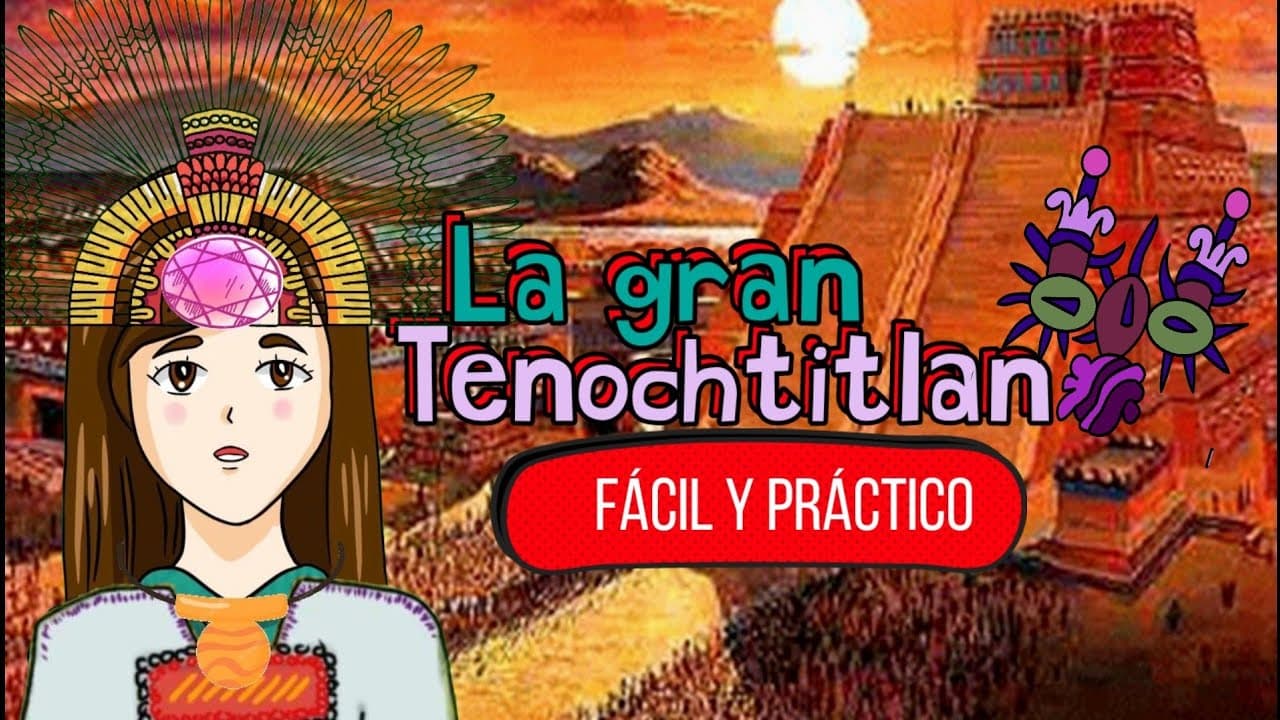
Tenochtitlan was a magnificent city, known for its advanced engineering, vibrant culture, and complex social structure. Built on an island in Lake Texcoco, it featured impressive hydraulic systems, chinampas for agriculture, and a bustling economy based on trade, tribute, and artisanal production. The city was a center of Aztec civilization, marked by religious practices, including human sacrifices.
Transcript
The other day I was cleaning the time machine, surely something moved because in that a trip was beginning Of course, at that moment I did not take it so well that you would have done the same not starting trips And that's how I traveled to the year 1521 to Mexico Tenochtitlan or Mexico Tenochtitlán By the way during this Adventure I lost f... Read More
Key Insights
- Tenochtitlan was founded by Nahuatl tribes in 1325, based on a prophecy involving an eagle devouring a snake on a cactus.
- Chinampas, a farming technique using small, rectangular areas of fertile arable land, were crucial for agriculture in Tenochtitlan.
- The city was known as the Venice of the New World due to its network of lakes and canals.
- Tenochtitlan had a hierarchical society with defined social classes, including priests, nobles, merchants, artisans, peasants, and slaves.
- Education was compulsory, with separate paths for boys and girls, including military training for boys and religious duties for girls.
- The economy was based on tribute, trade, agriculture, and artisanal production, with barter as the main form of exchange.
- Religion played a central role, with a polytheistic belief system and practices like human sacrifices to appease the gods.
- The Templo Mayor was the city's religious and political center, symbolizing the Aztec empire's power and devotion.
Install to Summarize YouTube Videos and Get Transcripts
Explore YouTube Video Summarizer or Get YouTube Transcript Extractor
Questions & Answers
Q: How was Tenochtitlan founded?
Tenochtitlan was founded in 1325 by Nahuatl tribes following a prophecy that instructed them to build a city where they saw an eagle devouring a snake on a cactus. This vision led them to an islet in Lake Texcoco, where they established what would become a major center of the Aztec empire.
Q: What were chinampas and their significance?
Chinampas were a form of ancient Mesoamerican agriculture that used small, rectangular areas of fertile land built on lake beds. This technique allowed the Aztecs to maximize agricultural output in Tenochtitlan, providing a reliable food source and enabling the city to support a large population.
Q: What was the social structure of Tenochtitlan?
Tenochtitlan's society was hierarchical, divided into distinct classes: priests, nobles, merchants, artisans, peasants, and slaves. The priests held significant power, while nobles were often war chiefs and officials. Merchants enjoyed prestige and freedom, and artisans and peasants formed the majority of the population.
Q: How did education work in Tenochtitlan?
Education in Tenochtitlan was compulsory, with boys receiving military training and girls learning religious and domestic duties. Schools like the tepochcalli provided education for commoners, while the calmecac was reserved for nobility. Both boys and girls were taught to dance, sing, and speak publicly, with a focus on history and religion.
Q: What role did religion play in Tenochtitlan?
Religion was central to life in Tenochtitlan, with the Templo Mayor serving as the spiritual heart of the city. The Aztecs practiced polytheism, worshipping over 114 gods. Human sacrifices were performed to appease these deities, believed to maintain cosmic order and ensure the city's prosperity.
Q: How was Tenochtitlan's economy structured?
Tenochtitlan's economy was based on four main pillars: tribute, trade, agriculture, and artisanal production. Tribute was collected from conquered peoples, while trade involved local and foreign markets. Barter was the primary means of exchange, and the city had no standardized currency.
Q: What were the hydraulic systems in Tenochtitlan?
Tenochtitlan featured advanced hydraulic systems, including aqueducts, dams, and canals, to manage water resources. These systems provided fresh water to the city, supported agriculture through irrigation, and facilitated transportation. The engineering marvels helped sustain the city's large population and contributed to its prosperity.
Q: What was the significance of the Templo Mayor?
The Templo Mayor was the central religious and political structure in Tenochtitlan, symbolizing the Aztec empire's power and devotion. It housed two temples dedicated to the gods Tláloc and Huitzilopochtli. The temple served as a site for religious ceremonies, including human sacrifices, and represented the city's economic and spiritual center.
Summary & Key Takeaways
-
Tenochtitlan, founded in 1325, was a thriving Aztec city known for its sophisticated engineering and vibrant culture. Built on Lake Texcoco, it featured chinampas for agriculture and advanced hydraulic systems. The city's economy relied on trade, tribute, and artisanal production, while its social structure was hierarchical, with education playing a key role.
-
The city was a religious hub, with the Templo Mayor serving as its spiritual center. Tenochtitlan's polytheistic society practiced human sacrifices as part of their religious rituals. The city's impressive infrastructure and strategic location made it a dominant force in Mesoamerica, often compared to the Roman Empire in its grandeur.
-
Tenochtitlan's unique blend of culture, religion, and engineering made it a marvel of the ancient world. The city's social classes were well-defined, with opportunities for mobility through education. Despite its eventual fall, Tenochtitlan remains a testament to the ingenuity and resilience of the Aztec civilization.
Read in Other Languages (beta)
Share This Summary 📚
Summarize YouTube Videos and Get Video Transcripts with 1-Click
Try YouTube Summary with ChatGPT & Claude or YouTube Transcript Generator
Explore More Summaries from Lagartija's vlogs 📚
![Teoría ENDOSIMBIÓTICA⚡ [Lynn MARGULIS] EVOLUCIÓN en 5 minutos thumbnail](/_next/image?url=https%3A%2F%2Fi.ytimg.com%2Fvi%2FU20hYvZTONI%2Fhqdefault.jpg&w=750&q=75)
Summarize YouTube Videos and Get Video Transcripts with 1-Click
Try YouTube Summary with ChatGPT & Claude or YouTube Transcript Generator