How to Make Better Financial Decisions by Avoiding Biases
TL;DR
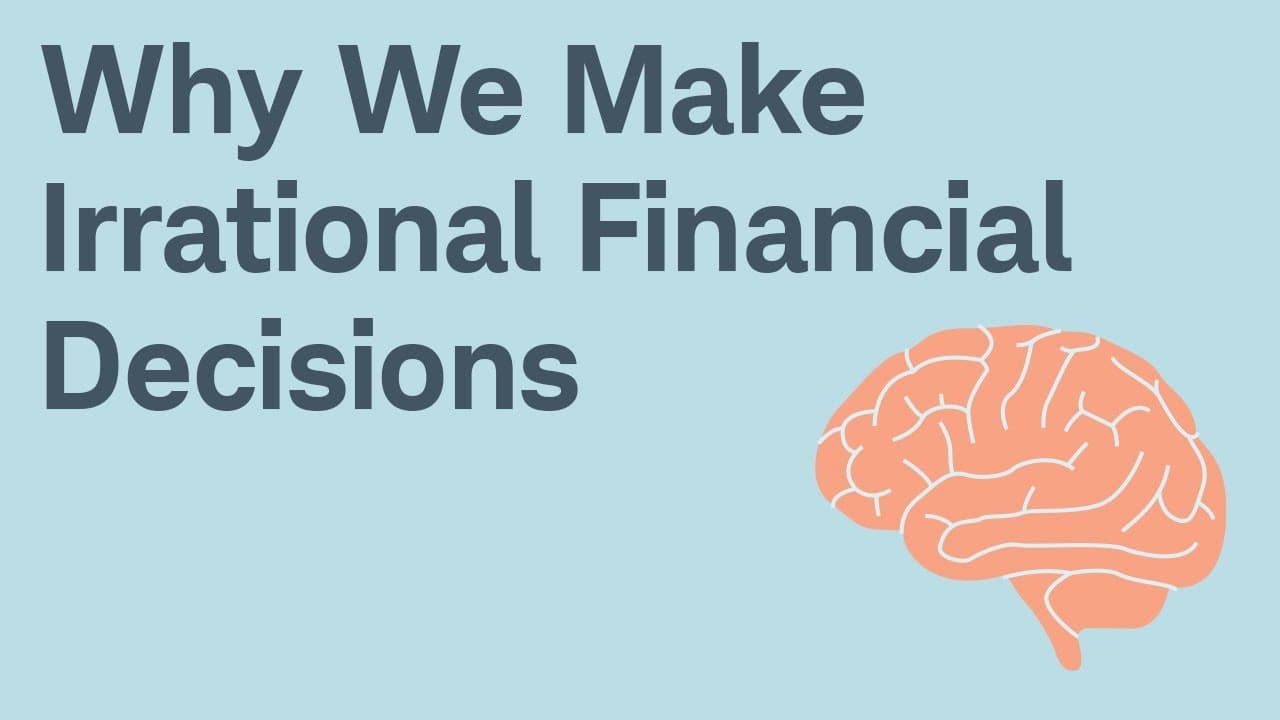
To make better financial decisions, be aware of cognitive biases like loss aversion and hyperbolic discounting that can lead to irrational choices. Implement strategies such as automatic contributions to savings and maintaining a long-term perspective to counteract these biases, enabling more rational investment behavior.
Transcript
The brain is a machine that automatically processes information. While this fast-processing power enables us to make decisions, sometimes these decisions are made so quickly that the brain bypasses logical decision-making. In the behavioral economics book, Nudge, Richard Thaler and Cass Sunstein explore how our brains process information. In the bo... Read More
Key Insights
- 🥺 Our brains process information quickly, enabling fast decision-making, but this can lead to cognitive biases and errors in judgment.
- 😚 Loss aversion, the fear of losing money, can cause investors to make irrational decisions and miss out on long-term gains.
- 🍉 Hyperbolic discounting, preferring immediate rewards over long-term rewards, can hinder saving and investing behaviors.
- 😫 Setting up automatic contributions and focusing on long-term goals can help individuals overcome cognitive biases in financial decision-making.
Install to Summarize YouTube Videos and Get Transcripts
Explore YouTube Video Summarizer or Get YouTube Transcript Extractor
Questions & Answers
Q: How do cognitive biases affect financial decision-making?
Cognitive biases can lead to irrational decisions, such as avoiding potential gains due to loss aversion. This can cause investors to miss out on long-term growth and negatively impact their investment portfolios.
Q: What is loss aversion and how does it influence investment decisions?
Loss aversion is a cognitive bias where people are more afraid of losing money than gaining it. Investors may exit the market during downturns to avoid further losses, but this strategy can lead to missing out on long-term gains and potentially underperforming compared to those who stayed invested.
Q: What is hyperbolic discounting and how does it affect saving and investing?
Hyperbolic discounting refers to the preference for immediate but smaller rewards over larger long-term rewards. This can prevent people from saving and investing, as they may choose to spend money now rather than wait for compound interest to potentially grow their savings.
Q: How can individuals overcome cognitive biases in financial decision-making?
Setting up automatic contributions to savings and investment accounts can help avoid hyperbolic discounting by ensuring regular contributions. Focusing on long-term results and having a systematic plan with predefined rebalancing and withdrawal timelines can also help mitigate the negative impacts of cognitive biases.
Summary & Key Takeaways
-
The brain automatically processes information, but sometimes it bypasses logical decision-making, leading to cognitive biases.
-
Cognitive biases can cause investors to make irrational financial decisions, such as avoiding potential gains due to loss aversion.
-
Hyperbolic discounting can also prevent people from saving and investing for long-term rewards.
Read in Other Languages (beta)
Share This Summary 📚
Summarize YouTube Videos and Get Video Transcripts with 1-Click
Try YouTube Summary with ChatGPT & Claude or YouTube Transcript Generator
Explore More Summaries from Charles Schwab 📚





Summarize YouTube Videos and Get Video Transcripts with 1-Click
Try YouTube Summary with ChatGPT & Claude or YouTube Transcript Generator