Cardiac Tamponade NCLEX Tips for Nursing Students
TL;DR
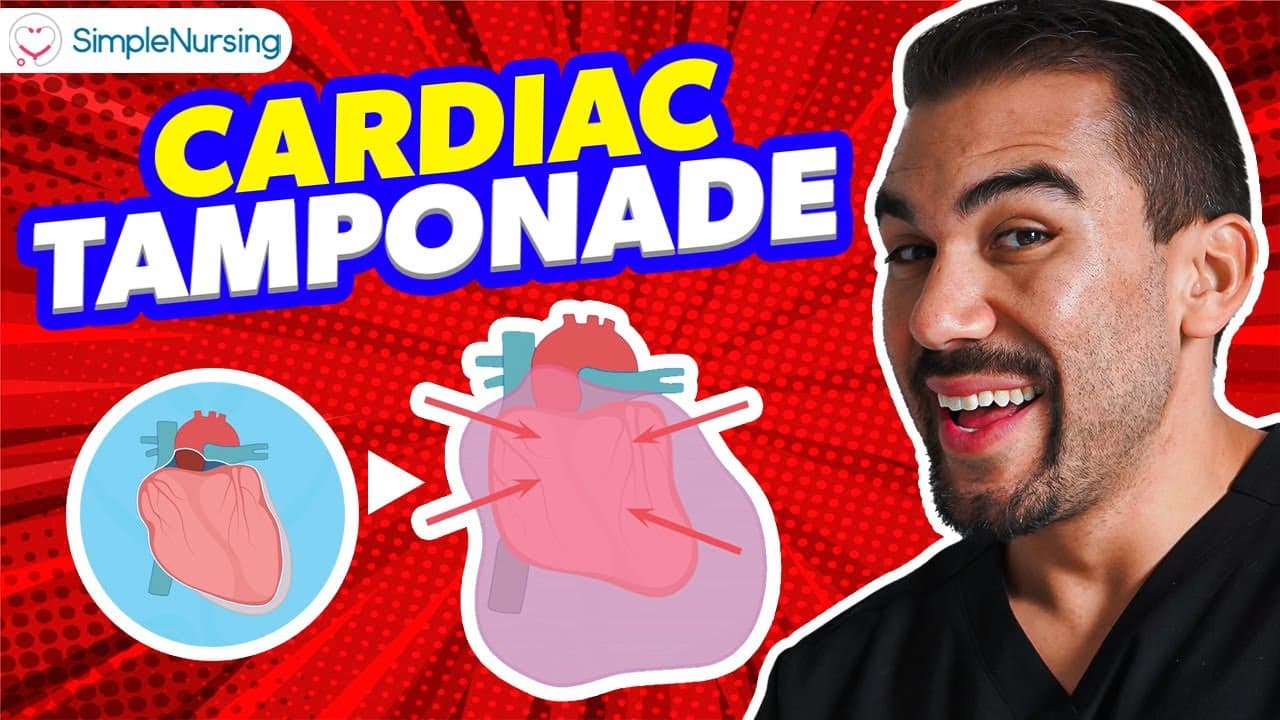
Cardiac tamponade occurs when the pericardial sac around the heart fills with blood or fluid, resulting in compression of the heart and decreased cardiac output.
Transcript
hey guys nurse Mike here and welcome to simple nursing comm now before we get today's lecture started please remember to access your free quiz and preview our cool nifty new study guides not here on YouTube click the link right up here at any time during this video all right guys let's begin you're the nurse in the emergency department and you have... Read More
Key Insights
- 🥰 Cardiac tamponade occurs when the pericardial sac fills with blood or fluid, compressing the heart and leading to decreased cardiac output.
- 😨 Trauma, such as car accidents and stabbings, is the most common cause of cardiac tamponade.
- 📤 Diagnosis of cardiac tamponade involves imaging tests, such as chest x-ray and echocardiogram, as well as cardiac monitoring.
- ❓ Pericardiocentesis is the main treatment for cardiac tamponade, involving the drainage of fluid from the pericardial sac.
- 🥰 Signs and symptoms of cardiac tamponade include restlessness, dizziness, dyspnea, tachycardia, JVD, hypotension, muffled heart sounds, pulsus paradoxus, and abnormal QRS complexes on the ECG.
- ❓ Adequate oxygenation and cardiac output are crucial for patient survival in cardiac tamponade.
- 🤱 Nursing considerations during pericardiocentesis involve monitoring the patient, ensuring proper catheter placement, and assessing for any complications.
Install to Summarize YouTube Videos and Get Transcripts
Explore YouTube Video Summarizer or Get YouTube Transcript Extractor
Questions & Answers
Q: What is the main cause of cardiac tamponade?
The main cause of cardiac tamponade is trauma, such as car accidents, stabbings, and falls. Other causes include cardiac surgery, heart attacks, cancer, connective tissue disorders, autoimmune diseases, renal failure, and hypothyroidism.
Q: How is cardiac tamponade diagnosed?
Diagnostic tests for cardiac tamponade include chest x-ray, echocardiogram, and cardiac monitoring. Chest x-ray may show a widening and large ending of the heart sac. Echocardiogram can reveal fluid inside the heart sac and swinging of the heart. Cardiac monitoring may show uneven and low voltage complexes on the ECG.
Q: What is the treatment for cardiac tamponade?
The main treatment for cardiac tamponade is a procedure called pericardiocentesis, where a needle is used to drain the fluid from the pericardial sac. Nursing considerations during pericardiocentesis include keeping the patient on the cardiac monitor, ensuring the catheter is attached to a closed drainage system, and periodically assessing the drainage device for kinks and slow drainage.
Q: What are the main signs and symptoms of cardiac tamponade?
The main signs and symptoms of cardiac tamponade include restlessness, dizziness, fatigue, dyspnea, tachycardia, big jugular vein distension (JVD), hypotension, muffled heart sounds, pulsus paradoxus, and short and uneven QRS complexes on the ECG.
Key Insights:
- Cardiac tamponade occurs when the pericardial sac fills with blood or fluid, compressing the heart and leading to decreased cardiac output.
- Trauma, such as car accidents and stabbings, is the most common cause of cardiac tamponade.
- Diagnosis of cardiac tamponade involves imaging tests, such as chest x-ray and echocardiogram, as well as cardiac monitoring.
- Pericardiocentesis is the main treatment for cardiac tamponade, involving the drainage of fluid from the pericardial sac.
- Signs and symptoms of cardiac tamponade include restlessness, dizziness, dyspnea, tachycardia, JVD, hypotension, muffled heart sounds, pulsus paradoxus, and abnormal QRS complexes on the ECG.
- Adequate oxygenation and cardiac output are crucial for patient survival in cardiac tamponade.
- Nursing considerations during pericardiocentesis involve monitoring the patient, ensuring proper catheter placement, and assessing for any complications.
- Prompt recognition and intervention in cardiac tamponade are essential to prevent patient death.
Summary & Key Takeaways
-
Cardiac tamponade is a condition where the pericardial sac around the heart fills with fluid or blood, causing compression on the heart.
-
The compression on the heart leads to decreased cardiac output, which means less oxygen is being pumped out to the body.
-
Signs and symptoms of cardiac tamponade include restlessness, dizziness, fatigue, shortness of breath, tachycardia, big jugular vein distension, hypotension, muffled heart sounds, and narrow pulse pressure.
Read in Other Languages (beta)
Share This Summary 📚
Summarize YouTube Videos and Get Video Transcripts with 1-Click
Try YouTube Summary with ChatGPT & Claude or YouTube Transcript Generator
Explore More Summaries from Simple Nursing 📚




Summarize YouTube Videos and Get Video Transcripts with 1-Click
Try YouTube Summary with ChatGPT & Claude or YouTube Transcript Generator