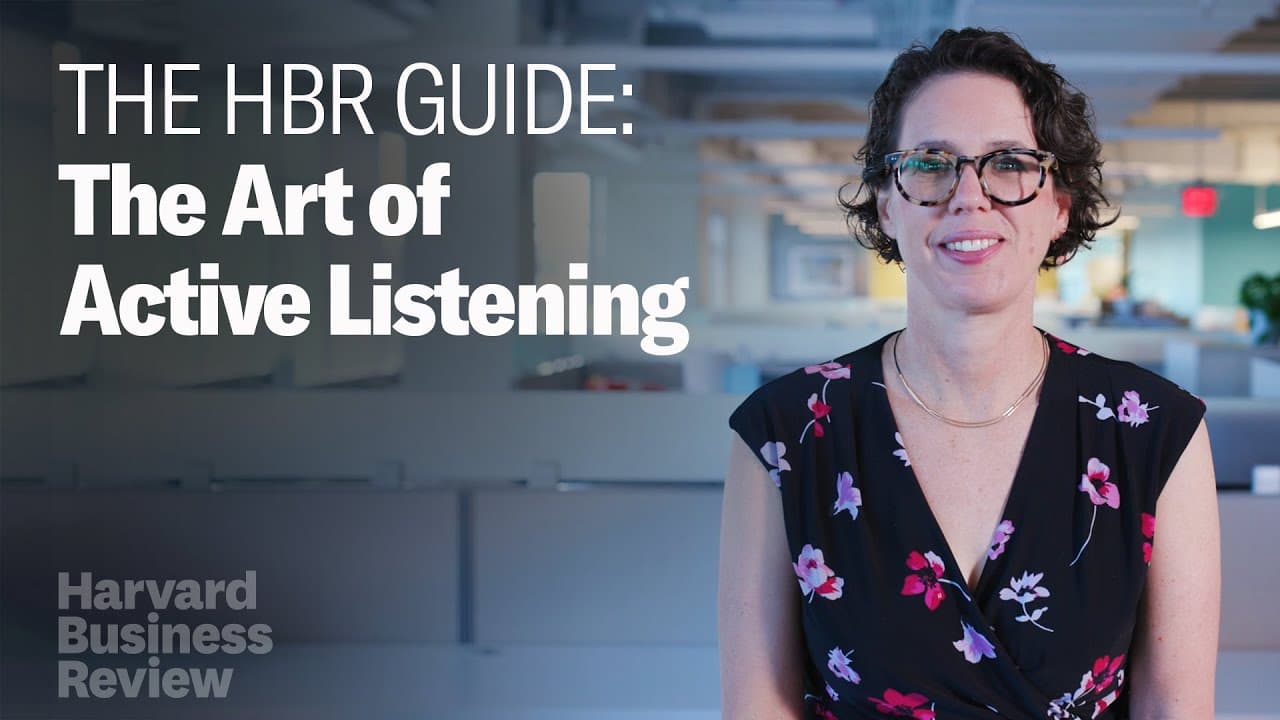
How to Become a Better Listener in Conversations
TL;DR
To become a better listener, engage actively by adapting your listening style to match the conversation's needs. Focus on the speaker, ask insightful questions, and create a trusting environment to encourage open communication. Overcoming personal insecurities and distractions is crucial for deepening your listening skills.
Transcript
AMY GALLO: Are you a good listener? No, really. Are you? You might think you are because you stay silent while they're talking, nod your head and say mm-hmm, and repeat back, word for word, what you heard them say. This has been standard management advice on good listening for ages. But what if I told you that following these tips could leave the l... Read More
Key Insights
- 💭 Good listening involves being an active, noncompetitive listener who supports and amplifies the speaker's thoughts.
- ⚾ Adapting your listening style based on the situation and goals of the conversation can enhance your listening skills.
- 😷 Asking good questions that go beyond surface-level understanding can deepen the conversation and create a supportive environment.
- 🎁 Overcoming internal insecurities and staying present in the conversation helps in becoming a better listener.
Install to Summarize YouTube Videos and Get Transcripts
Explore YouTube Video Summarizer or Get YouTube Transcript Extractor
Questions & Answers
Q: How can I become a better listener?
To become a better listener, you can start by being an active listener, adapting your listening style, asking thoughtful questions, and creating a safe and trusting environment for open communication.
Q: How should I adapt my listening style?
You can adapt your listening style by considering the goals of the conversation and the needs of the speaker. Reflect on whether you should be task-oriented, analytical, relational, or critical in your listening approach for each situation.
Q: Why is it important to ask good questions?
Good questions show that you are actively engaged and understand the speaker's thoughts. They can reveal unspoken emotions and vulnerabilities, creating a supportive environment and leading to valuable insights for both parties.
Q: What should senior leaders prioritize in listening?
Senior leaders should prioritize listening purely for comprehension, without judgment or distraction. They should actively seek input from all levels and create an environment that prioritizes trust and open communication.
Key Insights:
- Good listening involves being an active, noncompetitive listener who supports and amplifies the speaker's thoughts.
- Adapting your listening style based on the situation and goals of the conversation can enhance your listening skills.
- Asking good questions that go beyond surface-level understanding can deepen the conversation and create a supportive environment.
- Overcoming internal insecurities and staying present in the conversation helps in becoming a better listener.
- Senior leaders should be aware of information bubbles and create an environment that encourages open feedback and communication.
Summary & Key Takeaways
-
Good listening goes beyond staying silent and nodding. It involves active engagement, like a trampoline, where the listener amplifies and supports the speaker.
-
Understand your default listening style and adapt it based on the situation and goals of the conversation.
-
Ask yourself who the focus of attention is, what you might be missing, and if you are getting in your own way of listening deeply.
-
Senior leaders should prioritize listening without bias or agenda and create a trust-based environment for open communication.
Read in Other Languages (beta)
Share This Summary 📚
Summarize YouTube Videos and Get Video Transcripts with 1-Click
Try YouTube Summary with ChatGPT & Claude or YouTube Transcript Generator
Explore More Summaries from Harvard Business Review 📚





Summarize YouTube Videos and Get Video Transcripts with 1-Click
Try YouTube Summary with ChatGPT & Claude or YouTube Transcript Generator