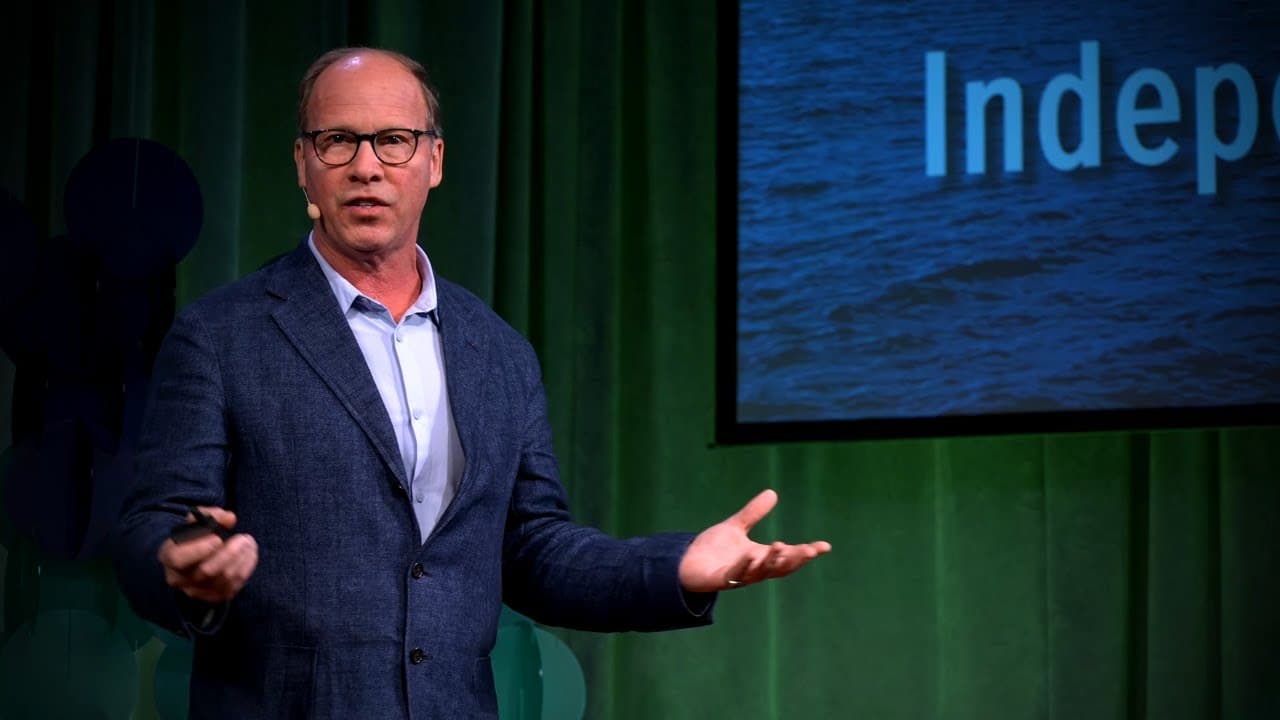
Building the internet of the ocean | Peter de Menocal | TEDxBoston
TL;DR
Developing an always connected ocean network to monitor carbon levels and ocean health for better conservation.
Transcript
I'm going to tell you an audacious goal today this is something that we've been working on at the Woods Hole oceanographic and indeed around the world for several years now and the audacious goal here is to develop an always on always connected ocean internet of sensors and robots to track and monitor ocean carbon ocean health and ecosystem Health ... Read More
Key Insights
- 💉 The need for an always connected ocean monitoring network is vital for understanding carbon levels and ecosystem health.
- ⚓ Existing monitoring methods, like using ships and buoys, are limited in providing comprehensive data about the ocean.
- 🌊 The ocean internet aims to address the lack of information about carbon flows and storage in the ocean.
- 💇 The project involves developing cutting-edge technology like autonomous vehicles and AI to monitor the ocean at scale.
- 🌍 Collaboration with international partners, federal agencies, industry, and philanthropy is crucial for the success of the ocean internet project.
- ☄️ Funding of $25 million has been secured to kickstart the project, with additional support coming from various sources.
- 🏑 Oceanography is an expensive and hazardous field, requiring a collective effort from multiple institutions and organizations.
Install to Summarize YouTube Videos and Get Transcripts
Explore YouTube Video Summarizer or Get YouTube Transcript Extractor
Questions & Answers
Q: What is the main goal of developing an ocean internet of sensors and robots?
The main goal is to have a constant monitoring system that can track carbon levels, ocean health, and ecosystem changes to protect the marine environment effectively.
Q: How do the existing monitoring methods fall short in understanding the ocean's complexities?
Current methods, like using ships and buoys, provide limited data about a specific area, leaving vast portions of the ocean unexplored and under-monitored.
Q: How can the ocean internet help in assessing carbon dioxide removal technologies?
By tracking carbon flows and storage in the ocean, the ocean internet can provide insights into the effectiveness and impact of carbon dioxide removal technologies on marine ecosystems.
Q: What are the potential benefits of having an always connected ocean network?
Benefits include better conservation through Marine Protected Areas, informed aquaculture and fisheries management, and improved understanding of carbon uptake processes by the ocean.
Summary & Key Takeaways
-
Scientists aim to create an ocean internet using sensors and robots to monitor carbon levels and ecosystem health at a global scale.
-
Current monitoring methods only cover a small fraction of the ocean, leaving a vast area unexplored and unstudied.
-
The goal is to understand the ocean better, track carbon flows, and protect marine environments through constant monitoring.
Read in Other Languages (beta)
Share This Summary 📚
Summarize YouTube Videos and Get Video Transcripts with 1-Click
Try YouTube Summary with ChatGPT & Claude or YouTube Transcript Generator
Explore More Summaries from TEDx Talks 📚




Summarize YouTube Videos and Get Video Transcripts with 1-Click
Try YouTube Summary with ChatGPT & Claude or YouTube Transcript Generator