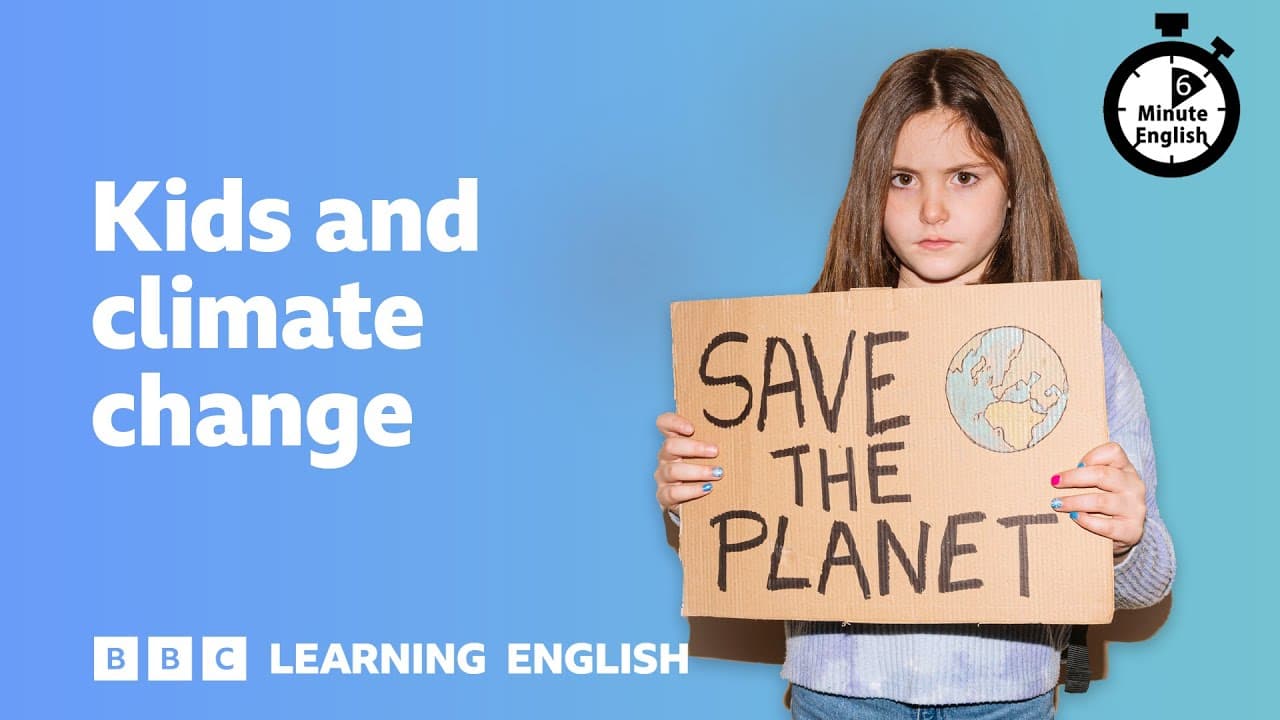
Kids and climate change ⏲️ 6 Minute English
TL;DR
Young people feel anxious about climate change and seek open discussions.
Transcript
Hello, this is 6 Minute English from BBC Learning English. I'm Neil. And I'm Beth. Many of those leading the fight against climate change are young people who feel betrayed by politicians and adults. In survey after survey, children report feeling that they have no future, that humanity is doomed and that governments are failing to act. This is cau... Read More
Key Insights
- Many young people feel betrayed by politicians and adults regarding climate change, leading to a sense of doom and climate anxiety.
- Climate anxiety is a significant issue, causing worry and conflict between generations, particularly within families and schools.
- Open and honest discussions about climate change can help bridge generational divides and foster cooperation.
- Greta Thunberg symbolizes young people's climate activism, starting with her school strike for climate in 2018.
- Surveys indicate that a large percentage of young people in the UK find the future frightening due to climate change.
- Psychotherapist Caroline Hickman emphasizes the importance of regular discussions about climate change with children.
- Parents and adults are encouraged to admit uncertainty about solutions but to work together with children to find answers.
- Vocabulary related to climate change includes 'climate anxiety,' 'parasite,' 'freaks me out,' 'one in a million,' 'put off,' and 'push away.'
Install to Summarize YouTube Videos and Get Transcripts
Explore YouTube Video Summarizer or Get YouTube Transcript Extractor
Questions & Answers
Q: What is climate anxiety?
Climate anxiety refers to the feelings of worry, fear, or depression that individuals experience due to concerns about climate change and its potential impact on the future. It is particularly prevalent among young people who feel that not enough is being done to address environmental issues.
Q: How did Greta Thunberg start her climate activism?
Greta Thunberg began her climate activism by skipping school on Fridays to protest outside the Swedish parliament, demanding action on climate change. This initiative, known as the 'school strike for climate,' started in August 2018 and quickly gained international attention, inspiring millions of students worldwide to join the movement.
Q: What are some of the vocabulary terms discussed in the program?
The program discusses several vocabulary terms related to climate change, including 'climate anxiety' (worry about climate change), 'parasite' (an organism that feeds off another), 'freaks me out' (makes someone very emotional or upset), 'one in a million' (very special or rare), 'put off' (delay action), and 'push away' (ignore or forget about something).
Q: What advice does Caroline Hickman give to parents about discussing climate change?
Caroline Hickman advises parents and adults to discuss climate change regularly with their children, rather than delaying or avoiding the conversation. She suggests acknowledging that they may not have all the answers but encourages working together with children to explore solutions, fostering a cooperative and hopeful approach to the climate crisis.
Q: Why do young people feel betrayed by adults regarding climate change?
Young people feel betrayed by adults because they perceive a lack of action and responsibility from politicians and older generations in addressing climate change. This perceived inaction contributes to their climate anxiety and a sense of hopelessness about the future, as they feel that the burden of fixing the planet is unfairly placed on their shoulders.
Q: What impact has Greta Thunberg's activism had globally?
Greta Thunberg's activism has had a significant global impact by raising awareness about climate change and inspiring a worldwide movement of young people demanding action. Her school strikes have mobilized millions of students to participate in protests, influencing public discourse and putting pressure on governments to address environmental issues more aggressively.
Q: How do young people describe their feelings about climate change?
Young people often describe their feelings about climate change using strong language, such as calling it a 'parasite' or expressing that it 'freaks them out.' These expressions reflect their deep concern and fear about the worsening state of the planet and the perceived lack of action from governments and adults to address the crisis.
Q: What role does communication play in addressing climate anxiety?
Communication plays a crucial role in addressing climate anxiety by facilitating open discussions between generations. By talking honestly about climate change, adults and children can share their concerns, explore solutions together, and build a sense of cooperation and hope. Regular communication helps alleviate fears and fosters a more proactive approach to tackling environmental challenges.
Summary & Key Takeaways
-
Many young people feel anxious about climate change, experiencing a sense of betrayal by politicians and adults. This has led to climate anxiety and conflicts between generations, particularly within families and schools. Open discussions about climate change are crucial for mending these divides and fostering cooperation.
-
Greta Thunberg, a symbol of youth climate activism, began her journey by skipping school on Fridays for climate strikes. Her actions have inspired millions of young people worldwide to participate in climate activism and demand action from governments and adults.
-
Caroline Hickman, a psychotherapist, advises adults to discuss climate change regularly with children. She suggests acknowledging uncertainties and working together to find solutions, promoting a hopeful and cooperative approach to addressing the climate crisis.
Read in Other Languages (beta)
Share This Summary 📚
Summarize YouTube Videos and Get Video Transcripts with 1-Click
Try YouTube Summary with ChatGPT & Claude or YouTube Transcript Generator
Explore More Summaries from BBC Learning English 📚
Summarize YouTube Videos and Get Video Transcripts with 1-Click
Try YouTube Summary with ChatGPT & Claude or YouTube Transcript Generator