Single phase AC controller with R Load - AC Voltage Converter - Power Electronics
TL;DR
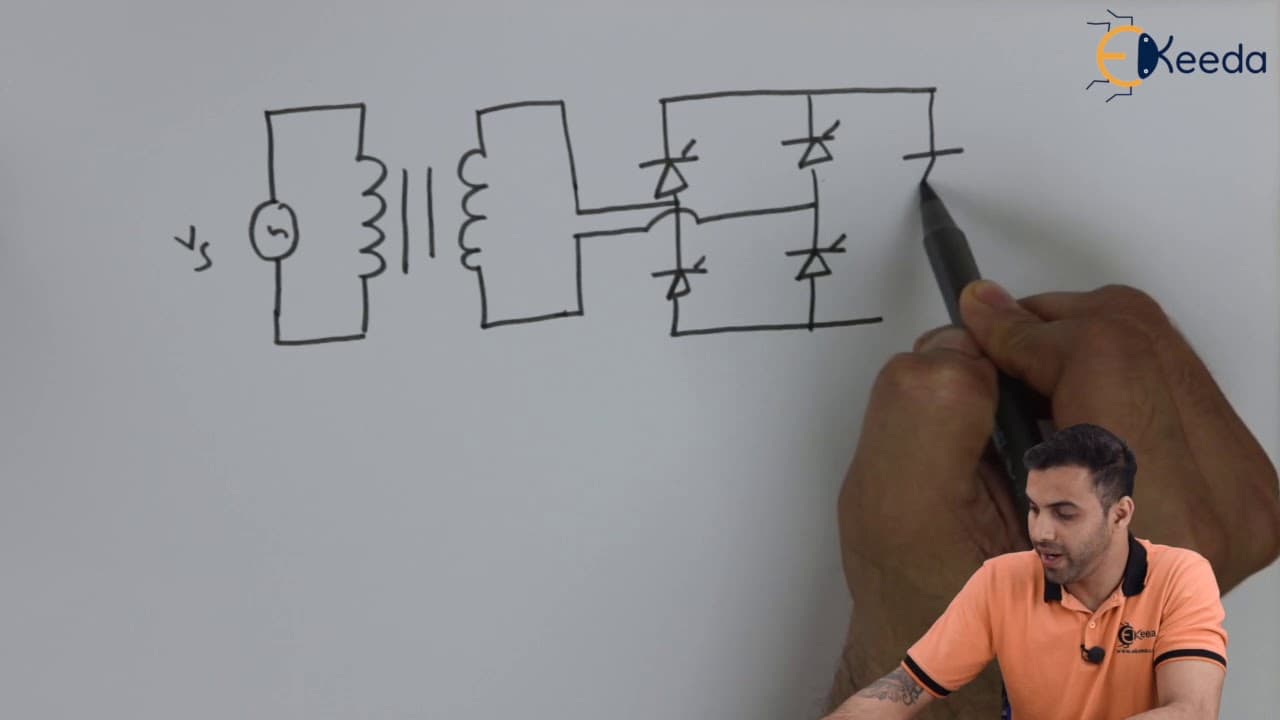
This video discusses how to control the output voltage of a single-phase AC voltage converter using thyristors, with examples of half-wave and full-wave control methods.
Transcript
click the bell icon to get latest videos from akira hello friends today we are going to discuss about single-phase AC voltage converter so friends as we discuss about the DC to DC voltage converter now can we take AC voltage is an input can we get an output controlled voltage so this is what we are going to discuss about first of all we can always ... Read More
Key Insights
- ⚡ Single-phase AC voltage converters can be used to control the output voltage of an AC supply.
- 🤩 Thyristors are the key component used to control the flow of current in the circuit.
- 🎮 Half-wave control and full-wave control methods provide different levels of control over the output voltage.
- ⚡ The firing angle of the thyristor determines the output voltage level.
- ⚡ A resistive load is typically used to demonstrate the control of the output voltage.
- 👋 Half-wave control blocks the rectification of the negative cycle of the AC voltage.
- 🎮 Full-wave control allows for a more continuous control of the output voltage.
Install to Summarize YouTube Videos and Get Transcripts
Explore YouTube Video Summarizer or Get YouTube Transcript Extractor
Questions & Answers
Q: How can AC voltage be controlled using a single-phase AC voltage converter?
AC voltage can be controlled by using thyristors in a single-phase AC voltage converter. By changing the firing angle of the thyristors, the output voltage can be controlled.
Q: What are the differences between half-wave control and full-wave control in AC voltage converters?
In half-wave control, only the positive cycle of the AC voltage is rectified, while in full-wave control, both the positive and negative cycles are rectified. This allows for a more continuous and smoother control of the output voltage.
Q: What is the role of the thyristor in the AC voltage control method?
The thyristor controls the flow of current in the circuit. It acts as a switch that can be triggered to conduct current, allowing control over the output voltage by varying the firing angle.
Q: Can the output voltage be controlled in both positive and negative cycles using a single-phase AC voltage converter?
No, in a single-phase AC voltage converter, only the positive cycle of the AC voltage can be controlled. The thyristor blocks the negative cycle from being rectified.
Summary & Key Takeaways
-
The video explains how to control AC voltage using thyristors in a single-phase AC voltage converter.
-
Two methods of control are discussed: half-wave control and full-wave control.
-
The video also demonstrates different circuit diagrams for both methods.
Read in Other Languages (beta)
Share This Summary 📚
Summarize YouTube Videos and Get Video Transcripts with 1-Click
Try YouTube Summary with ChatGPT & Claude or YouTube Transcript Generator
Explore More Summaries from Ekeeda 📚





Summarize YouTube Videos and Get Video Transcripts with 1-Click
Try YouTube Summary with ChatGPT & Claude or YouTube Transcript Generator