How to Calculate Charge and Voltage in Capacitor Circuits?
TL;DR
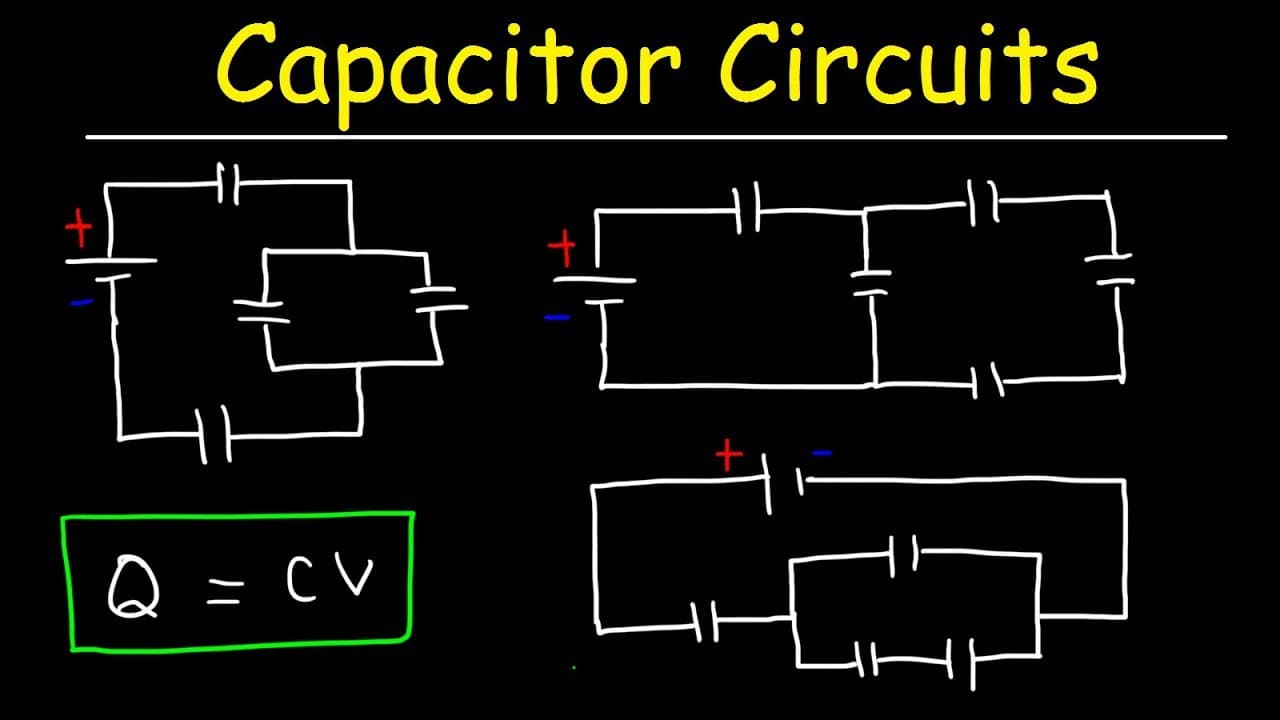
To calculate the charge and voltage in capacitor circuits, first find the equivalent capacitance. For capacitors in parallel, total capacitance is the sum of the individual capacitances; for series, it's calculated using the reciprocal formula. The charge is the same across capacitors in series, while the voltage is the same for those in parallel.
Transcript
so in this video we're going to talk about how to calculate the charge and the voltage across the capacitor if we have capacitors in series and parallel uh combinations so let's start with this problem what's the first thing we need to do in order to calculate the charge on every capacitor now the first thing we need to do is calculate the equivale... Read More
Key Insights
- 🍹 The equivalent capacitance of capacitors in parallel is the sum of their individual capacitances.
- ❓ The equivalent capacitance of capacitors in series is half of their individual capacitances if they have the same values.
- ⚡ The charge is the same for capacitors in series, while the voltage is the same for capacitors in parallel.
- 🏪 The potential energy stored in a capacitor can be calculated using formulas like 1/2 CV², 1/2 QV, or 1/2 Q²/C.
- ⚾ The total charge on capacitors in parallel is divided based on their individual capacitances. Similarly, the voltage is divided based on their individual charge.
- ⚡ The voltage across capacitors in series adds up to the voltage of the battery or power supply.
- 🏪 The potential energy stored in a capacitor depends on its capacitance and the voltage across it.
Install to Summarize YouTube Videos and Get Transcripts
Explore YouTube Video Summarizer or Get YouTube Transcript Extractor
Questions & Answers
Q: How do you calculate the equivalent capacitance of capacitors in parallel?
The equivalent capacitance of capacitors in parallel is the sum of their individual capacitances. For example, if you have capacitors with capacitances C1 and C2 in parallel, the equivalent capacitance would be C1 + C2.
Q: What is the equivalent capacitance of capacitors in series if they have the same value?
The equivalent capacitance of capacitors in series is half of their individual capacitances if they have the same values. So, if you have capacitors with capacitance C, the equivalent capacitance would be C/2.
Q: How can you calculate the charge on each capacitor in a series circuit?
The charge on each capacitor in a series circuit is the same as the total charge of the circuit. To calculate it, multiply the equivalent capacitance of the circuit by the voltage of the battery or power supply.
Q: How can you calculate the voltage across each capacitor in a parallel circuit?
The voltage across each capacitor in a parallel circuit is the same as the voltage of the battery or power supply. The charge on each capacitor may be different, but the voltage remains constant.
Summary & Key Takeaways
-
To calculate the charge on each capacitor in a series and parallel capacitor circuit, start by finding the equivalent capacitance of the circuit.
-
The total capacitance of capacitors in parallel is the sum of their individual capacitances.
-
The equivalent capacitance of capacitors in series is half of their individual capacitances if they have the same values.
-
The charge is the same for capacitors in series, while the voltage is the same for capacitors in parallel.
Read in Other Languages (beta)
Share This Summary 📚
Summarize YouTube Videos and Get Video Transcripts with 1-Click
Try YouTube Summary with ChatGPT & Claude or YouTube Transcript Generator
Explore More Summaries from The Organic Chemistry Tutor 📚


Summarize YouTube Videos and Get Video Transcripts with 1-Click
Try YouTube Summary with ChatGPT & Claude or YouTube Transcript Generator