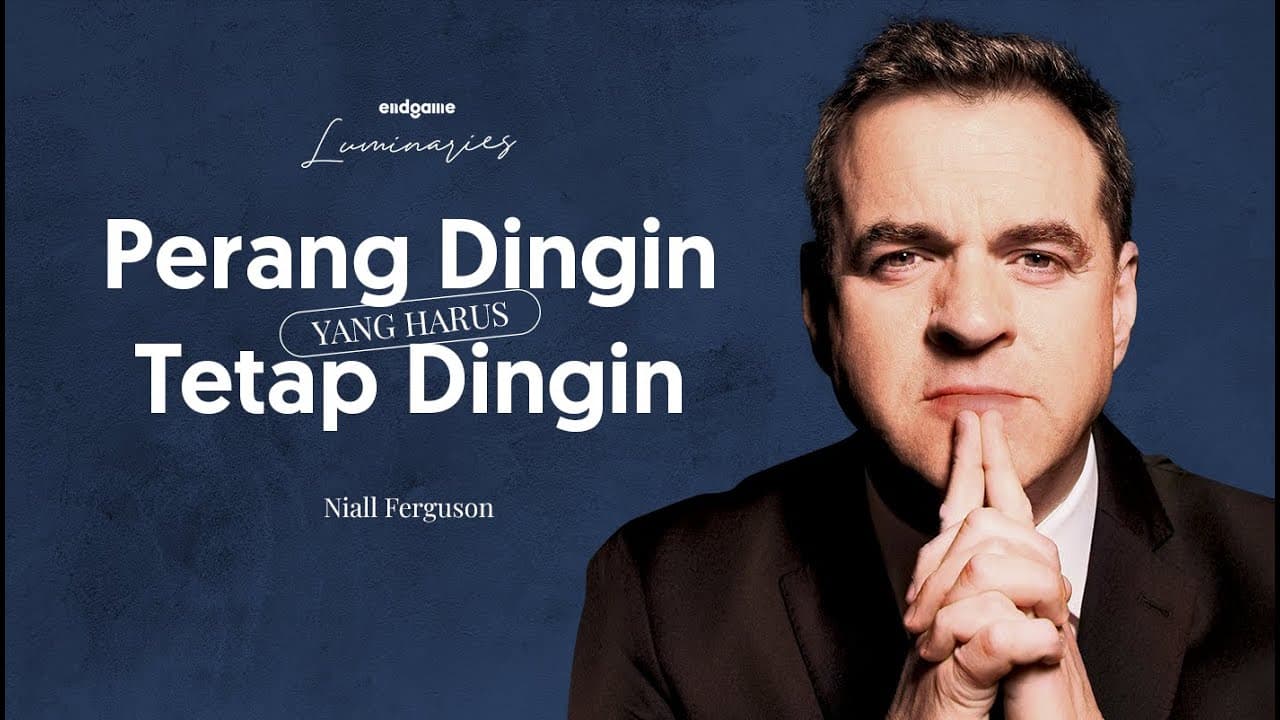
Niall Ferguson on Twitter, Elitism, and the Next World War | Endgame #123 (Luminaries)
TL;DR
Niall Ferguson discusses history, AI, and global issues.
Transcript
I proposed that we stop calling it artificial intelligence but call it instead inhuman intelligence because it's not human intelligence, it's a different form of it. You know, cognitive dissonance is the essence of human life and the psychologists were wrong to think that cognitive dissonance would make us ill. We'd live with it all the time, at Da... Read More
Key Insights
- Niall Ferguson suggests renaming artificial intelligence as 'inhuman intelligence' to highlight its distinct nature from human cognition.
- Ferguson emphasizes the importance of books in understanding Western civilization, despite the declining trend in reading.
- He believes that artificial intelligence cannot replicate the empathetic process of writing history, as it requires human insight.
- Ferguson argues that the democratization of information has not led to the democratization of ideas due to the polarizing nature of online platforms.
- He highlights the risks of geopolitical tensions, particularly between the U.S. and China, and advocates for maintaining strategic ambiguity regarding Taiwan.
- Ferguson draws parallels between the current war in Ukraine and historical conflicts, expressing concerns about prolonged warfare and its global impact.
- He critiques the economic policies that led to inflation and discusses the challenges faced by central banks in managing monetary policy.
- Ferguson remains skeptical about the notion of de-globalization, arguing that globalization continues despite geopolitical tensions.
Install to Summarize YouTube Videos and Get Transcripts
Explore YouTube Video Summarizer or Get YouTube Transcript Extractor
Questions & Answers
Q: Why does Niall Ferguson propose renaming artificial intelligence?
Niall Ferguson suggests renaming artificial intelligence as 'inhuman intelligence' to emphasize that it operates differently from human cognition. He believes this distinction is crucial as AI becomes less like human intelligence and more autonomous in its operations, highlighting the need for a clear understanding of its capabilities and limitations.
Q: What is Ferguson's view on the future of books?
Ferguson is pessimistic about the future of books, citing the declining trend in reading due to digital distractions. However, he remains loyal to books, arguing that they are essential for understanding Western civilization. He believes that books convey complex ideas and arguments about the human condition more effectively than digital media.
Q: How does Ferguson view the role of artificial intelligence in writing history?
Ferguson argues that artificial intelligence cannot replicate the empathetic process of writing history, which requires human insight into the motivations and thoughts of historical figures. He believes that while AI can produce factual narratives, it lacks the ability to understand and interpret the human experience, which is essential for writing meaningful history.
Q: What concerns does Ferguson have about online platforms and public discourse?
Ferguson is concerned that the democratization of information through online platforms has not led to a democratization of ideas. Instead, he argues that algorithms on these platforms amplify divisive narratives, leading to polarization and censorship. He believes this structure hinders rational debate and the free exchange of ideas, which are crucial for a healthy democracy.
Q: What is Ferguson's stance on strategic ambiguity regarding Taiwan?
Ferguson advocates for maintaining strategic ambiguity regarding Taiwan, as it has served all parties well for decades. He warns against rocking the boat and escalating tensions with China, arguing that a clear commitment from the U.S. to defend Taiwan could lead to a dangerous geopolitical showdown reminiscent of the Cuban Missile Crisis.
Q: How does Ferguson compare the war in Ukraine to historical conflicts?
Ferguson draws parallels between the war in Ukraine and historical conflicts like the Finnish-Soviet War of 1939. He expresses concerns about the resilience of Ukraine in the face of Russia's larger resources, warning that the conflict could follow a similar trajectory of initial success for the underdog followed by eventual defeat due to sheer weight of numbers and firepower.
Q: What are Ferguson's views on the economic policies leading to inflation?
Ferguson criticizes the fiscal and monetary policies of early 2021, which he believes contributed to inflation by continuing to inject stimulus into the economy despite signs of recovery. He discusses the challenges faced by central banks in managing interest rates and the potential consequences of higher borrowing costs for governments and individuals.
Q: Does Ferguson believe in the notion of de-globalization?
Ferguson is skeptical about the notion of de-globalization, arguing that globalization continues despite geopolitical tensions. He points to ongoing trade and investment between major economies like the U.S. and China as evidence that globalization is not reversing. He believes that while the dynamics may shift, the overall trend of globalization persists.
Summary & Key Takeaways
-
Niall Ferguson discusses the distinct nature of artificial intelligence, suggesting it be called 'inhuman intelligence' to emphasize its difference from human cognition. He highlights the enduring value of books in understanding Western civilization, despite modern trends toward digital media.
-
Ferguson critiques the impact of network platforms on public discourse, noting that the democratization of information has not equated to a democratization of ideas. He stresses the importance of maintaining strategic ambiguity in international relations, particularly regarding Taiwan and China.
-
Drawing parallels with historical conflicts, Ferguson expresses concerns about the ongoing war in Ukraine and its potential for prolonged conflict. He critiques past economic policies that led to inflation and discusses the challenges central banks face in managing monetary policy effectively.
Read in Other Languages (beta)
Share This Summary 📚
Summarize YouTube Videos and Get Video Transcripts with 1-Click
Try YouTube Summary with ChatGPT & Claude or YouTube Transcript Generator
Explore More Summaries from Gita Wirjawan 📚



Summarize YouTube Videos and Get Video Transcripts with 1-Click
Try YouTube Summary with ChatGPT & Claude or YouTube Transcript Generator