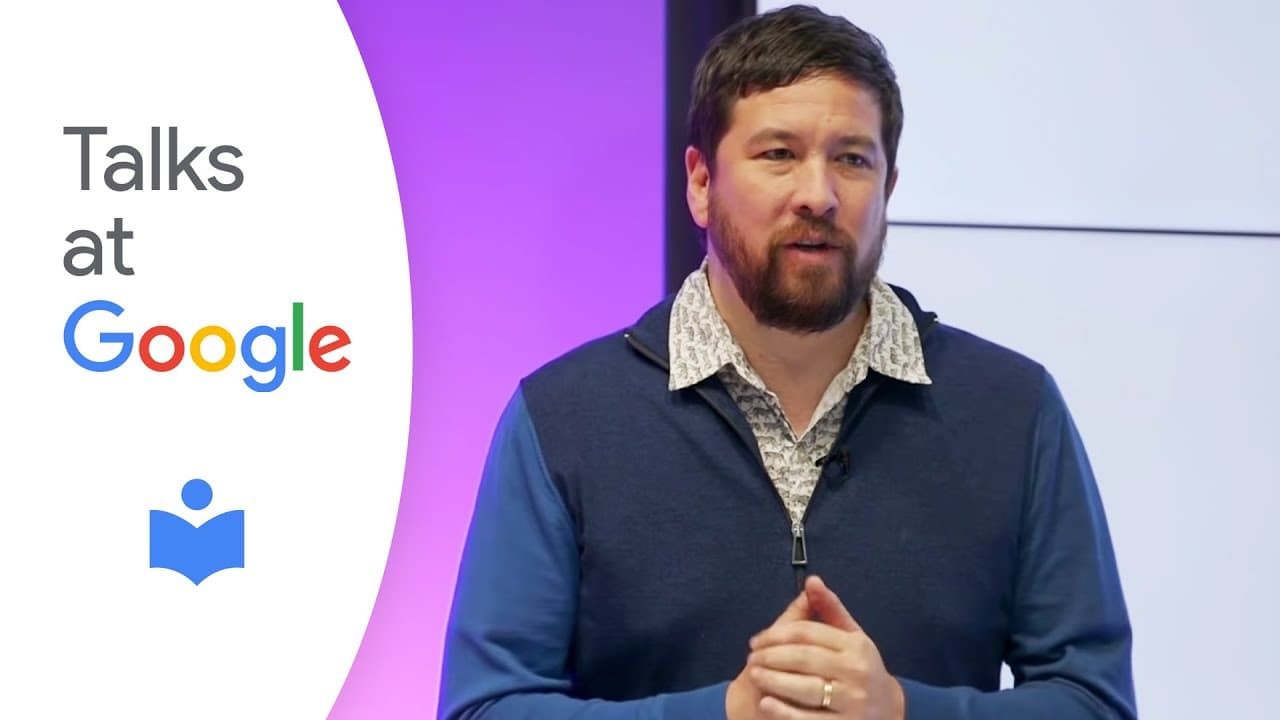
Why Are We Yelling? | Buster Benson | Talks at Google
TL;DR
Learn how to navigate disagreements by understanding the importance of building goodwill, acknowledging different perspectives, and finding common ground.
Transcript
[MUSIC PLAYING] [APPLAUSE] BUSTER BENSON: Thank you so much for coming to this talk. I'm really excited to talk with you all about this. I just realized today that I have never been to the Google campus as well. I've been in tech for 22 years-plus, but I've just never gotten here, so it's crazy. I'm so glad to be here. I've definitely worked with a... Read More
Key Insights
- ❓ Disagreements occur when there are differences in perspectives that are found to be unacceptable.
- 🛝 Productive disagreement involves understanding and empathy, finding common ground, and focusing on meaningful values.
- 🏛️ Building goodwill and open dialogue are key to navigating disagreements and building stronger relationships.
- 💖 It's important to address the underlying anxieties or cognitive dissonance that sparks disagreements.
- 🥺 Shifting the conversation from group representation to individual beliefs and values can lead to more productive discussions.
Install to Summarize YouTube Videos and Get Transcripts
Explore YouTube Video Summarizer or Get YouTube Transcript Extractor
Questions & Answers
Q: How can productive disagreement improve relationships and lead to better outcomes?
Productive disagreement promotes understanding and empathy, allowing individuals to see the world through different perspectives. This leads to stronger relationships based on trust and mutual respect. By focusing on meaningful values, disagreements can help address underlying issues and improve outcomes for all parties involved.
Q: What is the difference between a civil disagreement and a productive disagreement?
A civil disagreement might involve attacking or defending positions, whereas a productive disagreement seeks to understand each other's perspectives and find common ground. The goal of a productive disagreement is to build relationships and move towards a shared vision or outcome.
Q: How can one navigate disagreements with multiple parties?
When multiple parties are involved, it's important to focus on individual perspectives and build relationships with each person. Encourage open dialogue, ask questions, and find areas of agreement or compromise. By shifting the discussion from group representation to personal values and beliefs, you can foster a more productive conversation.
Q: What can be done when people come to a discussion with hidden agendas or a predisposition to disagree?
It is essential to create a safe and open environment for discussions where everyone feels comfortable sharing their thoughts. If someone has a hidden agenda or is resistant to agreement due to personal bias, it may be necessary to consider an exit strategy. Focus your energy on conversations and relationships that have the potential for positive growth and productive outcomes.
Summary & Key Takeaways
-
Disagreements are when two perspectives have a difference that is found to be unacceptable, and they can occur in various aspects of life and work.
-
Productive disagreement involves moving away from attacking and defending toward understanding and finding common ground.
-
To navigate disagreements, one should identify and address the spark of anxiety or cognitive dissonance, cultivate neutral spaces for conversations, and focus on the realm of meaningful values, rather than just objective facts.
Read in Other Languages (beta)
Share This Summary 📚
Summarize YouTube Videos and Get Video Transcripts with 1-Click
Try YouTube Summary with ChatGPT & Claude or YouTube Transcript Generator
Explore More Summaries from Talks at Google 📚
Summarize YouTube Videos and Get Video Transcripts with 1-Click
Try YouTube Summary with ChatGPT & Claude or YouTube Transcript Generator