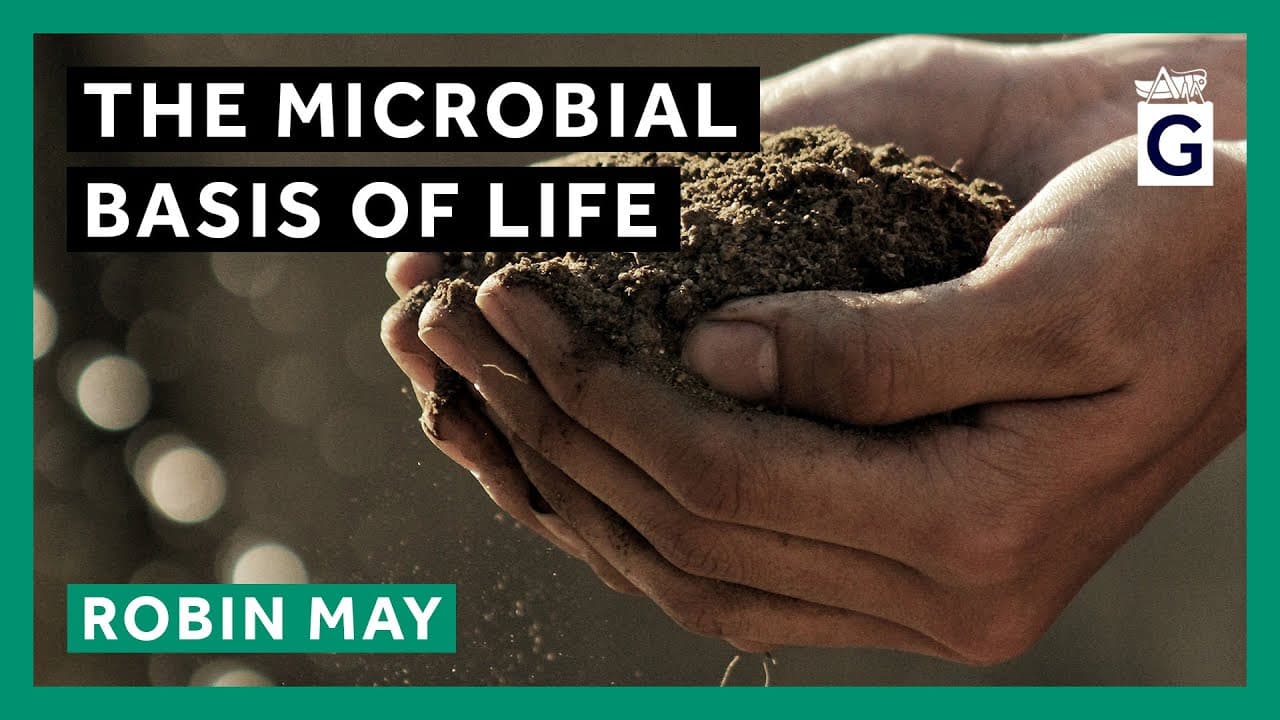
The Microbial Basis of Life
TL;DR
The content explores the crucial role of microbes in various aspects of life, highlighting their significance in food production, soil health, decomposition, and even human health. It also delves into the origins of life and the evolution of multicellularity, shedding light on the complex processes that have shaped the diversity of life on Earth.
Transcript
- Thank you very much, Martin, and thank you all for coming tonight. For those of you joining me here in the room, good evening. For those of you joining me online, good morning, good afternoon, good night, wherever and whatever you are drinking, eating, doing whilst you're listening to this. It's a really great pleasure to be here. And what I want... Read More
Key Insights
- 😋 All life on Earth relies on microbes, which have important roles in food production, nutrient cycling, and ecosystem health.
- 🙂 The origins of life and the transition to multicellularity are still widely debated topics, with various hypotheses and experimental evidence shedding light on these processes.
- 💼 Acquired characteristics can be inherited in some cases, particularly through epigenetic modifications, but genetic inheritance remains the primary mode of inheritance for most traits.
Install to Summarize YouTube Videos and Get Transcripts
Explore YouTube Video Summarizer or Get YouTube Transcript Extractor
Questions & Answers
Q: How diverse are the 39 trillion bacteria in the human body?
The 39 trillion bacteria in the human body are highly diverse, with each individual having a unique combination of bacterial species. The human microbiome is still largely unexplored, and many bacterial species are yet to be identified.
Q: Can acquired characteristics be inherited?
Acquired characteristics can be inherited in certain cases, such as epigenetic modifications. Chemical modifications on DNA can affect gene expression and may be passed on to future generations. However, most traits are still primarily determined by genetic inheritance.
Q: How did multicellular organisms evolve from single-celled organisms?
Multicellularity is thought to have evolved independently multiple times in different lineages. The process likely involved genetic changes that promoted cell adhesion and cooperation, leading to the formation of multicellular colonies. Experimental studies have shown that single-celled organisms can rapidly evolve into multicellular organisms under specific environmental conditions.
Summary & Key Takeaways
-
Microbes play a vital role in food production, as they are responsible for the fermentation processes involved in the creation of soy sauce, alcoholic drinks, and various dairy products.
-
Microbes are also essential for the growth of land plants, as they form a symbiotic relationship with the plants' roots, aiding in nutrient absorption.
-
Microbes contribute to the decomposition process, creating compost that is crucial for the growth of plants and the overall health of ecosystems.
Read in Other Languages (beta)
Share This Summary 📚
Summarize YouTube Videos and Get Video Transcripts with 1-Click
Try YouTube Summary with ChatGPT & Claude or YouTube Transcript Generator
Explore More Summaries from Gresham College 📚
Summarize YouTube Videos and Get Video Transcripts with 1-Click
Try YouTube Summary with ChatGPT & Claude or YouTube Transcript Generator