What Is the Role of Jealousy in Literature?

TL;DR
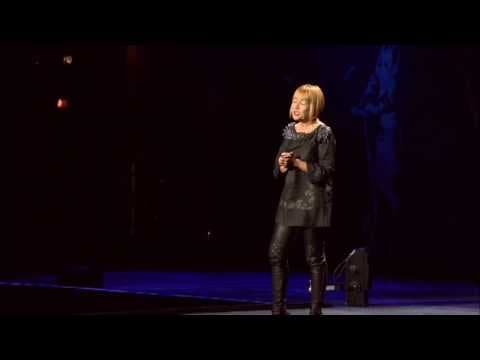
Jealousy serves as a profound narrative foundation in literature, revealing deep human emotions and complexities. It is characterized as a hungry, exhausting emotion that presents individuals as amateur novelists, crafting stories that reflect their insecurities. Through fiction, jealousy can be demystified, enabling readers to align with rather than resent others' successes.
Transcript
So when I was eight years old, a new girl came to join the class, and she was so impressive, as the new girl always seems to be. She had vast quantities of very shiny hair and a cute little pencil case, super strong on state capitals, just a great speller. And I just curdled with jealousy that year, until I hatched my devious plan. So one day I sta... Read More
Key Insights
- 🤔 Jealousy, even in children, can be a powerful and baffling emotion, and it is pervasive in society, with studies on its effects and nuances largely limited to literature and fiction.
- 😮 The novel has extensively studied jealousy, as it is a solid foundation for narrative structure and a central theme in many classic works of literature.
- 💔 Jealousy is an emotion that makes us tell ourselves stories, often designed to make us feel terrible, showcasing our amateur novelist capabilities.
- 📚 Jealousy is portrayed in literature as a quest for knowledge and truth, revealing our aggression, ambition, entitlement, and teaching us to look intensely, even if not accurately.
- 💡 Jealousy prompts wildly inventive behavior, seen both in personal experiences and stories like a woman creating a fake identity on social media to frame her ex-boyfriend's new girlfriend.
- 📱 Social media platforms like Instagram thrive on jealousy, as it feeds on information, details, and shiny displays of success.
- 📖 Fiction serves as a source of consolation and a means to demystify and domesticate jealousy, allowing readers to align themselves with the excellence of others rather than resenting it.
- 💭 Jealousy may ultimately be a matter of perspective and the position we choose to stand in relation to others, opening the possibility of admiration and pride rather than resentment.
Install to Summarize YouTube Videos and Get Transcripts
Explore YouTube Video Summarizer or Get YouTube Transcript Extractor
Questions & Answers
Q: What was the speaker's devious plan when she was eight years old?
The speaker's devious plan when she was eight years old was to change her rival's grades by altering the grade book at school.
Q: Why did the speaker feel great after changing the grades?
The speaker felt great after changing the grades because jealousy made her want to assert her superiority over her classmates and feel a sense of power and control.
Q: Why does jealousy fascinate the speaker?
Jealousy fascinates the speaker because it is a mysterious and pervasive emotion that affects humans, primates, and even birds. Jealousy has a powerful presence in literature and the speaker wonders why it is such a common human experience.
Q: What does the speaker believe is the connection between jealousy and literature?
The speaker believes that jealousy is an integral part of literature as it serves as a solid narrative foundation. Without jealousy, many classic literary works, like the "Odyssey," "Arabian Nights," and Shakespearean plays, would not exist. Jealousy is a driving force behind compelling stories and character development.
Q: How does jealousy prompt us to behave?
Jealousy prompts us to behave in wildly inventive ways. It makes us look for details and information to feed our jealousy, such as shiny hair, photos, or social media posts. The speaker highlights a news story about a woman who created a fake Facebook account to frame her ex-boyfriend's new girlfriend as an example of the imaginative lengths jealousy can drive someone to.
Q: According to the speaker, what does jealousy reveal about us?
Jealousy reveals our aggression, hideous ambition, entitlement, and intense desire to look closely at the lives of others. The speaker suggests that jealousy uncovers truths about ourselves and exposes our vulnerabilities and insecurities.
Q: How does fiction help to demystify jealousy?
Fiction helps demystify jealousy by allowing us to explore the complexities of the emotion and relate to fictional characters experiencing jealousy. Fiction humanizes jealousy and brings it to the forefront, inviting us to examine and understand jealousy through different perspectives. It provides consolation and companionship in our own experiences of jealousy.
Summary & Key Takeaways
-
The speaker recalls a childhood experience of jealousy and reflects on the mystery of why jealousy exists and its impact on literature.
-
Jealousy is described as a hungry and exhausting emotion that seeks information and details to feed itself.
-
The speaker explores how jealousy can lead to wild and inventive behavior, as shown in examples from both personal experiences and famous works of fiction.
Read in Other Languages (beta)
Share This Summary 📚
Summarize YouTube Videos and Get Video Transcripts with 1-Click
Try YouTube Summary with ChatGPT & Claude or YouTube Transcript Generator
Explore More Summaries from TED 📚



Summarize YouTube Videos and Get Video Transcripts with 1-Click
Try YouTube Summary with ChatGPT & Claude or YouTube Transcript Generator