How to Organize for ADHD: 3 Essential Steps
TL;DR
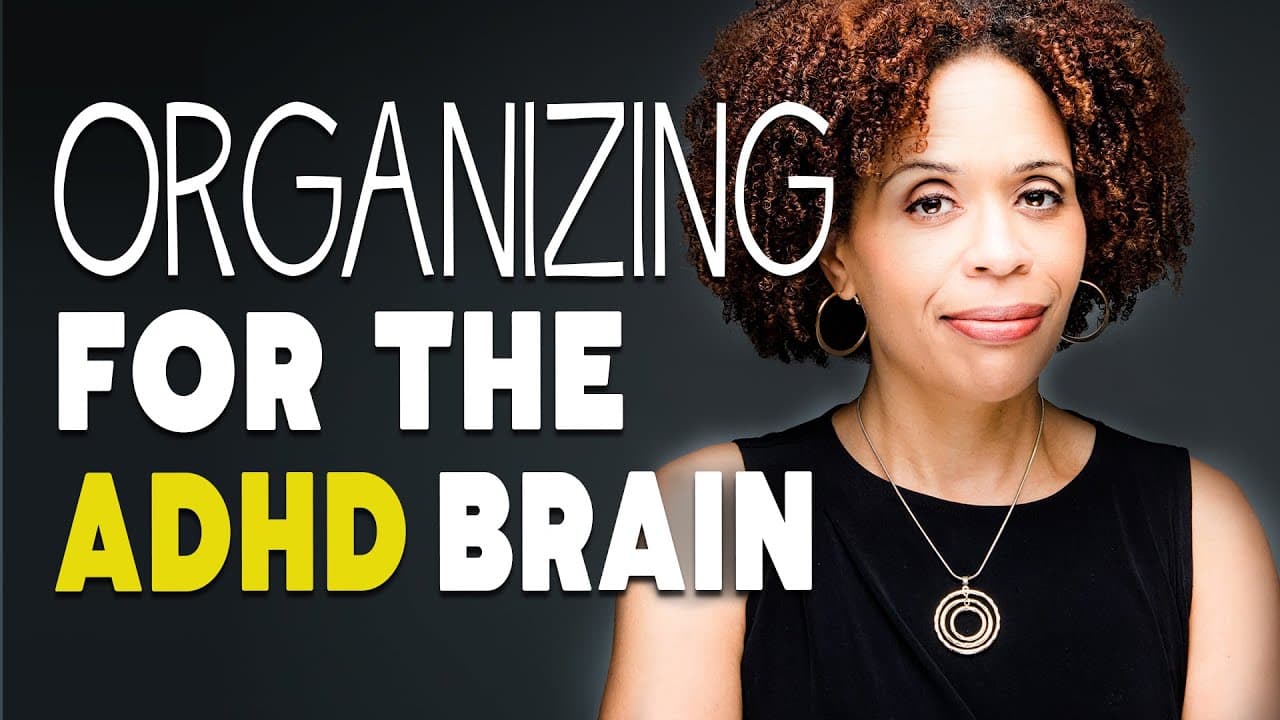
To effectively organize for ADHD, follow these three steps: designate a specific place for every item, retrieve it from that place when needed, and immediately return it after use. This method reduces clutter and stress by ensuring that everything has a clear location, making it easier to find and manage your belongings.
Transcript
- Hi, I'm Dr. Tracey Marks, a psychiatrist, and I make mental health education videos. Today's video is part three of a series on learning ADHD skills to help you with your day-to-day functioning. The first videos work on time management, and if you haven't seen them, I'll have a link in the corner and in the descrip... Read More
Key Insights
- Organization is a critical executive function often impaired in individuals with ADHD, leading to frustration and wasted time.
- The three-step approach to organization includes making a place for everything, retrieving items from their designated places, and returning them immediately after use.
- Clutter is common among those with organizational challenges due to a preference for keeping items within reach, but intentional placement is crucial.
- Attention problems can cause individuals to overlook items even when they are in plain sight, as clutter can become overwhelming.
- Effective organization requires sorting and filing frequently used items while discarding those not used for extended periods, like six months to a year.
- Breaking down organizing tasks into manageable chunks, such as one-hour sessions, can make the process less daunting.
- Avoid distractions during organizing tasks by resisting the urge to look through interesting items until the task is complete.
- Consistent practice of the place, retrieve, and return method can significantly reduce stress and free up time by minimizing the need to search for misplaced items.
Install to Summarize YouTube Videos and Get Transcripts
Explore YouTube Video Summarizer or Get YouTube Transcript Extractor
Questions & Answers
Q: Why is organization particularly challenging for individuals with ADHD?
Organization is challenging for individuals with ADHD because it is one of the executive functions often impaired by the disorder. Disorganization leads to frustration and wasted time, as individuals struggle to find items and manage clutter. ADHD can make it difficult to maintain focus and consistently apply organizational strategies, further complicating the process.
Q: What are the three steps Dr. Marks suggests for effective organization?
Dr. Marks suggests a three-step method for effective organization: place, retrieve, and return. 'Place' involves designating a specific spot for each item. 'Retrieve' means taking items from their designated places when needed. 'Return' involves putting items back immediately after use, preventing clutter and making it easier to find items in the future.
Q: How does clutter affect individuals with attention problems?
Clutter can be overwhelming for individuals with attention problems because it creates visual distractions that make it difficult to focus on finding specific items. The brain may filter out clutter, causing individuals to overlook items even when they are in plain sight. This can lead to frustration and inefficiency in completing tasks.
Q: What is the recommended approach for dealing with clutter?
The recommended approach for dealing with clutter involves intentional placement of items and sorting through possessions to discard those not used for a significant period, such as six months to a year. This helps reduce visual distractions and makes it easier to locate frequently used items, ultimately decreasing stress and improving efficiency.
Q: Why is it important to break organizing tasks into smaller sessions?
Breaking organizing tasks into smaller sessions, such as one-hour increments, makes the process less overwhelming and more manageable. It allows individuals to focus on specific areas without feeling daunted by the entire task. This approach also helps maintain motivation and provides a sense of accomplishment with each completed session.
Q: How can distractions be minimized during organizing tasks?
Distractions can be minimized during organizing tasks by resisting the urge to engage with interesting items found during the process. Instead, individuals should focus on completing the task or session and reward themselves by looking through these items afterward. This helps maintain focus and ensures that organizing tasks are completed efficiently.
Q: What are the long-term benefits of consistent organization practices?
Consistent organization practices offer long-term benefits such as reduced stress, as individuals spend less time searching for misplaced items. This approach also frees up time for other activities and improves overall efficiency. By maintaining a structured environment, individuals can better manage their daily tasks and reduce frustration associated with disorganization.
Q: What mindset shift is necessary for effective organization?
A necessary mindset shift for effective organization involves seeing every item as needing to be retrieved and returned to its designated place. This consistent practice helps break the habit of leaving items out and reduces clutter over time. Emphasizing the importance of immediate return after use can lead to more efficient and stress-free environments.
Summary & Key Takeaways
-
Dr. Tracey Marks discusses the importance of organization for individuals with ADHD and introduces a three-step method: place, retrieve, and return. This approach helps reduce clutter and frustration by ensuring that each item has a designated spot and is returned immediately after use.
-
Clutter can be overwhelming for those with attention problems, making it difficult to find items even when they are in plain sight. The video emphasizes the importance of intentional placement and sorting to make spaces more manageable and reduce stress.
-
Dr. Marks advises breaking organizing tasks into smaller, timed sessions to make them more manageable. She also warns against distractions during these sessions and highlights the long-term benefits of consistent organization practices, such as reduced stress and more free time.
Read in Other Languages (beta)
Share This Summary 📚
Summarize YouTube Videos and Get Video Transcripts with 1-Click
Try YouTube Summary with ChatGPT & Claude or YouTube Transcript Generator
Explore More Summaries from Dr. Tracey Marks 📚





Summarize YouTube Videos and Get Video Transcripts with 1-Click
Try YouTube Summary with ChatGPT & Claude or YouTube Transcript Generator