The Earth's Internet: How Fungi Help Plants Communicate
TL;DR
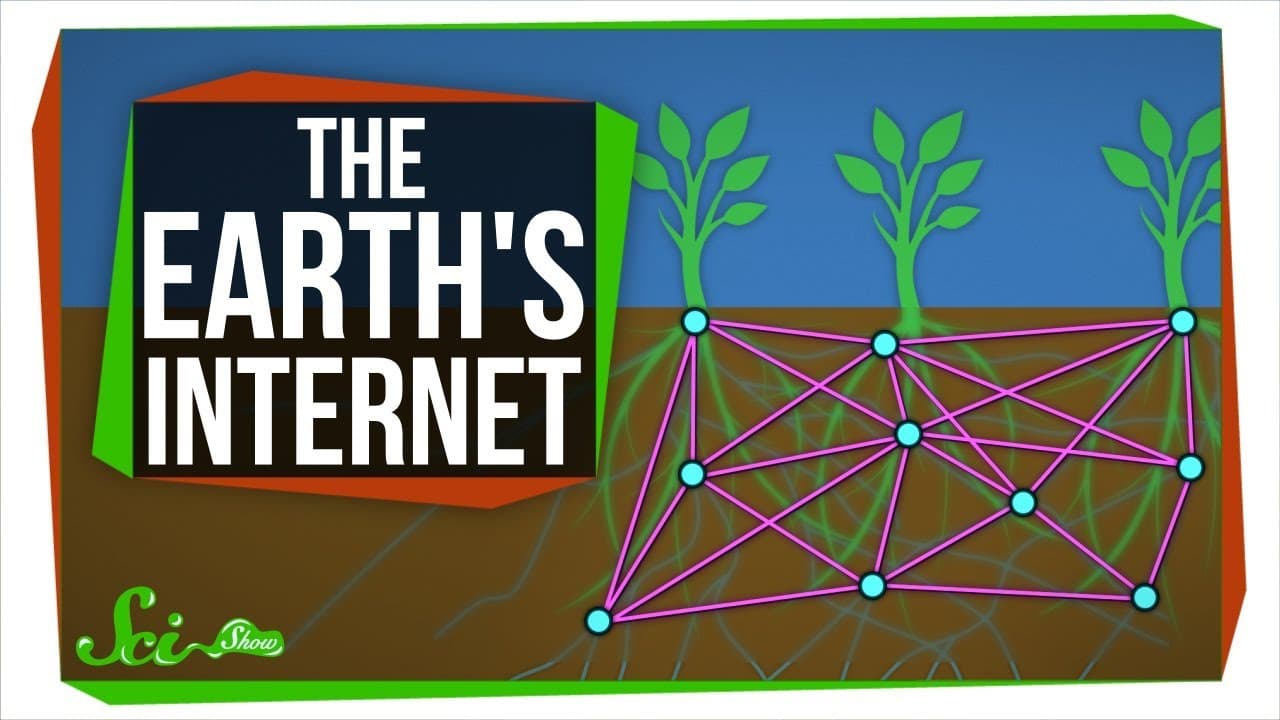
Plants have a secret underground communication network facilitated by fungi, allowing them to trade nutrients, send warnings, and support each other's survival.
Transcript
The internet connects more than half of the world’s population through an invisible web of servers, computers, and devices. It has changed our lives in countless ways by allowing otherwise separated people to interact and by providing access to vast amounts of information. But humans aren’t the only organisms on the planet with an invisible interco... Read More
Key Insights
- 🌱 Plants have a mutualistic relationship with fungi, exchanging nutrients and carbon through an intricate underground fungal network.
- 👻 This fungal network, known as the Common Mycelium Network, allows plants to communicate and warn each other of threats.
- 🖐️ Highly connected hub trees play a crucial role in supporting the overall health and diversity of forests.
- 🌲 Preserving mother trees helps with forest conservation and regrowth by maintaining mycorrhizal fungal diversity.
- 👾 The ability of plants to communicate and support each other has implications for agriculture, as they can warn of invading pests, potentially reducing the need for pesticides.
- 😒 Some plants can use the fungal network to release toxins, influencing community dynamics and claiming territory.
- 🌱 Knowledge of plant communication and fungal networks can improve our relationship with plants and contribute to ecological conservation efforts.
Install to Summarize YouTube Videos and Get Transcripts
Explore YouTube Video Summarizer or Get YouTube Transcript Extractor
Questions & Answers
Q: How do plants and fungi benefit from their symbiotic relationship?
The fungi absorb nutrients from the soil and provide them to the plants, while the plants trade carbon in the form of sugars to the fungi.
Q: How did Suzanne Simard prove that plants can share nutrients with each other?
She conducted an experiment where trees were infused with radioactive carbon, and neighboring trees were found to contain the radioactive carbon, showing that nutrients can be transferred between plants.
Q: How do plants communicate through the fungal network?
Plants release chemicals when attacked, signaling nearby plants through airborne compounds and the interconnected fungal network, allowing other plants to activate their defenses.
Q: How do highly connected trees, known as hub or mother trees, contribute to the ecosystem?
Hub trees have larger root networks with more mycorrhizal fungi diversity, and they can send extra nutrients to support their kin and nurture new generations of trees, even of different species.
Summary & Key Takeaways
-
Plants have a symbiotic relationship with soil fungi called mycorrhizae, allowing fungi to absorb nutrients from the soil and receive carbon from plants in return.
-
Ecologist Suzanne Simard discovered that plants can communicate and share nutrients with each other through this underground fungal network.
-
Plants use chemical signals, both airborne and through the fungal network, to warn each other of threats and activate defenses.
Read in Other Languages (beta)
Share This Summary 📚
Summarize YouTube Videos and Get Video Transcripts with 1-Click
Try YouTube Summary with ChatGPT & Claude or YouTube Transcript Generator
Explore More Summaries from SciShow 📚


Summarize YouTube Videos and Get Video Transcripts with 1-Click
Try YouTube Summary with ChatGPT & Claude or YouTube Transcript Generator