Lecture 0: Tomaso Poggio - Introduction to Brains, Minds, and Machines
TL;DR
Researchers at MIT and Harvard are merging brain research and computer science to study and understand intelligence.
Transcript
The following content is provided under a Creative Commons license. Your support will help MIT OpenCourseWare continue to offer high quality educational resources for free. To make a donation, or view additional materials from hundreds of MIT courses, visit MIT OpenCourseWare at ocw.mit.edu. TOMASO POGGIO: This problem of intelligence, it's one of ... Read More
Key Insights
- 🤗 Intelligence has been a long-standing problem, but recent advancements in AI have opened up new opportunities for research and collaboration.
- 🉐 Interdisciplinary collaboration is necessary to gain a comprehensive understanding of intelligence.
- 🧠 While AI has made significant progress, there is still much to learn about how the human brain processes and understands images.
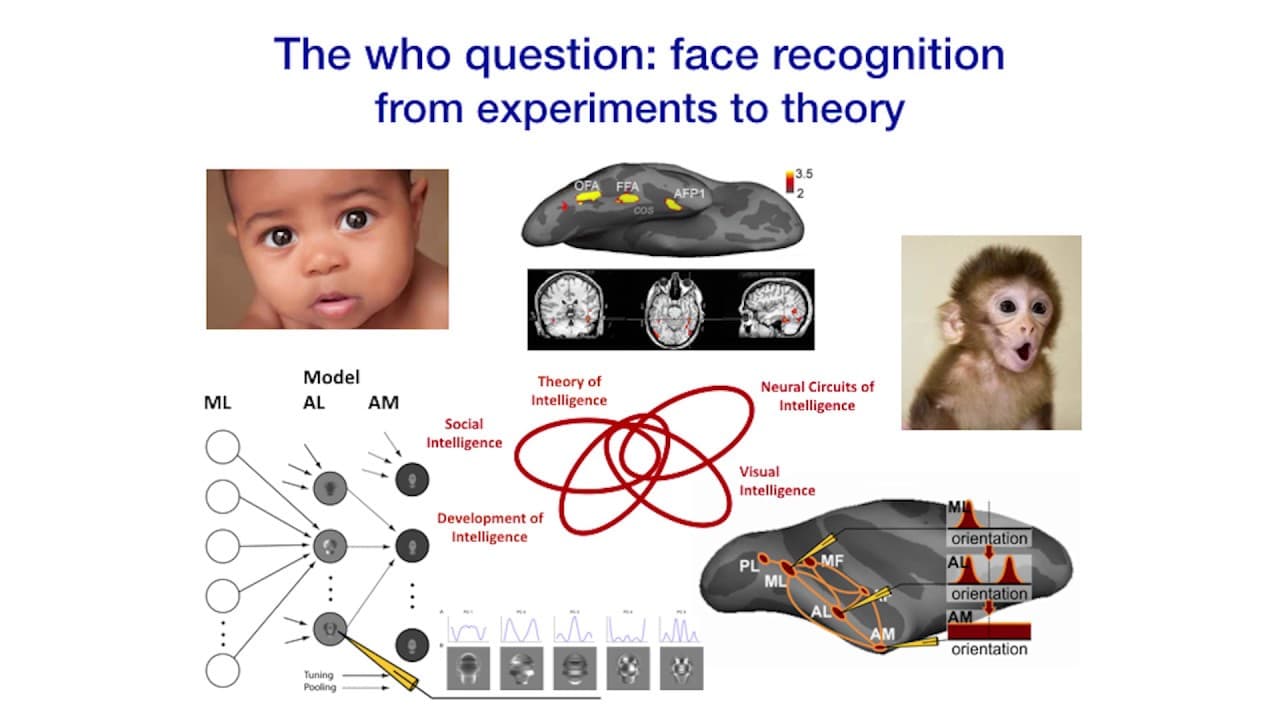
- 😀 Face recognition is one area where progress has been made in creating models that align with brain activity.
Install to Summarize YouTube Videos and Get Transcripts
Explore YouTube Video Summarizer or Get YouTube Transcript Extractor
Questions & Answers
Q: What spurred the need for interdisciplinary collaboration in studying intelligence?
Recent progress in AI and the realization that computer science alone is not enough prompted the need for expertise from other fields to understand intelligence comprehensively.
Q: What are some recent advancements in AI?
Advancements such as IBM's Deep Blue beating Kasparov in chess, Watson winning in Jeopardy, and drones landing on aircraft carriers highlight the progress in AI.
Q: What is the main focus of the interdisciplinary research at MIT and Harvard?
In the first five years, the main focus is on studying and understanding how the human brain answers questions about images, particularly in the area of vision.
Q: What is the goal of the research at MIT and Harvard?
The researchers aim to not only develop AI systems that can answer questions about images but also understand how the brain accomplishes the same task.
Summary & Key Takeaways
-
The problem of intelligence has been a focus for millennia, and recent progress in artificial intelligence has prompted the need for interdisciplinary collaboration.
-
MIT and Harvard have brought together experts from various fields, including neuroscience and cognitive science, to study and find answers to the problem of intelligence.
-
While significant advances have been made in AI, there is still much to learn about how the human brain answers questions about images and how it compares to AI systems.
Read in Other Languages (beta)
Share This Summary 📚
Summarize YouTube Videos and Get Video Transcripts with 1-Click
Try YouTube Summary with ChatGPT & Claude or YouTube Transcript Generator
Explore More Summaries from MIT OpenCourseWare 📚



Summarize YouTube Videos and Get Video Transcripts with 1-Click
Try YouTube Summary with ChatGPT & Claude or YouTube Transcript Generator