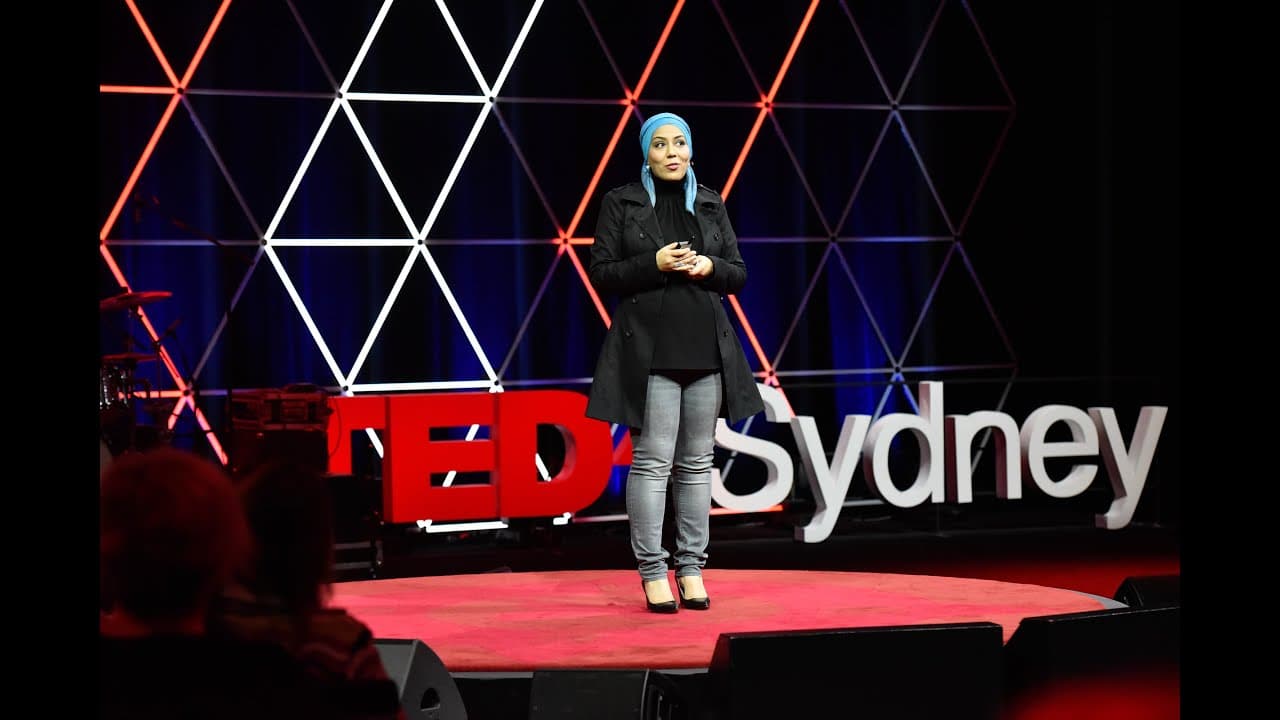
How to Recognize Privilege — and Uplift Those Without It | Mariam Veiszadeh | TED
TL;DR
This content discusses the importance of addressing stereotyping, unconscious bias, and societal privilege in creating a fair playing field for diverse minority groups.
Transcript
Anyone who knows me knows that I love to talk. I'm a chatterbox, just ask anyone. I like to think that I'm pretty good at building rapport with my clients. And having spent just under a decade working as a lawyer, I tell you, this is one skill that really came in handy. Now, I remember this one interstate client in particular. We got on like a hous... Read More
Key Insights
- 🗣️ Building rapport and communication skills are valuable in professional settings but can be hindered by unconscious bias and stereotyping.
- 💼 Privilege is an unearned advantage based on belonging to a particular identity, and it is often invisible to those who have it.
- 👥 Lack of cultural diversity in top positions perpetuates biases and assumptions, leading to affinity bias and unconscious categorization of individuals.
- 🌍 Intersectionality compounds the barriers faced by women of minority groups, who face social and institutional hurdles in addition to gender discrimination.
- 💼 Culturally diverse women face a double glazed glass ceiling, as evidenced by the low representation of ASX directors and CEOs from these backgrounds.
- 💵 Diversity brings a competitive advantage to businesses, with gender diverse companies 15% more likely to outperform industry averages and culturally diverse companies 35% more likely.
- 📚 Targets are necessary to address the lack of diversity and promote true meritocracy, as the existing status quo has not successfully done so.
- 🌍 Consciousness of unconscious biases and privileges is crucial in combating societal discrimination and promoting inclusivity in a divisive political climate.
Install to Summarize YouTube Videos and Get Transcripts
Explore YouTube Video Summarizer or Get YouTube Transcript Extractor
Questions & Answers
Q: How does the speaker feel about building rapport with clients?
The speaker believes that building rapport with clients is a skill that came in handy during her time as a lawyer and is something she is good at.
Q: What was the speaker's experience with an interstate client?
The speaker had been corresponding with the client for months and had built a good relationship over email and phone calls. However, when they finally met face to face, the client mistook the speaker for the legal secretary or assistant, leading to wasted time and effort in rebuilding rapport.
Q: What is privilege?
Privilege is described as an unearned advantage, granting access to or enjoyment of certain rights based on one's identity or membership in a particular group. The speaker admits to being privileged and suggests that many others in the audience likely are as well.
Q: How does societal privilege shape the playing field for diverse minority groups?
The speaker explains that societal privilege gives certain individuals a head start in life, even if they possess the same abilities as others. This privilege, which is largely invisible to those who have it, creates an unequal playing field for diverse minority groups, including women who face multiple barriers such as sexism, racism, and Islamophobia.
Q: How does the lack of diversity in leadership positions impact society?
The speaker points out the general lack of cultural diversity in top positions of society, such as CEOs, university chancellors, and TV personalities. This lack of diversity feeds the assumptions and biases people make about others. By not reflecting the multicultural makeup of the population, society fails to understand and address the needs of diverse groups.
Q: What is the diversity dividend?
The diversity dividend refers to the competitive advantage that diversity brings to companies. Gender-diverse companies are 15% more likely to outperform industry averages, while culturally diverse companies are 35% more likely to do so. The speaker emphasizes that real diversity goes beyond tokenism and brings diverse perspectives, views, and thoughts to the table, benefiting businesses and reflecting the needs of a multicultural customer base.
Q: How does unconscious bias and societal privilege affect individuals?
The speaker asks the audience to reflect on their levels of privilege and unconscious biases. She emphasizes the importance of being aware of these biases and taking action to address them. In an era where divisive politics and discriminatory rhetoric prevail, conscious effort to overcome biases is necessary to create a fair and inclusive society.
Q: Why does the speaker believe targets are necessary to address inequality?
The speaker argues that the existing status quo has not allowed for true meritocracy and that targets are needed as additional measures to drive change. She believes that targets provide a nudge towards achieving diversity and inclusion, as what gets measured ultimately gets done.
Summary & Key Takeaways
-
The speaker reflects on experiences of unconscious bias, stereotypes, and societal privilege that create an unequal playing field for diverse minority groups.
-
Privilege is an unearned advantage based on belonging to a particular identity, and those with the most privilege are often unaware of it.
-
The lack of diversity in top ranks of society feeds biases, and diverse minority groups, particularly women, face social and institutional barriers to equality.
Read in Other Languages (beta)
Share This Summary 📚
Summarize YouTube Videos and Get Video Transcripts with 1-Click
Try YouTube Summary with ChatGPT & Claude or YouTube Transcript Generator
Explore More Summaries from TED 📚
Summarize YouTube Videos and Get Video Transcripts with 1-Click
Try YouTube Summary with ChatGPT & Claude or YouTube Transcript Generator