Five Bizarre Places Frogs Call Home
TL;DR
Frogs have adapted to survive in various extreme environments, including frozen ponds, deserts, cloud forests, and low-oxygen waters.
Transcript
Thanks to Brilliant for supporting this SciShow List Show! As a SciShow viewer, you can keep building your STEM skills for 20% off an annual premium subscription at Brilliant.org/SciShow. [ intro ] If you wasted some time in the 80s playing Frogger, you might have been left with the impression that frogs just aren't that tough. After all, if f... Read More
Key Insights
- 🐸 Frogs have been around for 250 million years and have adapted to survive in diverse and challenging environments.
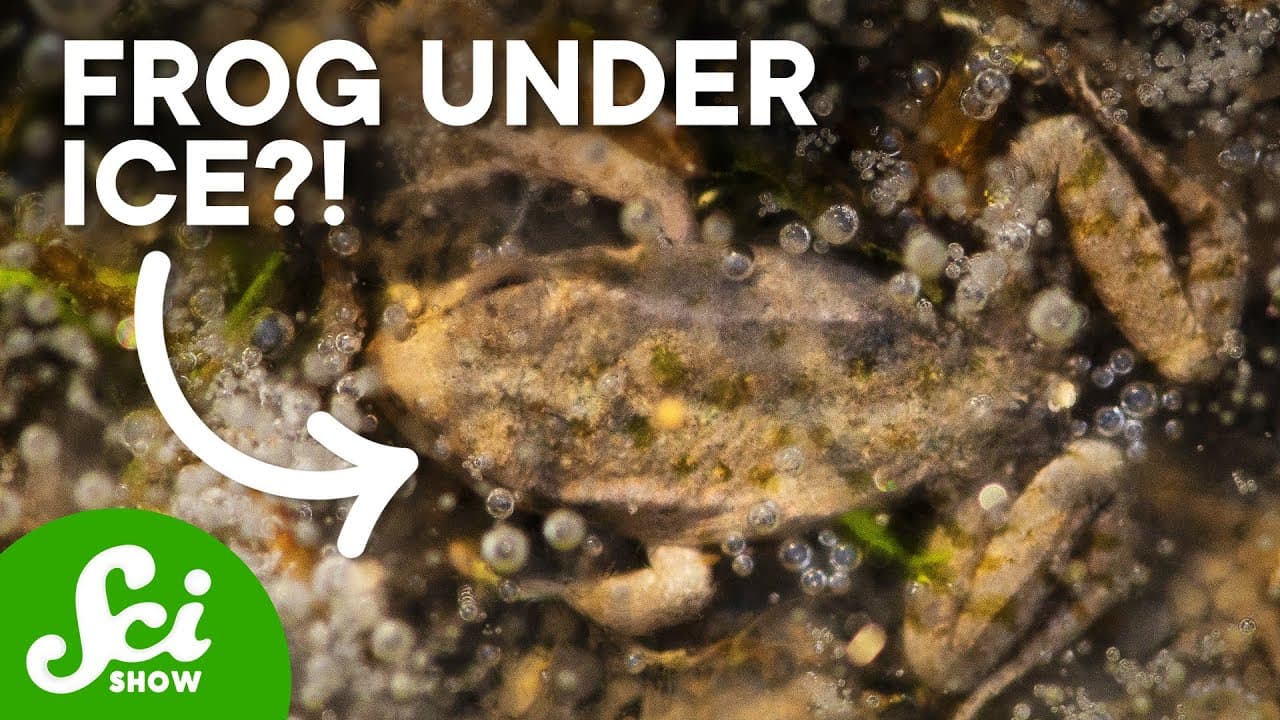
- 😒 Northern leopard frogs hibernate under frozen ponds and use hibernation pits for protection and oxygen intake.
- 🧠 Desert rain frogs rely on marine fog in arid deserts to keep their skin moist.
- 😶🌫️ Saddleback toads are specialized for high-altitude cloud forest environments.
- 🐢 Scrotum frogs have evolved loose, flappy skin and a slow metabolism to survive in low-oxygen waters.
- 😀 The thumbnail-sized laterite frogs face habitat destruction in a "wasteland" due to human activities.
- ✊ The adaptability of frogs demonstrates the power of evolution in solving survival challenges.
Install to Summarize YouTube Videos and Get Transcripts
Explore YouTube Video Summarizer or Get YouTube Transcript Extractor
Questions & Answers
Q: How do northern leopard frogs survive the cold winters in Canada?
Northern leopard frogs survive by hibernating under frozen ponds and creating hibernation pits, which provide camouflage and protection from predators. They also leave a gap in the silt layer to allow oxygen-rich water to enter and maintain slow movement to flush out silt and acquire oxygen.
Q: How do desert rain frogs in arid deserts get water?
Desert rain frogs live near the shores of the Atlantic Ocean and rely on marine fog rolling off the sea for moisture. They burrow into the fog-dampened sand during the day, which retains moisture and keeps their skin from drying out.
Q: Why are saddleback toads restricted to mountaintop cloud forests?
Saddleback toads are adapted to the cold and humid conditions found in cloud forests. They exist in isolated populations, as they cannot leave their comfort zones without facing inhospitable environments. They are vulnerable to changes in their limited habitats.
Q: How do scrotum frogs survive in low-oxygen waters?
Scrotum frogs have loose, flappy skin that increases their surface area for oxygen absorption and helps them survive in hypoxic waters. They also have a slow metabolism, requiring less oxygen. They perform a bobbing dance-like movement to enhance oxygen intake.
Summary & Key Takeaways
-
Northern leopard frogs survive the cold winters in Canada by hibernating under ice and creating hibernation pits for safety and oxygen intake.
-
Desert rain frogs in South Africa live in arid deserts near the Atlantic Ocean, getting moisture from marine fog to keep their skin from drying out.
-
Saddleback toads are adapted to high-altitude cloud forests and have limited mobility, making them vulnerable to changes in their environments.
-
Scrotum frogs in Lake Titicaca have loose skin flaps and a slow metabolism to survive in low-oxygen waters, absorbing oxygen through their skin.
-
The thumbnail-sized laterite frogs, found in a "wasteland" on the West Coast of India, face habitat destruction and are highly vulnerable due to lack of protection.
Read in Other Languages (beta)
Share This Summary 📚
Summarize YouTube Videos and Get Video Transcripts with 1-Click
Try YouTube Summary with ChatGPT & Claude or YouTube Transcript Generator
Explore More Summaries from SciShow 📚


Summarize YouTube Videos and Get Video Transcripts with 1-Click
Try YouTube Summary with ChatGPT & Claude or YouTube Transcript Generator