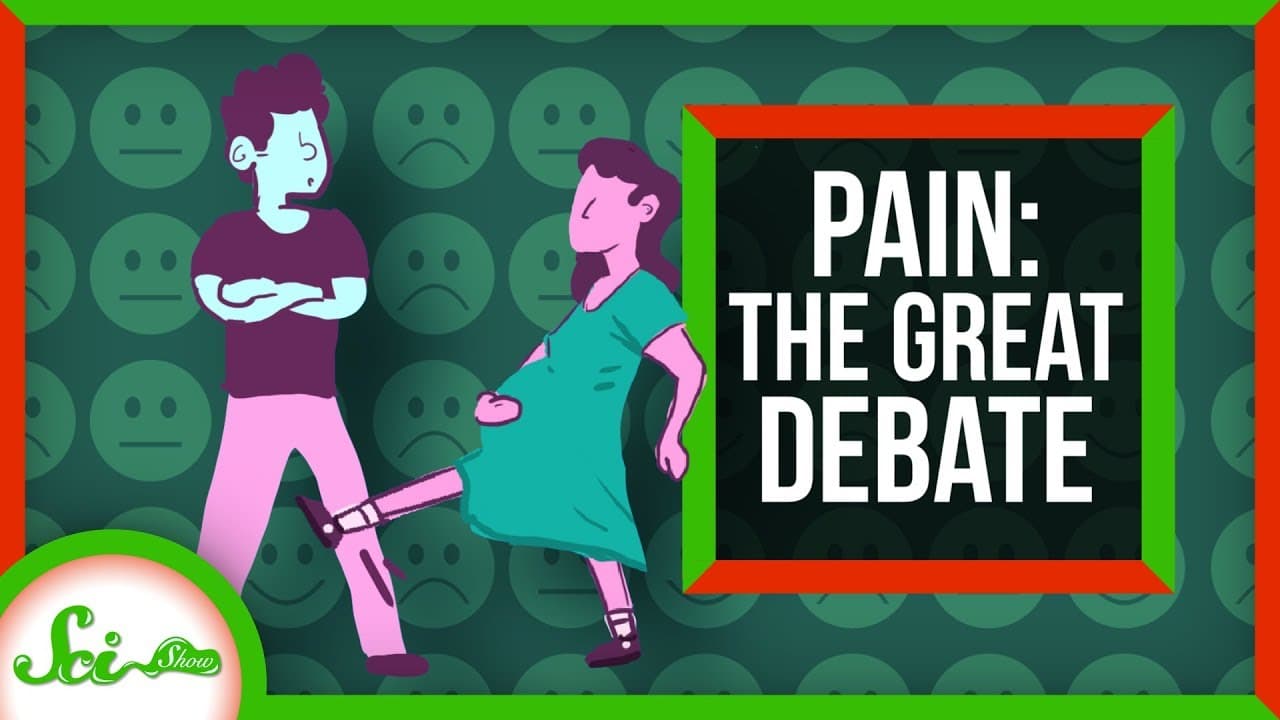
Kicked in the Crotch vs. Childbirth: The Great Debate
TL;DR
The subjective nature of pain and the lack of comprehensive pain assessment tools make it challenging to determine whether being kicked in the crotch or childbirth is more painful.
Transcript
[ INTRO ] So what hurts more: being kicked in the crotch or giving birth? If you’re a guy you’d likely argue strongly for being kicked in the nards. Whereas many women would be inclined to argue childbirth. But can science settle the debate once and for all? Nope! ... Or at least not yet. Basically everyone feels pain. But the experience is incredi... Read More
Key Insights
- 🧑🏭 Pain is subjective and influenced by individual factors, making it challenging to measure objectively.
- 👨🎨 Traditional pain scales and questionnaires have limitations in capturing the complexity of pain.
- 👨🎨 Neuroimaging techniques provide insights into brain areas involved in pain, but their ability to measure pain intensity is still debatable.
- 🧑🏭 Gender, race, and cultural factors impact pain experiences and perception, highlighting the need for more inclusive research.
- 👨🎨 Biases and stereotypes can result in undertreatment or mismanagement of pain in certain populations.
- 👨🎨 Objective measurement of pain without bias remains an elusive goal.
- 👨🎨 Comprehensive assessment tools incorporating multiple measures and questionnaires may be needed to accurately determine pain intensity.
Install to Summarize YouTube Videos and Get Transcripts
Explore YouTube Video Summarizer or Get YouTube Transcript Extractor
Questions & Answers
Q: Why is pain difficult to measure objectively?
Pain is influenced by individual factors and varies greatly from person to person. The complexity and multidimensionality of pain make it challenging to develop a single standardized measure.
Q: How do traditional pain scales fall short?
Traditional pain scales, like the one to ten scale, provide limited information about the nature and impact of pain. They fail to capture the complexity of pain and its various dimensions.
Q: What are some challenges related to pain research in women?
Historically, pain research has excluded women, leading to a lack of understanding of their unique pain experiences. Gender biases and stereotypes have further hindered proper assessment and treatment of pain in women.
Q: What role does race and ethnicity play in pain perception?
Certain racial and ethnic groups have been found to have different pain sensitivities. Biases and misconceptions about these differences can lead to disparities in pain assessment and treatment.
Summary & Key Takeaways
-
Pain is subjective, influenced by various factors and difficult to measure accurately.
-
Traditional pain scales and questionnaires have limitations in capturing the multidimensional nature of pain.
-
Neuroimaging techniques like fMRI have identified brain areas involved in pain, but their validity as a measure of pain intensity is debatable.
-
Gender, race, and cultural factors affect pain experiences and perception, highlighting the need for more inclusive research.
Read in Other Languages (beta)
Share This Summary 📚
Summarize YouTube Videos and Get Video Transcripts with 1-Click
Try YouTube Summary with ChatGPT & Claude or YouTube Transcript Generator
Explore More Summaries from SciShow 📚


Summarize YouTube Videos and Get Video Transcripts with 1-Click
Try YouTube Summary with ChatGPT & Claude or YouTube Transcript Generator