Textiles: Humanity’s early tech boom | Virginia Postrel | Big Think
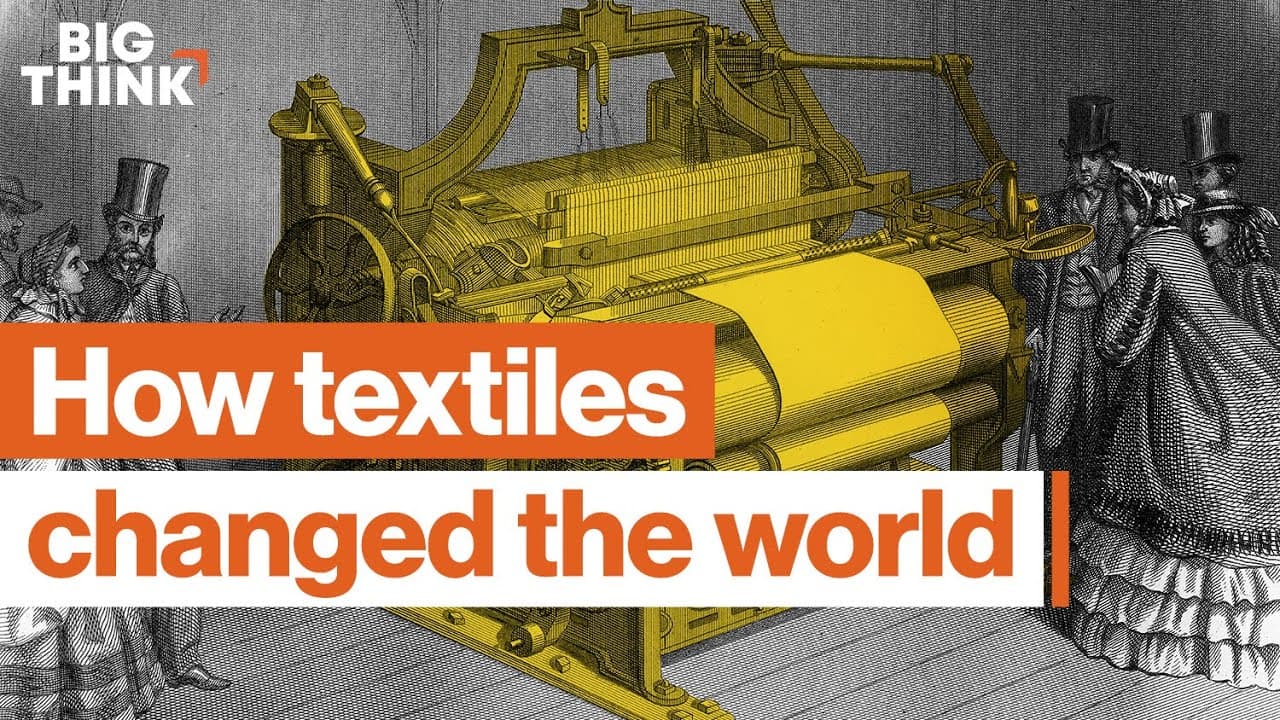
TL;DR
Cloth holds deep human intelligence and history, from weaving innovations to Industrial Revolution impacts.
Transcript
VIRGINIA POSTREL: I think we take for granted just how much human intelligence there is in every piece of cloth. From the moment you're born, you're surrounded by cloth. Clothes, medical bandages, tents and backpacks, tape—The pursuit of textiles has led to all kinds of innovation. The machines that launched the Industrial Revolution were machines ... Read More
Key Insights
- ⌛ Textiles showcase human intelligence from ancient times.
- 🥺 Weaving innovations led to the Industrial Revolution.
- 😚 The Luddites protested against losing their weaving jobs to machines.
- ❓ Textile history is deeply connected to technology and innovation.
- ❓ Weaving is a mathematical activity with complex patterns.
- 👚 Industrial Revolution revolutionized cloth production efficiency.
- ❓ Textile innovation impacts various industries beyond clothing.
Install to Summarize YouTube Videos and Get Transcripts
Explore YouTube Video Summarizer or Get YouTube Transcript Extractor
Questions & Answers
Q: How did textiles lead to the Industrial Revolution?
Textiles mechanized with machines sparked the Industrial Revolution, breaking production bottlenecks and increasing cloth production significantly. This had wide-ranging impacts on industries beyond just clothing.
Q: What role did the Luddites play in the textile industry?
The Luddites were weavers who protested against losing their jobs to power looms during the early 19th century. Their actions were driven by economic needs rather than a simple opposition to technology.
Q: Why is weaving considered a deeply mathematical activity?
Weaving involves intricate patterns and design, making it a deeply mathematical activity similar to music. Even on simple looms, people have created complex patterns, showcasing the mathematical intelligence behind weaving.
Q: How did the Industrial Revolution change the textile industry?
The Industrial Revolution revolutionized the textile industry by increasing production efficiency and breaking bottlenecks. This led to not only more accessible and better clothes but also impacted various other industries relying on textiles.
Summary & Key Takeaways
-
Textiles hold human intelligence from cloth to technology.
-
Industrial Revolution broke cloth production bottlenecks.
-
Weaving history shows human ingenuity from ancient times to present day.
Read in Other Languages (beta)
Share This Summary 📚
Summarize YouTube Videos and Get Video Transcripts with 1-Click
Try YouTube Summary with ChatGPT & Claude or YouTube Transcript Generator
Explore More Summaries from Big Think 📚




Summarize YouTube Videos and Get Video Transcripts with 1-Click
Try YouTube Summary with ChatGPT & Claude or YouTube Transcript Generator