Clop: Ransomware vs Police
TL;DR
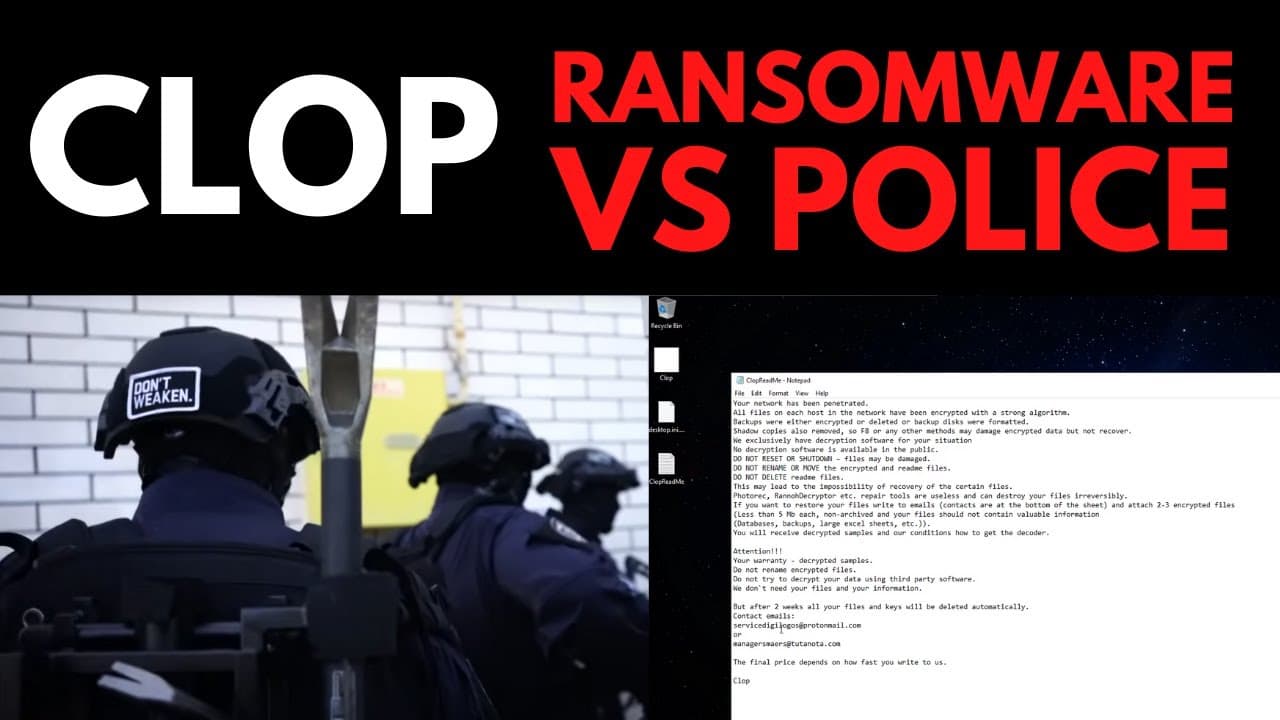
Clop ransomware, with a history dating back to 2019, has recently reemerged, posing a significant threat to police and government databases. This analysis provides insights into its behavior, encryption techniques, and detection challenges.
Transcript
hello and welcome to the pc security channel today we'll be taking a look at clop ransomware an interesting case study in ransomware versus police of course we're going to take a look at the sample in a vm run it and show you what it does and some of the key indicators that you need to look out for and there are a couple of interesting things about... Read More
Key Insights
- 🧑🤝🧑 Clop ransomware has a history dating back to 2019 but recently reemerged, highlighting the persistent nature of ransomware threats.
- 👮 The seizure of the ransomware operators' infrastructure by the police demonstrates the impact of law enforcement efforts in combating cybercriminals.
- 🎵 The customer-focused approach of the ransomware operators, evident in the detailed ransom note, showcases their understanding of victim psychology and negotiation tactics.
- ⛔ Limiting CPU usage to 13% enables the ransomware to operate silently, increasing the chances of successful data encryption without detection.
- ❓ The obfuscation techniques used by Clop ransomware, such as packing and encryption, pose challenges for traditional antivirus detection methods.
- 🥹 Threats like Clop ransomware can have severe consequences, potentially compromising sensitive data held by law enforcement agencies and governments.
- 👊 Ransomware attacks underscore the importance of robust cybersecurity measures to prevent and mitigate such incidents.
Install to Summarize YouTube Videos and Get Transcripts
Explore YouTube Video Summarizer or Get YouTube Transcript Extractor
Questions & Answers
Q: How did the police track down the creators of Clop ransomware?
The police managed to track down the creators of Clop ransomware in Ukraine in 2021, seizing their infrastructure and assets, including money and high-end cars.
Q: What data may have been compromised when Clop ransomware hacked the government's infrastructure?
The breached infrastructure managed police databases, potentially exposing sensitive information such as lists of suspects, crime records, and vulnerable individuals.
Q: Why does Clop ransomware limit CPU usage to 13%?
By limiting CPU usage, the ransomware can operate discreetly in the background without raising suspicion or causing noticeable performance issues for users.
Q: How do the ransomware operators guide victims in the decryption process?
The ransom note provides detailed instructions, warns against using third-party decryption tools, and even advises on the valuation and selection of files to be decrypted.
Summary & Key Takeaways
-
Clop ransomware originated in 2019 but has resurfaced recently, targeting police and government databases.
-
The ransomware limits CPU usage to 13% to avoid suspicion and allows for data encryption without alerting users.
-
The ransom note provides detailed instructions and FAQs, indicating a customer-focused approach by the ransomware operators.
Read in Other Languages (beta)
Share This Summary 📚
Summarize YouTube Videos and Get Video Transcripts with 1-Click
Try YouTube Summary with ChatGPT & Claude or YouTube Transcript Generator
Explore More Summaries from The PC Security Channel 📚



Summarize YouTube Videos and Get Video Transcripts with 1-Click
Try YouTube Summary with ChatGPT & Claude or YouTube Transcript Generator