The Entire History of Ancient Japan
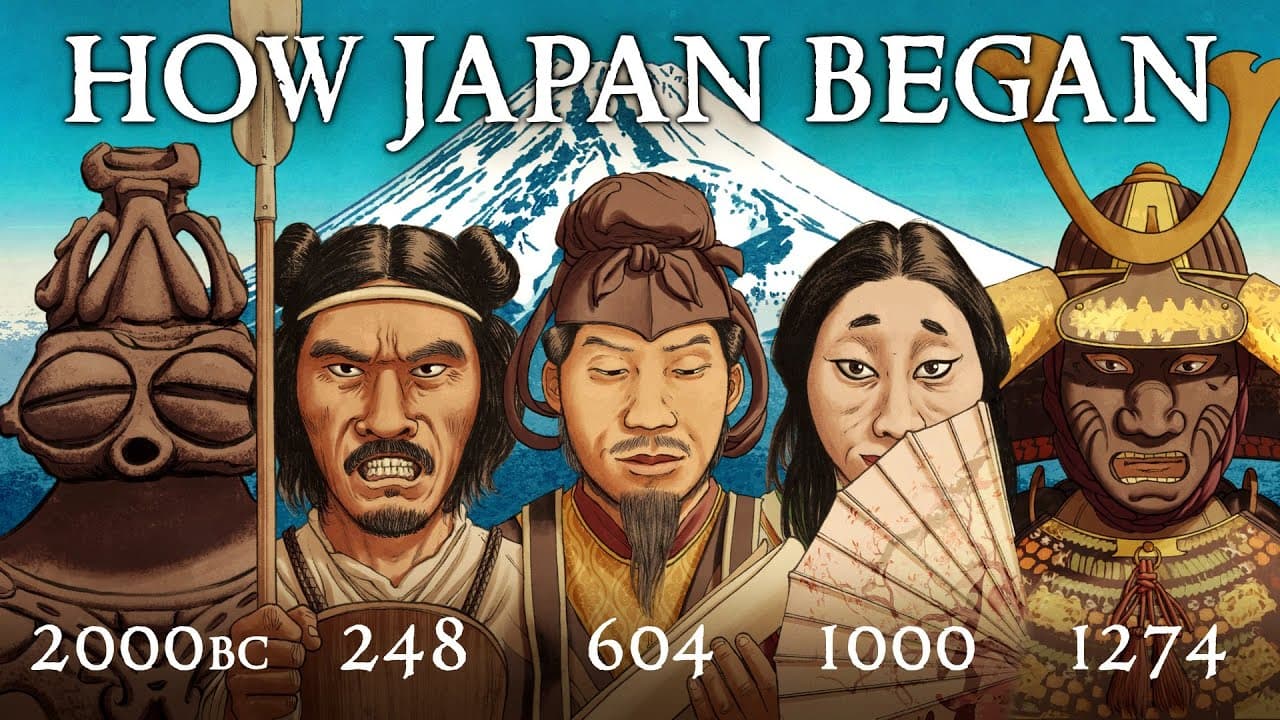
TL;DR
The Mongol Empire attempted to invade Japan in the 13th century, leading to several battles and periods of conflict with the Japanese samurai. Despite initial successes, the Mongols eventually faced defeat due to a combination of Japanese resilience, natural disasters, and military strategies.
Transcript
Five Mongol envoys knelt on the beach at Kamakura and stretched out their necks. Their time had come, and a clear target for the executioner’s sword would at least ensure it was painless. They gazed out over the deep blue of the Pacific Ocean, waves lapping slowly. How they wished their last sight could have been an Ocean of grass swaying softly in... Read More
Key Insights
- 🇲🇳 The Mongol invasions of Japan in the 13th century were ambitious attempts to expand the Mongol Empire, but they ultimately faced defeat due to various factors.
- 👹 The resilience and strategic skills of the Japanese samurai played a crucial role in their successful defense against the Mongols.
- 🥺 Natural disasters, particularly typhoons, played a significant role in the defeat of the Mongols, leading to the popularization of the term "Divine Winds" or "Kamikaze" to describe these destructive storms.
Install to Summarize YouTube Videos and Get Transcripts
Explore YouTube Video Summarizer or Get YouTube Transcript Extractor
Questions & Answers
Q: Why did the Mongols want to invade Japan?
The Mongols, under the rule of Kublai Khan, sought to expand their empire and establish dominance over neighboring territories. Japan was seen as a potential conquest due to its strategic location and resources.
Q: How did the Japanese samurai respond to the Mongol invasions?
The samurai, led by Shogun Hojo Tokimune, fought bravely against the Mongols, using their skills in warfare and strategic planning to defend their homeland. They employed defensive measures such as building walls, increasing troop numbers, and redesigning weapons to counter the new threat.
Q: What role did natural disasters play in the Mongol invasions?
Natural disasters, particularly typhoons, played a significant role in the defeat of the Mongols. They were caught in typhoons during both invasion attempts, resulting in the destruction of many ships and the loss of soldiers. These disasters became known as the "Divine Winds" or "Kamikaze," a term later used during World War II.
Q: How did the Mongol invasions impact Japan?
The Mongol invasions had a lasting impact on Japan. They led to changes in military training and defense strategies, with a greater emphasis on coastal defense and naval capabilities. The invasions also influenced cultural attitudes towards foreign powers and helped foster a sense of national identity among the Japanese people.
Key Insights:
- The Mongol invasions of Japan in the 13th century were ambitious attempts to expand the Mongol Empire, but they ultimately faced defeat due to various factors.
- The resilience and strategic skills of the Japanese samurai played a crucial role in their successful defense against the Mongols.
- Natural disasters, particularly typhoons, played a significant role in the defeat of the Mongols, leading to the popularization of the term "Divine Winds" or "Kamikaze" to describe these destructive storms.
- The Mongol invasions had a lasting impact on Japan, leading to changes in military strategies, defense systems, cultural attitudes, and the formation of a national identity.
Summary & Key Takeaways
-
The Mongols, led by Kublai Khan, attempted to invade Japan in the 13th century with two large fleets and thousands of soldiers.
-
The first invasion in 1274 and the second invasion in 1281 were met with resistance from the Japanese samurai and difficult weather conditions.
-
The Mongols faced defeat due to the resilience of the Japanese, natural disasters like typhoons, and strategic military tactics.
-
The Mongol invasions had a significant impact on Japan, leading to changes in military training, defense strategies, and cultural attitudes towards foreign powers.
Read in Other Languages (beta)
Share This Summary 📚
Summarize YouTube Videos and Get Video Transcripts with 1-Click
Try YouTube Summary with ChatGPT & Claude or YouTube Transcript Generator
Explore More Summaries from Voices of the Past 📚

Summarize YouTube Videos and Get Video Transcripts with 1-Click
Try YouTube Summary with ChatGPT & Claude or YouTube Transcript Generator