How The World's Largest Paper Company Makes 1/3 of Cardboard Boxes In America | World Wide Waste
TL;DR
Cardboard, also known as corrugated packaging, is made from trees, and while it is highly recyclable, the demand for new cardboard boxes necessitates the cutting down of trees. The sustainability of the process depends on responsible forest management and recycling efforts.
Transcript
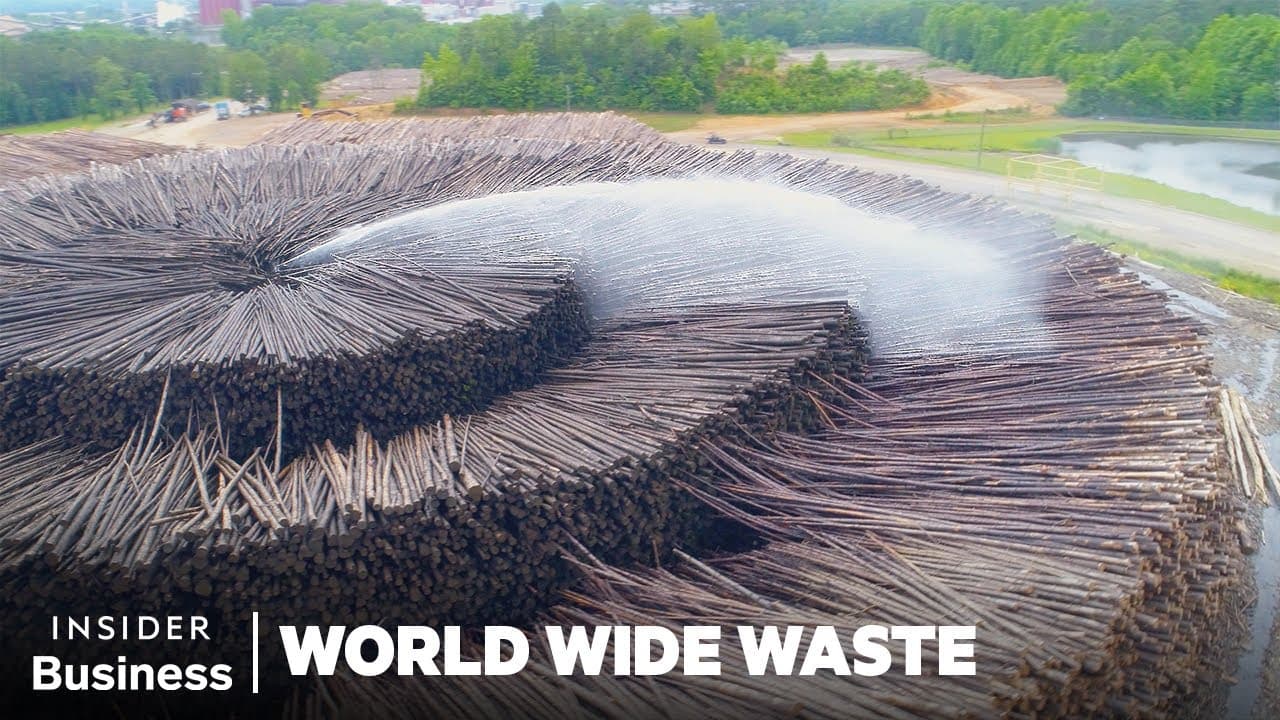
this massive pile of pine trees will be turned into cardboard Packaging a single box can contain material from thousands of trees and pass through the hands of hundreds of workers they're like it's just a box I say no it ain't a lot a lot goes into it you've used a cardboard box in the US today there's a one in three chance that International Paper... Read More
Key Insights
- 🌍 Cardboard, or corrugated packaging, is an essential material used in various industries and is often made by the world's largest paper company, International Paper.
- 🫵 Tree harvesting for cardboard production is part of a cycle that includes replanting and maintaining forests, viewed as an investment for sustainable growth.
- 😑 The cardboard production process involves debarking, chipping, pulping, cleaning, and pressing, utilizing steam and chemicals.
- ♻️ Recycling used cardboard is crucial for conservation, as it saves trees, energy, and water, with the majority of Americans having access to curbside recycling programs.
- 🪡 The sustainability of the cardboard industry depends on responsible forest management, certification programs, and efforts to balance industry needs with forest conservation.
- 🌲 Natural forests are more beneficial in terms of carbon storage and biodiversity compared to tree plantations used for cardboard production.
- ⚖️ Collaboration between industry and conservationists is necessary to strike a balance between cardboard production and forest preservation.
Install to Summarize YouTube Videos and Get Transcripts
Explore YouTube Video Summarizer or Get YouTube Transcript Extractor
Questions & Answers
Q: Why do we still need to cut down trees if cardboard is highly recyclable?
While cardboard recycling is effective, its reuse has a limit due to the degradation of paper fibers after multiple cycles. Therefore, new cardboard production requires fresh fibers, leading to the continued need for tree harvesting.
Q: Is the cardboard industry contributing to deforestation?
The cardboard industry gets more than 90% of its fiber from tree plantations in the southern U.S. These plantations have replaced natural forests, raising concerns about the loss of biodiversity and carbon storage capabilities.
Q: How does recycling cardboard help the environment?
Recycling cardboard saves trees, energy, and water. Each ton of recycled cardboard can save a significant amount of these resources. Additionally, the high recyclability of cardboard is facilitated by widespread access to curbside recycling programs in the U.S.
Q: Can the cardboard industry coexist with forest conservation?
Balancing the cardboard industry's demand with responsible forest management is possible. Creating incentives for landowners to maintain and reforest their lands can help preserve forests while meeting the industry's needs.
Key Insights:
- Cardboard, or corrugated packaging, is an essential material used in various industries and is often made by the world's largest paper company, International Paper.
- Tree harvesting for cardboard production is part of a cycle that includes replanting and maintaining forests, viewed as an investment for sustainable growth.
- The cardboard production process involves debarking, chipping, pulping, cleaning, and pressing, utilizing steam and chemicals.
- Recycling used cardboard is crucial for conservation, as it saves trees, energy, and water, with the majority of Americans having access to curbside recycling programs.
- The sustainability of the cardboard industry depends on responsible forest management, certification programs, and efforts to balance industry needs with forest conservation.
- Natural forests are more beneficial in terms of carbon storage and biodiversity compared to tree plantations used for cardboard production.
- Collaboration between industry and conservationists is necessary to strike a balance between cardboard production and forest preservation.
- Measuring forest area and defining what constitutes a forest can be complex, and there are ongoing discussions about the impact of tree plantations on natural forests.
Summary & Key Takeaways
-
Trees are harvested and replanted to provide material for cardboard production, with the process taking several decades for new crops to mature.
-
Cardboard production involves debarking, chipping, pulping, and cleaning, with steam and chemicals used to separate the fibers.
-
Recycling used cardboard is crucial, and the process involves removing grease and tape before pulping it with water and chemicals. This saves trees, energy, and water.
Read in Other Languages (beta)
Share This Summary 📚
Summarize YouTube Videos and Get Video Transcripts with 1-Click
Try YouTube Summary with ChatGPT & Claude or YouTube Transcript Generator
Explore More Summaries from Business Insider 📚
Summarize YouTube Videos and Get Video Transcripts with 1-Click
Try YouTube Summary with ChatGPT & Claude or YouTube Transcript Generator