How to select between SAST, DAST, IAST, RASP, and AST Abraham Kang
TL;DR
Understand the importance of evaluating scanning tools based on supported languages, frameworks, and architectures, as well as their integration with the CI/CD pipeline and developer/QA buy-in.
Transcript
arcsan is now digital.ai join us at our booth in the virtual expo hall to learn how our app protection white box cryptography and threat analytics solutions can help you stay ahead of the evolving threat landscape welcome today i'm going to help you navigate this alphabet soup of scanning tools sas das isd rasp and asd first i want to start by than... Read More
Key Insights
- 🗯️ Understanding the specific languages, frameworks, and architectures being scanned is crucial for selecting the right scanning tool and optimizing vulnerability detection.
- 😀 Involving developers and QA staff in the tool selection process enhances buy-in, integration, and overall app security.
- 👨💻 Different scanning tools have various strengths and weaknesses, such as false positives, false negatives, language and framework support, and code coverage capabilities.
- 🐛 Integrating scanning tools with the CI/CD pipeline and bug tracking systems streamlines the security process and enables early vulnerability identification and remediation.
- 👨💼 Custom rules and manual code review may be necessary for niche languages, frameworks, or specific business logic vulnerabilities.
- 🥳 Software composition analysis tools focus on identifying vulnerabilities in third-party libraries but may generate false positives without examining usage in the code.
- 🧑🏭 When evaluating scanning tool vendors, consider factors such as true and false positives and negatives, integration capabilities, vulnerability explanations, and business logic support.
Install to Summarize YouTube Videos and Get Transcripts
Explore YouTube Video Summarizer or Get YouTube Transcript Extractor
Questions & Answers
Q: Why is it important to understand the specific languages and frameworks being scanned?
Each scanning tool has different capabilities and limitations when it comes to scanning different languages and frameworks, so understanding compatibility ensures accurate vulnerability detection and prevention.
Q: How does involving developers and QA staff in the selection process benefit app security?
Involving developers and QA staff ensures their buy-in and comfort with the selected tool, leading to higher confidence in the results and greater willingness to address reported vulnerabilities.
Q: What are the advantages and disadvantages of static analysis tools?
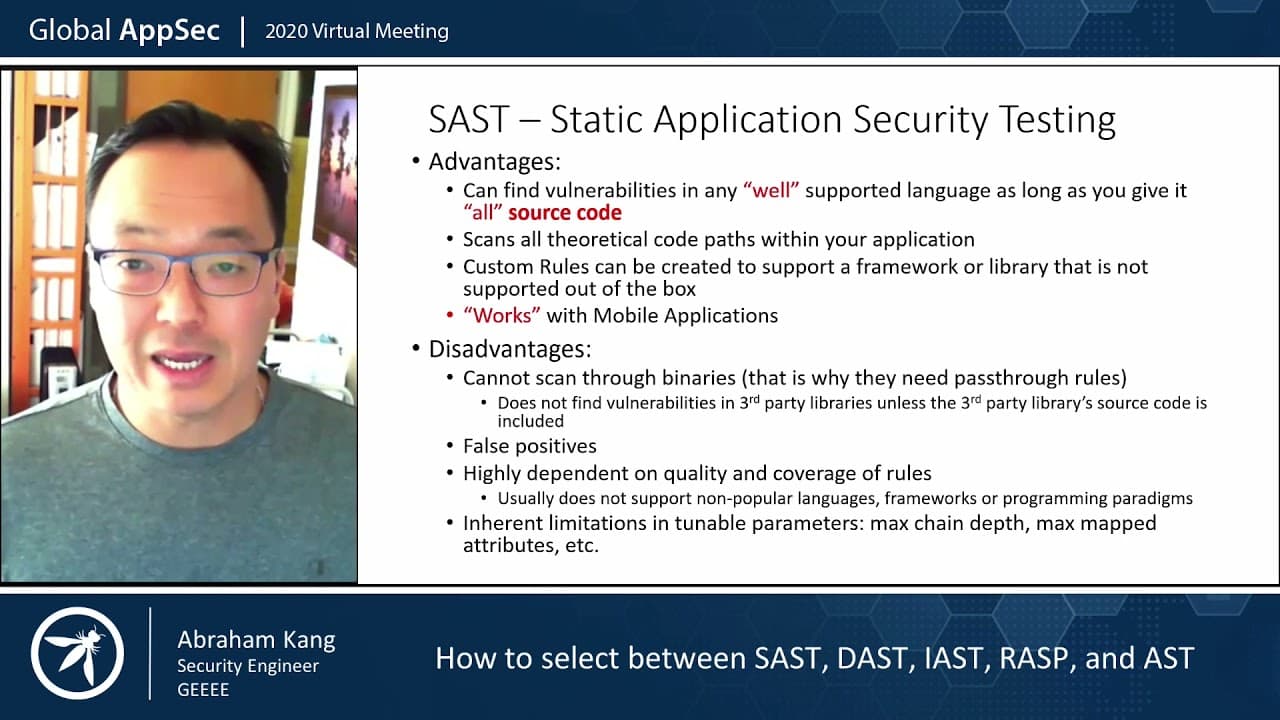
Static analysis tools can provide decent results for supported languages with all the source code, but they struggle with scanning through binaries, have a high number of false positives, and depend heavily on rule coverage and language support.
Q: How does dynamic application security testing (DAST) differ from other scanning tools?
DAST can detect vulnerabilities across the entire server pipeline, making it effective for finding vulnerabilities that other tools may miss. However, it may result in false positives and has limitations in correctly identifying vulnerabilities.
Key Insights:
- Understanding the specific languages, frameworks, and architectures being scanned is crucial for selecting the right scanning tool and optimizing vulnerability detection.
- Involving developers and QA staff in the tool selection process enhances buy-in, integration, and overall app security.
- Different scanning tools have various strengths and weaknesses, such as false positives, false negatives, language and framework support, and code coverage capabilities.
- Integrating scanning tools with the CI/CD pipeline and bug tracking systems streamlines the security process and enables early vulnerability identification and remediation.
- Custom rules and manual code review may be necessary for niche languages, frameworks, or specific business logic vulnerabilities.
- Software composition analysis tools focus on identifying vulnerabilities in third-party libraries but may generate false positives without examining usage in the code.
- When evaluating scanning tool vendors, consider factors such as true and false positives and negatives, integration capabilities, vulnerability explanations, and business logic support.
- Calculating return on investment involves weighing the tool's effectiveness, developer/QA trust, integration capabilities, and standardized handling of business logic vulnerabilities.
Summary & Key Takeaways
-
Evaluating scanning tools requires understanding the specific languages, frameworks, and architectures being scanned, as different tools have varying limitations and capabilities.
-
Consider common characteristics of scanning tools, such as the number of rules, the type of vulnerabilities covered, and the level of language and framework support.
-
Integration with the CI/CD pipeline and involving developers and QA staff in the tool selection process enhances security and ensures efficiency in finding and fixing vulnerabilities.
Read in Other Languages (beta)
Share This Summary 📚
Summarize YouTube Videos and Get Video Transcripts with 1-Click
Try YouTube Summary with ChatGPT & Claude or YouTube Transcript Generator