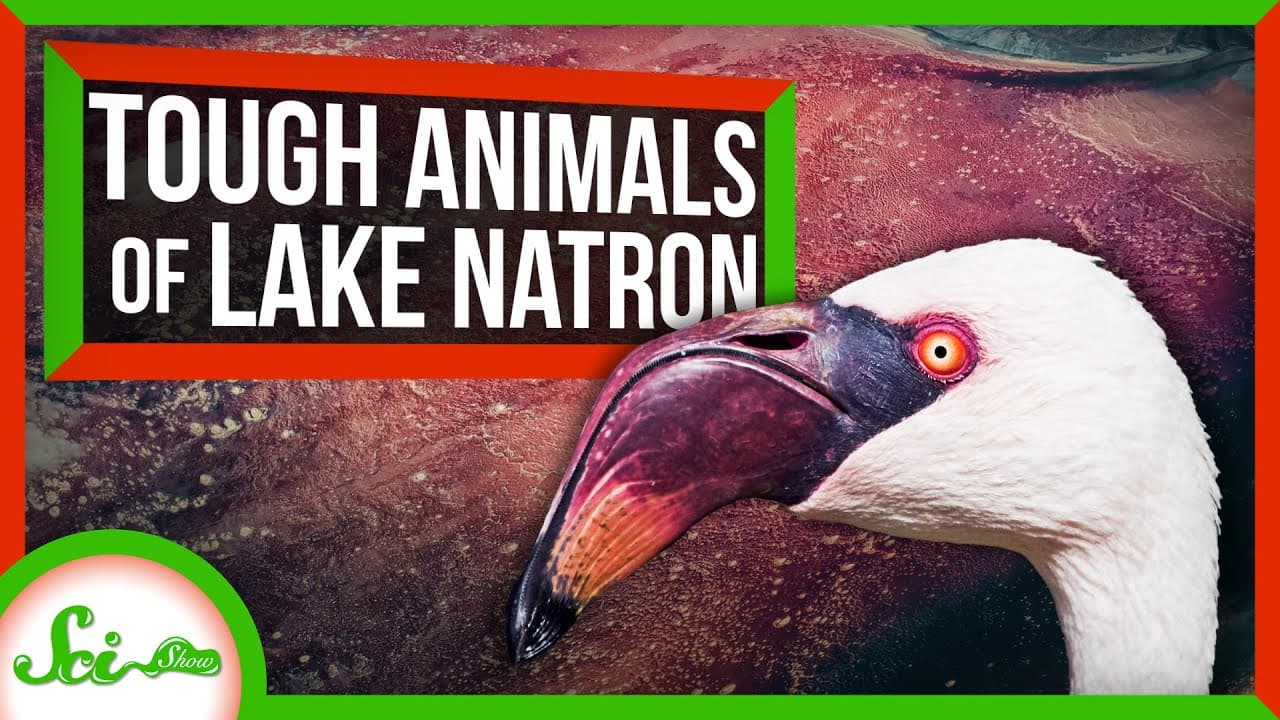
The Unbelievably Tough Animals of Lake Natron
TL;DR
Lake Natron in Tanzania is a highly alkaline lake with extreme temperatures, yet it is home to a diverse ecosystem of red algae, fish called Alcolapia, and Lesser Flamingos, each having evolved unique adaptations to survive in this challenging environment.
Transcript
[♪ INTRO] Tanzania’s Lake Natron isn’t exactly a pleasant place for a swim. The water is alkaline -- sometimes very alkaline. Depending on the conditions, its pH can be higher than 10 -- that’s a thousand times more basic than pure water. Also, it is heated by volcanic geysers. The lake’s temperature has been known to hit sixty (60) degrees Celsius... Read More
Key Insights
- 😪 Lake Natron, an alkaline lake in Tanzania, despite its extreme conditions, supports a diverse ecosystem of red algae, fish, and flamingos.
- 💦 Alcolapia fish have unique adaptations to survive in the toxic alkaline waters, including enzymes to convert ammonia and higher internal pH.
- 💦 Lesser Flamingos have specialized features to thrive in Lake Natron, such as tough skin, tolerance to high temperatures, and the ability to filter out excess minerals from the alkaline water.
- ❄️ The presence of alkaline lakes and the stability of their habitats are crucial for the survival of these specialized species.
- 💨 Human activities such as soda ash mining in alkaline lakes threaten the delicate balance of these ecosystems.
Install to Summarize YouTube Videos and Get Transcripts
Explore YouTube Video Summarizer or Get YouTube Transcript Extractor
Questions & Answers
Q: Why is Lake Natron not suitable for swimming?
Lake Natron has an extremely alkaline pH, which can be more than a thousand times basic than pure water, making it unsuitable for swimming. Moreover, the lake's high temperatures caused by volcanic geysers would also be intolerable for humans.
Q: How do Alcolapia fish survive in such a toxic environment?
Alcolapia fish have evolved an enzyme that allows them to convert toxic ammonia into less harmful urea without using excessive energy. They have also developed a higher internal pH, reducing the need to spend energy protecting their bodies from changes in the alkaline environment.
Q: What adaptations do Lesser Flamingos have for thriving in Lake Natron?
Lesser Flamingos have tough skin on their legs to protect against the caustic water. They can also submerge their heads in hot water and even drink boiling water from geysers, possibly aided by a unique structure in their head that helps them withstand extreme temperatures and supports their feeding style.
Q: Why are alkaline lakes important for flamingos?
Flamingos, specifically Lesser Flamingos, depend on alkaline lakes like Lake Natron for breeding because they can outcompete other birds there. These lakes provide their preferred food source, Arthrospira algae, which also gives flamingos their distinct pink color.
Summary & Key Takeaways
-
Lake Natron is an alkaline lake in Tanzania with pH levels higher than 10 and a temperature that can reach 60 degrees Celsius.
-
Despite its harsh conditions, the lake supports life, including a flourishing community of bright red algae called Arthrospira.
-
Alcolapia, a genus of fish, have evolved enzymes to convert ammonia to urea and higher internal pH to survive in the toxic waters.
-
Lesser Flamingos have tough skin on their legs, can withstand high temperatures, and have adapted to drink alkaline water while feeding on Arthrospira.
Read in Other Languages (beta)
Share This Summary 📚
Summarize YouTube Videos and Get Video Transcripts with 1-Click
Try YouTube Summary with ChatGPT & Claude or YouTube Transcript Generator
Explore More Summaries from SciShow 📚


Summarize YouTube Videos and Get Video Transcripts with 1-Click
Try YouTube Summary with ChatGPT & Claude or YouTube Transcript Generator