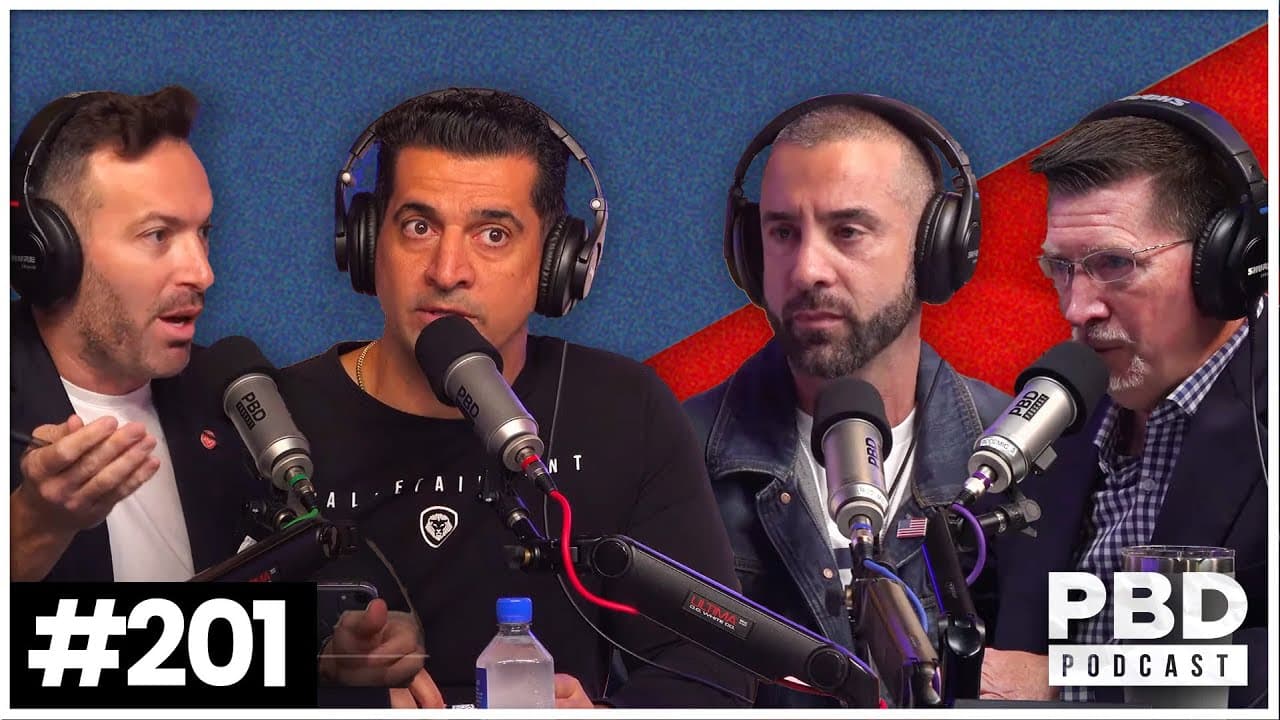
Home Team | PBD Podcast | Ep. 201
TL;DR
The podcast discusses U.S. economic challenges, including inflation, interest rates, and the Fed's policies.
Transcript
that is wild anyway episode number 201 Vinnie just uh taught us something that's going on with vitamin the Instagram account maybe we'll ask you guys for you to test it out as well got a lot of things to talk about yesterday our commander-in-chief of the world president uh Joe Biden gave a uh Speech 26 minutes I don't know if you guys had a chance ... Read More
Key Insights
- ☠️ The Federal Reserve's policies, including interest rate hikes, play a significant role in shaping the housing market and consumer affordability.
- 😮 Rising operational costs are straining small businesses, with many unable to meet basic obligations such as rent.
- 🥺 Job openings in sectors like hospitality suggest a shift toward lower-paying jobs, which implies weak wage growth and may lead to economic instability.
- 🏈 The American public's spending behavior is increasingly cautious, reflecting concerns over inflation and the uncertain economic outlook.
- ❓ The relationship between U.S. and foreign economic policies is critical, as geopolitical tensions can influence domestic market behaviors.
- 😘 The potential for a recession looms due to dwindling purchasing power and increased living costs despite low unemployment rates.
- 😮 Public trust in economic stability appears shaky as many consumers and small business owners feel the pinch of rising expenses.
Install to Summarize YouTube Videos and Get Transcripts
Explore YouTube Video Summarizer or Get YouTube Transcript Extractor
Questions & Answers
Q: What impact do the recent Fed interest rate hikes have on mortgage rates?
The recent Fed interest rate hikes have led to rising mortgage rates, which now hover around 7.8% for borrowers with lower credit scores. This increase means that buyers are facing significantly higher monthly payments, reducing affordability and purchasing power, ultimately impacting the housing market.
Q: How does the rise in small business rent payments reflect economic conditions?
A report highlights that nearly 40% of small businesses fail to pay rent, which indicates financial strain in the sector despite purportedly low unemployment. The simultaneous rise in operational costs and rents suggests that inflation is affecting business viability and could lead to increased closures.
Q: What are the implications of high job openings despite the economic downturn?
High job openings, particularly in low-skill sectors, suggest a disconnect between the job market and economic health. Many available positions are in industries like hospitality and warehousing, which offer lower wages and may not be sustainable, thus raising concerns about wage stagnation and the overall economy.
Q: Why are consumers hesitant to spend on travel and luxury goods?
Consumers seem hesitant to spend on travel and luxury items, as indicated by declining earnings reported by companies like Airbnb. This shift may stem from inflation concerns, leading individuals to conserve cash and prioritize essential spending over discretionary expenditures during challenging economic times.
Summary & Key Takeaways
-
The Federal Reserve's recent interest rate hike affects mortgage rates, significantly reducing purchasing power for average Americans, making housing less affordable.
-
Nearly 40% of small businesses in the U.S. fail to pay rent, highlighting the financial strain amid low unemployment and rising costs.
-
Analysts suggest that changes in the job market and consumer spending patterns could lead to further economic challenges, including a potential recession.
Read in Other Languages (beta)
Share This Summary 📚
Summarize YouTube Videos and Get Video Transcripts with 1-Click
Try YouTube Summary with ChatGPT & Claude or YouTube Transcript Generator