Lev Vygotsky Sociocultural Theory
TL;DR
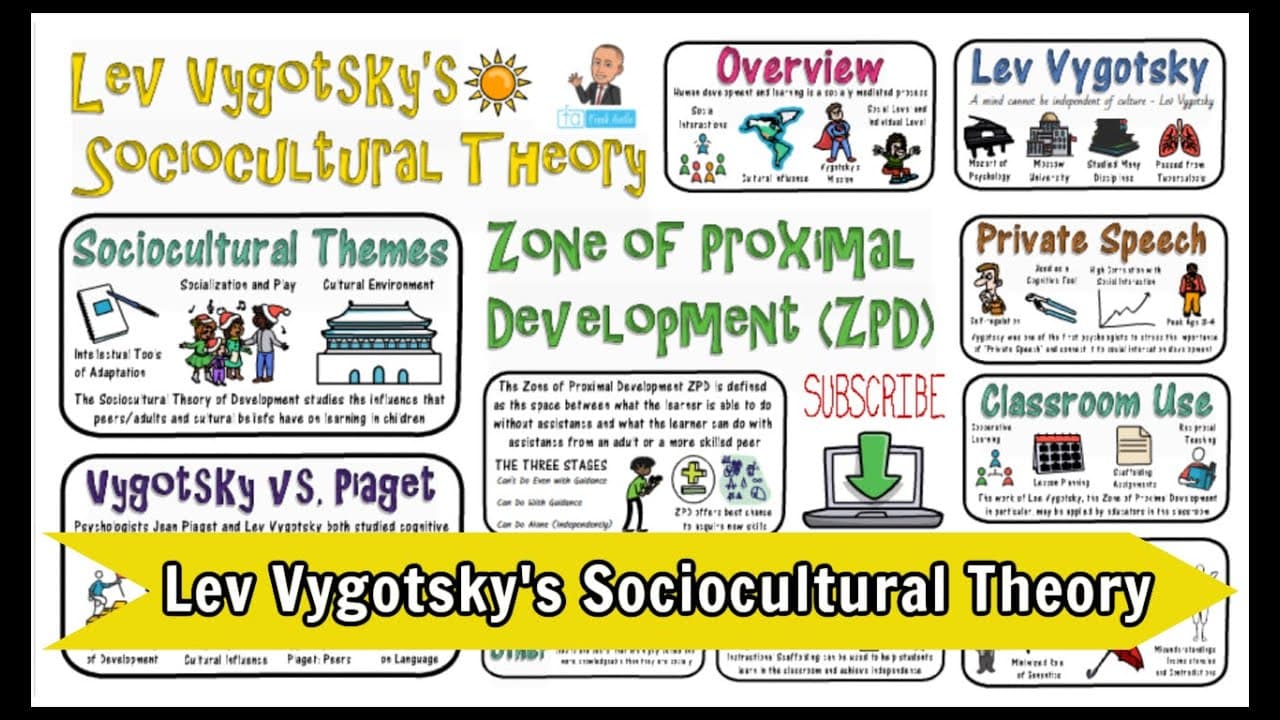
Lev Vygotsky's sociocultural theory emphasizes the role of social interaction and culture in child development and learning, with the zone of proximal development being a key concept.
Transcript
hello and welcome to teachings in education lev vygolsky and the sociocultural theory i am your narrator frank avella and in this presentation you will learn everything you ever needed to know about this topic and the zone of proximal development here we'll take a look at the life of mrs vegolsky and other related topics all information will be bro... Read More
Key Insights
- 👶 Lev Vygotsky's sociocultural theory highlights the importance of social interaction and culture in child development and learning.
- 🤩 The zone of proximal development (ZPD) is a key concept in Vygotsky's theory, representing the space where learning and cognitive development occur with assistance.
- 😯 Private speech serves as a cognitive tool for children, helping them regulate their behaviors and plan their actions.
- 👶 Vygotsky's theory differs from Jean Piaget's theory in terms of the emphasis placed on social interaction, culture, and language in child development.
- 🈸 Classroom applications of Vygotsky's theory include cooperative learning, scaffolding, and reciprocal teaching.
Install to Summarize YouTube Videos and Get Transcripts
Explore YouTube Video Summarizer or Get YouTube Transcript Extractor
Questions & Answers
Q: What was the main emphasis of Lev Vygotsky's sociocultural theory?
Vygotsky's sociocultural theory places significant importance on the role of social interaction and culture in child development and learning. He believed that social interaction within the family and community is the primary means by which children acquire behaviors and enhance cognitive processes relative to their society and closest individuals.
Q: How does the zone of proximal development (ZPD) relate to learning?
The ZPD represents the space between a learner's current abilities and their potential abilities with assistance. According to Vygotsky, learning occurs in the ZPD when a learner receives guidance and support from more knowledgeable others. This zone provides the best opportunity for acquiring new skills and advancing cognitive development.
Q: What is the significance of private speech according to Vygotsky?
Vygotsky emphasized the importance of private speech, which refers to children using self-directed talk to guide their actions and solve problems. He believed that private speech serves as a cognitive tool that helps children overcome obstacles, increase imagination, and enhance self-regulation of behaviors.
Q: How does Vygotsky's theory differ from Jean Piaget's theory of cognitive development?
Vygotsky's sociocultural theory focuses on the influence of social interaction and culture on child development, whereas Piaget's theory primarily emphasizes cognitive constructs and individual development stages. Vygotsky also highlights the role of the more knowledgeable other, while Piaget's theory gives more attention to learning from peers.
Key Insights:
- Lev Vygotsky's sociocultural theory highlights the importance of social interaction and culture in child development and learning.
- The zone of proximal development (ZPD) is a key concept in Vygotsky's theory, representing the space where learning and cognitive development occur with assistance.
- Private speech serves as a cognitive tool for children, helping them regulate their behaviors and plan their actions.
- Vygotsky's theory differs from Jean Piaget's theory in terms of the emphasis placed on social interaction, culture, and language in child development.
- Classroom applications of Vygotsky's theory include cooperative learning, scaffolding, and reciprocal teaching.
- Criticisms of Vygotsky's work include a lack of experimental evidence, limited consideration of cognitive development genetics, and inconsistencies in his theories.
Summary & Key Takeaways
-
Lev Vygotsky believed that human development and learning are socially mediated processes, with social interaction being crucial for children to acquire behaviors and enhance cognitive processes.
-
Vygotsky's work focused on the complex relationship between culture and child development, analyzing the effects of socialization on cognitive development.
-
The zone of proximal development (ZPD) is a central concept in Vygotsky's theory, representing the space between what a learner can do independently and what they can achieve with assistance from an adult or more skilled peer.
Read in Other Languages (beta)
Share This Summary 📚
Summarize YouTube Videos and Get Video Transcripts with 1-Click
Try YouTube Summary with ChatGPT & Claude or YouTube Transcript Generator
Explore More Summaries from Teachings in Education 📚

Summarize YouTube Videos and Get Video Transcripts with 1-Click
Try YouTube Summary with ChatGPT & Claude or YouTube Transcript Generator