When Two Species Mix
TL;DR
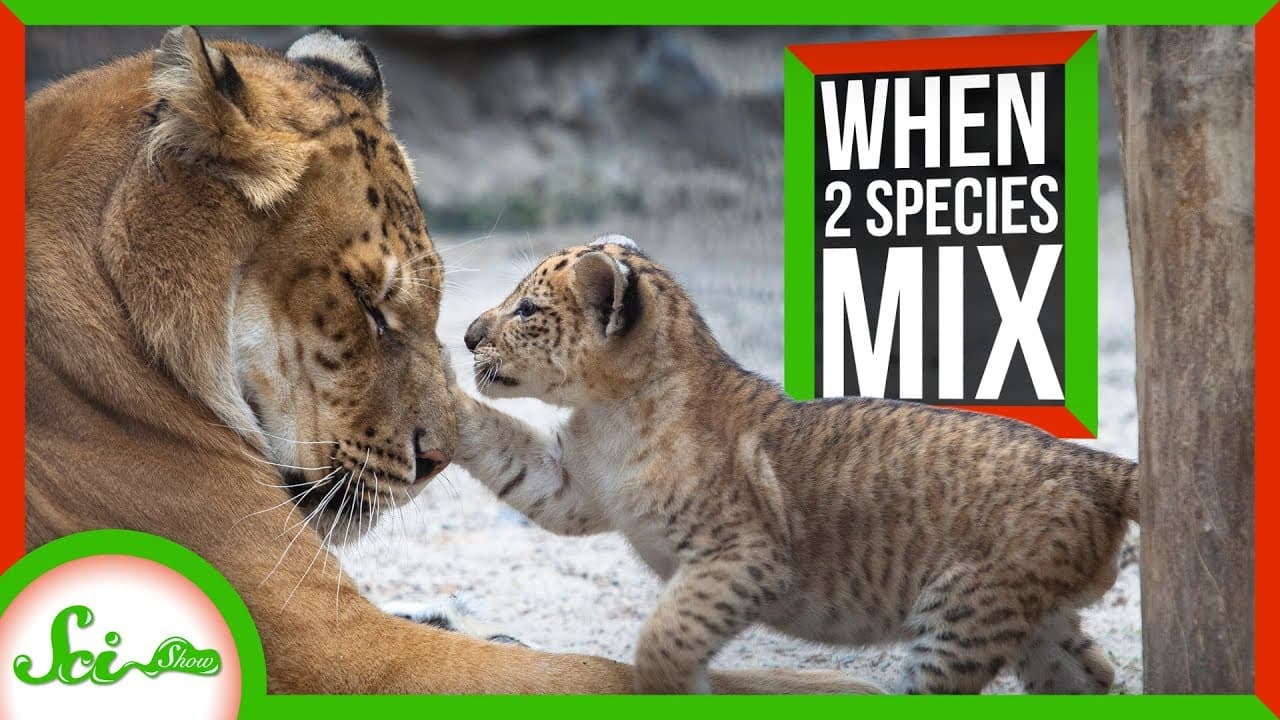
Hybrids, or species resulting from interbreeding, defy traditional definitions of species and play a significant role in the creation of new species.
Transcript
{♫Intro♫} Organizing living things into kingdoms and families and species and stuff helps us understand the vastness of life on Earth. It gives it order. And we tend to think of these categories as fixed, with a species being a species no matter what. Except… life doesn’t have to follow our rules. Species interbreed to produce hybrids more often th... Read More
Key Insights
- ❓ The biological species concept, while useful, is not always applicable to hybridization and speciation.
- 🌱 Hybridization is more common in plants than animals, mainly due to polyploidy.
- 🖐️ Interbreeding and the formation of hybrids play a significant role in the evolution and adaptation of species.
- 🥺 Gene mixing through processes like backcrossing can lead to the formation of new species.
Install to Summarize YouTube Videos and Get Transcripts
Explore YouTube Video Summarizer or Get YouTube Transcript Extractor
Questions & Answers
Q: How does the biological species concept define a species, and how does hybridization challenge that definition?
The biological species concept defines a species as a population of organisms that regularly interbreed and produce fertile offspring. However, hybridization between different species challenges this definition because hybrids can be fertile and give rise to new species.
Q: Why is hybridization more common in plants than animals?
Hybridization is more common in plants because they are more likely to be polyploid, meaning they have extra sets of chromosomes. This can occur when the parent species accidentally duplicates its DNA, leading to the formation of new species through interbreeding.
Q: How has hybridization contributed to the creation of new wheat species?
The domestication of wild wheat by humans led to interbreeding between wild and domestic strains. Over time, this gene flow resulted in the creation of new hybrid wheat species, such as durum wheat, which is used for making pasta.
Q: How does backcrossing contribute to the formation of new hybrid species?
Backcrossing occurs when a hybrid mates with one of the parent species and produces fertile offspring. This process, known as introgression, leads to the mixing of genes and can result in the formation of a new species over generations.
Summary & Key Takeaways
-
The biological species concept defines species as populations that regularly interbreed and produce fertile offspring, but interbreeding and the creation of hybrids is more common than previously thought.
-
Hybridization is a driving force for speciation, especially in plants, where natural hybridization occurs in 25% of plant species and 10% of animal species.
-
Polyploid individuals, with extra sets of chromosomes, can only mate with other polyploids, leading to the formation of new species.
Read in Other Languages (beta)
Share This Summary 📚
Summarize YouTube Videos and Get Video Transcripts with 1-Click
Try YouTube Summary with ChatGPT & Claude or YouTube Transcript Generator
Explore More Summaries from SciShow 📚


Summarize YouTube Videos and Get Video Transcripts with 1-Click
Try YouTube Summary with ChatGPT & Claude or YouTube Transcript Generator