This Is Not A Bug
TL;DR
The term "bug" is commonly used to refer to insects, but scientifically, bugs are a specific subgroup of insects known as Hemiptera.
Transcript
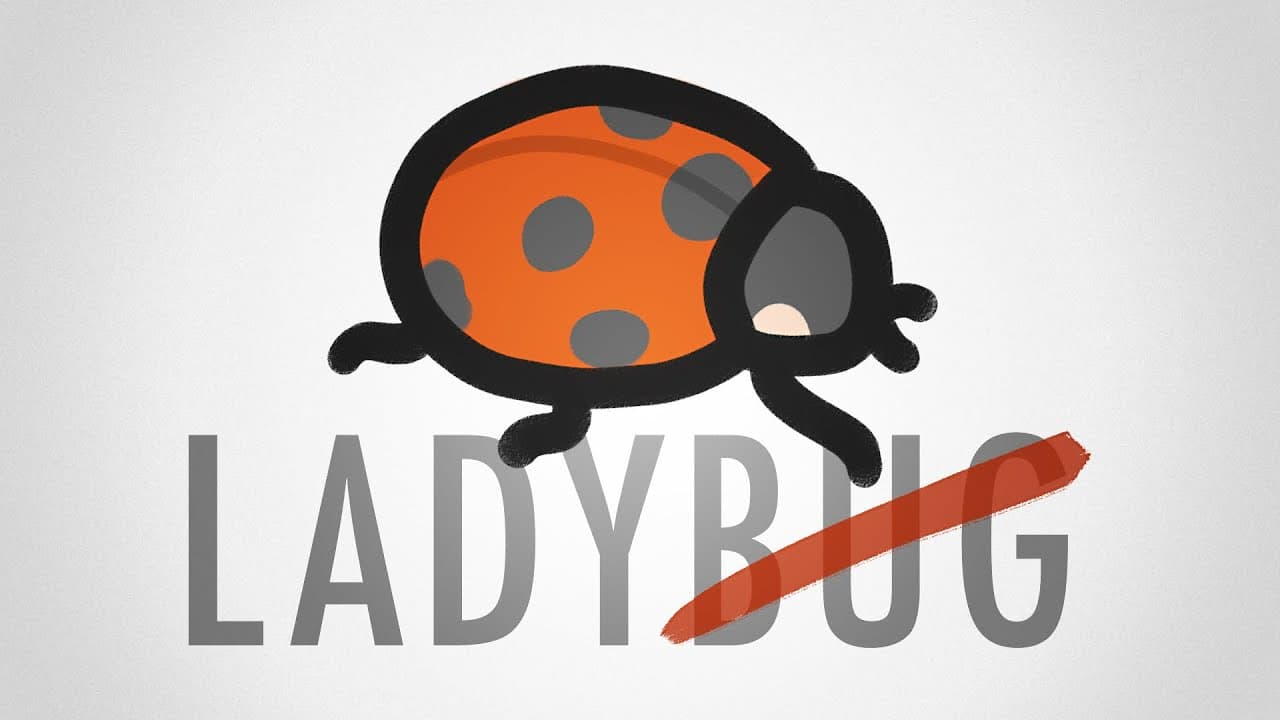
I've got a bug problem. Every time I'm making a video about a small creepy crawly critter – like this ladybug – a big part of me wants to call it a bug. I mean, it feels like a bug. But there's also a small part of me that knows that it's not technically a bug in the scientific sense. What’s up with this disconnect, and why does it bug me... Read More
Key Insights
- 🤙 Bugs are a specific order of insects called Hemiptera, consisting of around 80,000 species.
- 🐛 The term "bug" has expanded beyond its scientific definition due to popular usage.
- 🐞 Other creatures like beetles and isopods are often mistakenly referred to as bugs.
- 🐛 The confusion stems from the historical usage of the word "bug" to describe various mysterious or creepy things.
- 🐛 Carl Linnaeus initially grouped bed bugs and similar insects as bugs, leading to further confusion in the classification.
- 🦾 The word "bug" is widely used in different contexts, including mechanical glitches and illnesses.
- 😒 Entomologists may reluctantly use the term "bug" when communicating with non-scientists for better understanding.
Install to Summarize YouTube Videos and Get Transcripts
Explore YouTube Video Summarizer or Get YouTube Transcript Extractor
Questions & Answers
Q: What is the scientific definition of a bug?
Bugs, scientifically known as Hemiptera, are a specific subgroup of insects characterized by their straw-like beaks used for feeding.
Q: Are all insects bugs?
No, bugs are a subset of the larger insect classification. Insects consist of various orders, with bugs being just one of them.
Q: Why is the term "bug" used so broadly to describe different creatures?
The term "bug" has expanded its meaning over time, branching out from its scientific definition. It now encompasses various creepy crawly critters and even non-living things like mechanical glitches.
Q: Do entomologists use the term "bug" in their scientific work?
Entomologists often use the term "insect" to maintain accuracy in their scientific research. However, when communicating with non-scientists, they may use the word "bug" as it is more commonly understood.
Summary & Key Takeaways
-
Creepy crawly creatures are often referred to as bugs, but this term specifically applies to insects in the order Hemiptera.
-
True bugs are distinguished by their straw-shaped beaks and their ability to dissolve and slurp their food.
-
The confusion arises because the term "bug" is widely used to describe various insects and other creatures.
Read in Other Languages (beta)
Share This Summary 📚
Summarize YouTube Videos and Get Video Transcripts with 1-Click
Try YouTube Summary with ChatGPT & Claude or YouTube Transcript Generator
Explore More Summaries from MinuteEarth 📚



Summarize YouTube Videos and Get Video Transcripts with 1-Click
Try YouTube Summary with ChatGPT & Claude or YouTube Transcript Generator