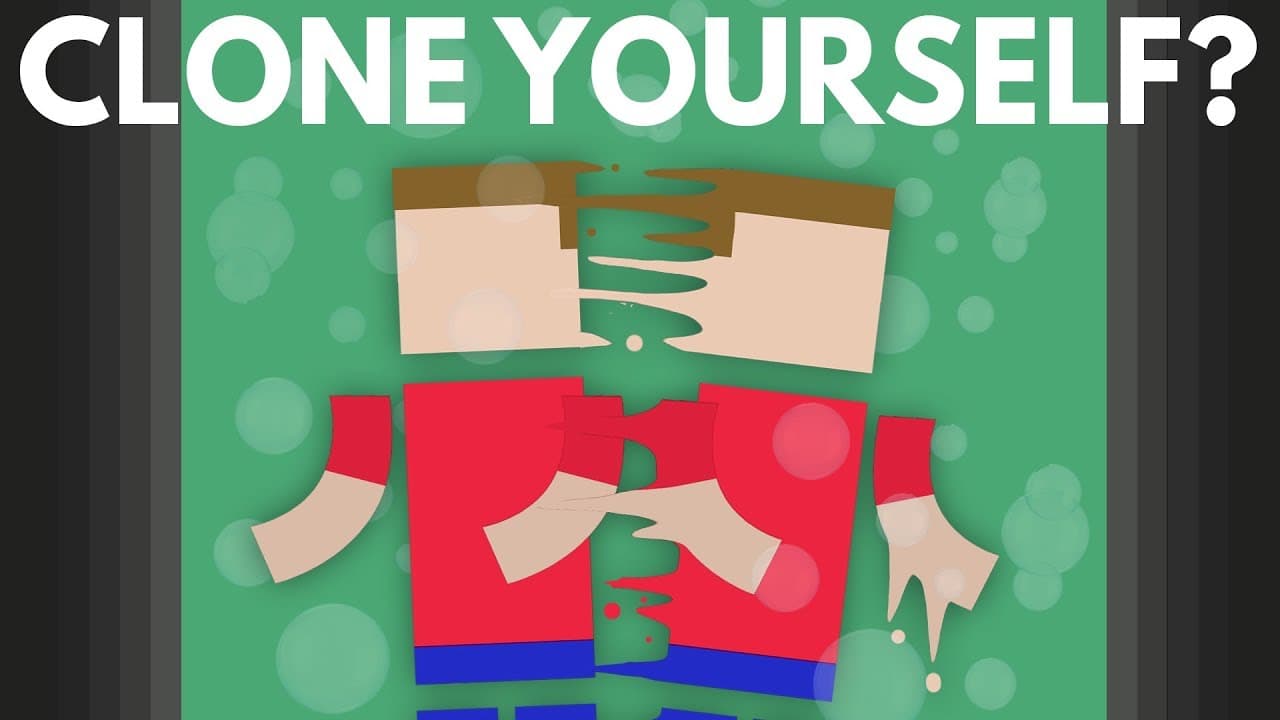
What Would REALLY Happen If You Cloned Yourself?
TL;DR
Cloning involves creating genetically identical copies of living organisms, with potential ethical and biological challenges.
Transcript
Hey there! Welcome to Life Noggin! If you didn’t already know, Ronbus is my best friend. He’s great, he's really good and soccer for some reason even though he's never played, and I want more friends just like him... Exactly like him. It’s easy to clone in my world. My animator can just copy and paste, and voila, I’ve got 20 best friends. I am gonn... Read More
Key Insights
- 🫒 Cloning involves creating genetically identical copies of living organisms.
- 🤠 Successful cloning has been achieved in animals like sheep, cows, monkeys, and more.
- 🎁 Human cloning presents ethical dilemmas and technical challenges.
- 🧑🏭 Genetic factors, environmental influences, and experiences shape differences in cloned organisms.
- 🧑⚕️ Cloned animals often exhibit health issues and premature aging.
- 😀 Cloning technology continues to advance but still faces hurdles in human application.
- ❓ Ethical considerations around individuality and identity complicate discussions on human cloning.
Install to Summarize YouTube Videos and Get Transcripts
Explore YouTube Video Summarizer or Get YouTube Transcript Extractor
Questions & Answers
Q: What is cloning and how does it work?
Cloning is the process of creating genetically identical copies of living organisms. It involves replicating DNA or generating a complete genetic copy through techniques like Somatic Cell Nuclear Transfer.
Q: Can humans be cloned like animals?
While scientists have cloned animals successfully, cloning humans raises ethical and technical challenges. The success rates for cloning primates have been low, and there are still biological issues to overcome.
Q: Will a cloned human be exactly like the original?
A clone may not necessarily resemble the original due to factors like gene expression, fetal environment, and experiences shaping personality and health. Cloned animals often exhibit defects and health issues.
Q: What are the challenges and implications of human cloning?
Human cloning raises ethical concerns, including questions of individuality, identity, and the potential risks of health issues in cloned individuals. Overcoming biological obstacles remains a significant challenge.
Summary & Key Takeaways
-
Cloning is the process of producing genetically identical organisms, from replicating DNA to creating complete genetic copies.
-
Scientists have successfully cloned animals like Dolly the Sheep, cows, horses, cats, dogs, and recently, monkeys.
-
The process involves Somatic Cell Nuclear Transfer, where the nucleus of a somatic cell is inserted into an egg, implanted into a surrogate.
Read in Other Languages (beta)
Share This Summary 📚
Summarize YouTube Videos and Get Video Transcripts with 1-Click
Try YouTube Summary with ChatGPT & Claude or YouTube Transcript Generator
Explore More Summaries from Life Noggin 📚

Summarize YouTube Videos and Get Video Transcripts with 1-Click
Try YouTube Summary with ChatGPT & Claude or YouTube Transcript Generator