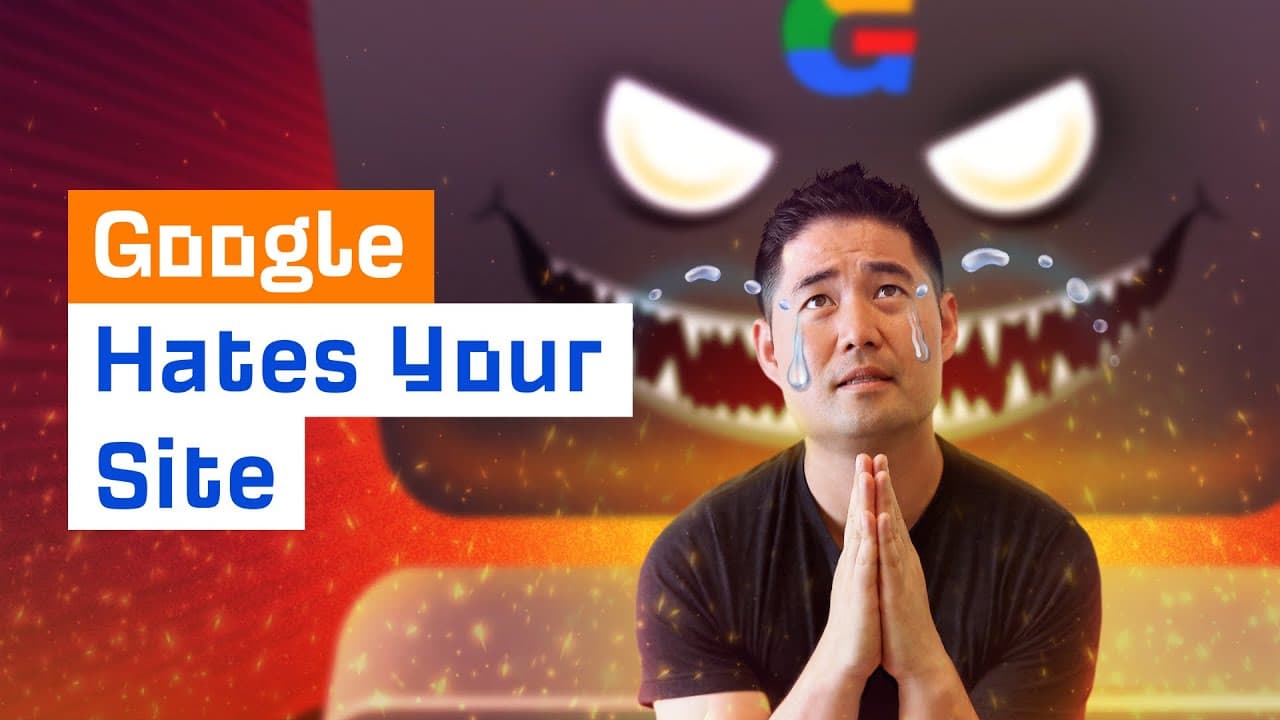
Why Isn't My Website Ranking High on Google?
TL;DR
If your pages aren't ranking high on Google, it's likely due to issues with eligibility, content, or links. Eligibility might be affected by noindex tags or penalties, content issues arise from not matching search intent, and link authority issues occur when competitors have stronger backlinks. Addressing these can improve your rankings.
Transcript
If your pages aren't ranking high in Google, it's not because Google hates your website. It's most likely because your page doesn't deserve a top-ranking result. Now, there's lots of reasons why that might be the case. And it'll usually come down to an eligibility, content, or links issue. Or sometimes it'll be a combination of two or three of thes... Read More
Key Insights
- Eligibility issues can prevent pages from ranking if they are set as noindex or have penalties.
- Content must match search intent to rank; analyze top-ranking pages to understand intent.
- Fresh content is crucial for certain queries; outdated content can hinder rankings.
- Thorough content covers all vital points but doesn't equate to longer content.
- Use tools like Ahrefs to find subtopics and improve content comprehensiveness.
- Link authority is a major ranking factor; compare your backlinks with competitors'.
- Compete against sites with similar link authority and topical relevance.
- Internal linking and site structure can also impact rankings; optimize these for better results.
Install to Summarize YouTube Videos and Get Transcripts
Explore YouTube Video Summarizer or Get YouTube Transcript Extractor
Questions & Answers
Q: How to check if my page is eligible to rank on Google?
To check eligibility, ensure your page is not set to noindex and is not blocked in the robots.txt file. Verify that there are no manual actions or penalties against your site. Also, consider the age of your page, as newer pages may take time to rank.
Q: What is search intent and why is it important?
Search intent is the reason behind a user's query. It's crucial because Google aims to provide the best results that match the searcher's intent. To rank well, your content must align with the dominant search intent, which can be determined by analyzing top-ranking pages for your target query.
Q: How can I improve my content to match search intent?
To improve content, analyze top-ranking pages to understand what users are looking for. Ensure your content addresses the same intent, whether it's informational, commercial, or navigational. Update your content regularly to maintain relevance, especially for topics where freshness is key.
Q: Why is link authority important for ranking?
Link authority is important because backlinks are a major ranking signal for Google. They indicate the credibility and relevance of your page. Higher-quality backlinks from authoritative sites can significantly boost your page's authority and improve its ranking potential.
Q: What tools can help identify content gaps?
Tools like Ahrefs Content Gap tool and Keywords Explorer can help identify content gaps. These tools analyze top-ranking pages to find subtopics and related terms that your content may be missing, allowing you to enhance its comprehensiveness and relevance.
Q: How do I assess my competitors' link authority?
Use tools like Ahrefs SERP Checker to evaluate competitors' link authority. Look at metrics such as the number of referring domains and URL ratings. Compare these with your page to determine if you need to build more or better-quality links to compete effectively.
Q: What are some other factors that affect rankings besides content and links?
Besides content and links, factors such as site structure, internal linking, and user experience signals can affect rankings. Improving these aspects can enhance your site's overall SEO performance and contribute to better rankings.
Q: What should I do if I can't figure out why my page isn't ranking?
If you can't determine why your page isn't ranking, consider joining an SEO community for feedback and insights. Use data to make educated guesses, optimize based on these insights, and track progress. Reassess and adjust your strategy as needed, understanding that SEO often involves trial and error.
Summary & Key Takeaways
-
Eligibility issues can block your page from ranking, such as using noindex tags or facing penalties. Ensure your page is eligible to be indexed by Google to improve ranking chances.
-
Content issues often stem from not aligning with search intent. Analyze top-ranking pages to understand what users are searching for and ensure your content matches this intent.
-
Link authority plays a significant role in rankings. Evaluate your backlinks against competitors and build quality links to strengthen your page's authority.
Read in Other Languages (beta)
Share This Summary 📚
Summarize YouTube Videos and Get Video Transcripts with 1-Click
Try YouTube Summary with ChatGPT & Claude or YouTube Transcript Generator
Explore More Summaries from Ahrefs 📚





Summarize YouTube Videos and Get Video Transcripts with 1-Click
Try YouTube Summary with ChatGPT & Claude or YouTube Transcript Generator