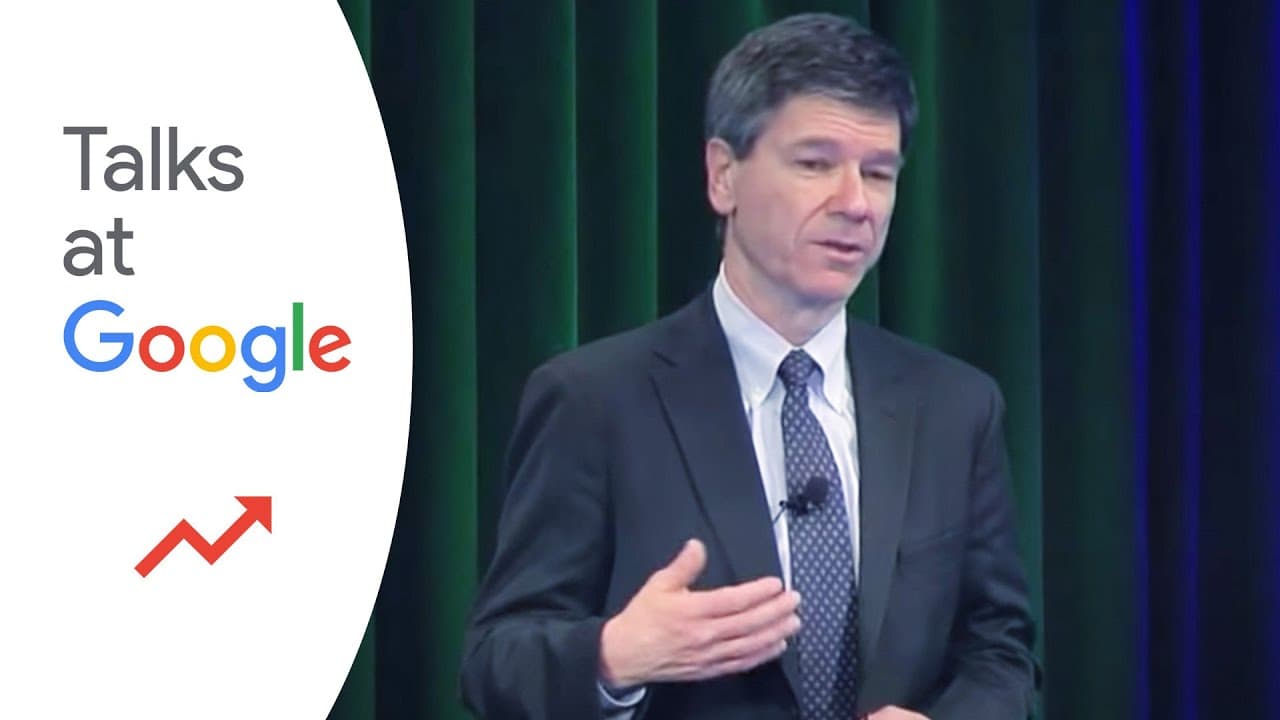
The Price of Civilization | Jeffrey Sachs | Talks at Google
TL;DR
Jeffrey Sachs, author of "The Price of Civilization" discusses the current state of the U.S. economy and society, highlighting the increasing inequality and poverty faced by the majority of Americans, and the lack of effective government response.
Transcript
Female Presenter: Thanks everyone for coming. So Jeffrey Sachs is the director of the Earth Institute and professor of sustainable development and health policy and management at Columbia University. He's also a special advisor to UN secretary general, Ban Ki-moon-- on the Millennium Development Goals, designed to reduce extreme poverty, disease... Read More
Key Insights
- 🥺 The U.S. economy is facing a financial, budget, and moral crisis, leading to widespread public discontent.
- ❓ The deregulation of financial markets and globalization, combined with the digital revolution, have contributed to the current economic challenges in the U.S.
- ☠️ The Reagan era policies, including cuts in top tax rates and public services, have led to increasing income inequality, stagnating middle-income households, and rising poverty rates.
- ✋ Other high-income countries have responded to globalization and technological change by increasing tax collections and investing in education, social support, and infrastructure, resulting in more inclusive societies.
- 🚕 To address the current challenges, the U.S. should consider raising tax rates, implementing a wealth tax, ending deferral privileges for offshore profits, and enforcing tax laws.
Install to Summarize YouTube Videos and Get Transcripts
Explore YouTube Video Summarizer or Get YouTube Transcript Extractor
Questions & Answers
Q: Why has the U.S. economy experienced increasing inequality and poverty?
The combination of deregulation, globalization, and the digital revolution has led to a widening wealth gap and economic challenges for the majority of Americans.
Q: What is the impact of the Reagan era policies on the U.S. economy?
Reagan's policies, including cuts in top tax rates and slashing public services, have contributed to rising income inequality, stagnating middle-income households, and increasing poverty in the country.
Q: How have other high-income countries responded to globalization and technological change?
Unlike the U.S., countries like Sweden, Denmark, and Germany have increased tax collections and invested in education, social support, and infrastructure, resulting in higher social mobility, lower income inequality, and more inclusive societies.
Q: How can the U.S. address the current economic and social challenges?
Jeffrey Sachs suggests raising tax rates, implementing a wealth tax, ending deferral privileges for offshore profits, and enforcing tax laws to generate additional government revenue. He also emphasizes the need for a strong social movement and political platform to bring about change.
Summary & Key Takeaways
-
The U.S. economy, despite having successful companies like Google, is facing a financial, budget, and moral crisis, leading to widespread public discontent.
-
The deregulation of the financial markets in the 1980s and 1990s, combined with globalization and the digital revolution, have contributed to the current economic situation in the U.S.
-
The Reagan era initiated deep cuts in top tax rates and public services, leading to rising income inequality, stagnation in middle-income households, and increasing poverty, while the wealthy continue to accumulate vast wealth.
Read in Other Languages (beta)
Share This Summary 📚
Summarize YouTube Videos and Get Video Transcripts with 1-Click
Try YouTube Summary with ChatGPT & Claude or YouTube Transcript Generator
Explore More Summaries from Talks at Google 📚

Summarize YouTube Videos and Get Video Transcripts with 1-Click
Try YouTube Summary with ChatGPT & Claude or YouTube Transcript Generator