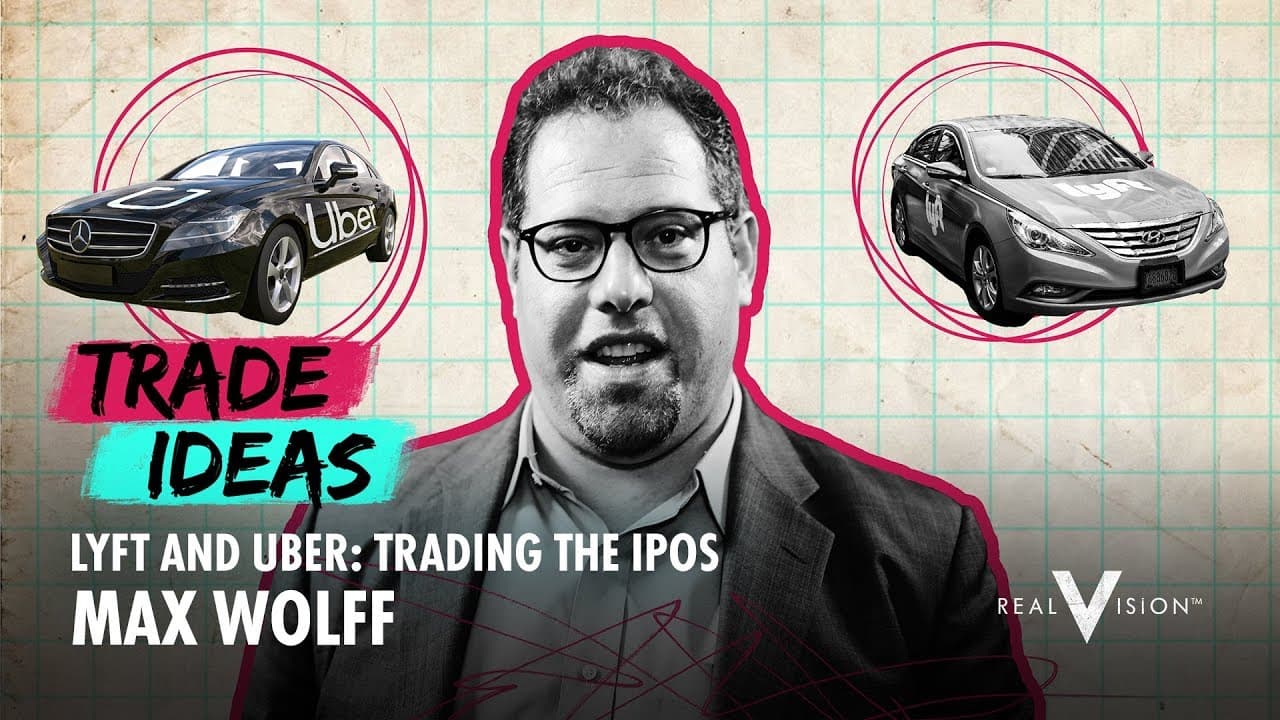
Lyft and Uber: Trading The IPOs (w/ Max Wolff) | Trade Ideas
TL;DR
The IPO market is experiencing an onslaught of companies going public after staying private for longer periods. These companies have high valuations but lack liquidity and transparency, making them risky investments.
Transcript
[music playing] JUSTINE UNDERHILL: Welcome to Real Vision's Trade Ideas. Today we're sitting down with Max Wolff of Multivariate. Great to have you back. MAX WOLFF: Always my pleasure, thank you. JUSTINE UNDERHILL: So today we're going to be talking a little bit about the IPO market, and what a market it's been recently. Could you give us a little ... Read More
Key Insights
- 🔒 Late-stage private companies are staying private longer and becoming larger before going public.
- 🥇 Valuations of private companies have become aggressive, with a premium being placed on illiquid and opaque assets.
- 🧑🏭 The IPO market is influenced by factors such as the window of opportunity, company reputation, and market timing.
- 😀 Tech IPOs, like ridesharing companies, face challenges from established competitors, labor issues, and the potential for regulatory hurdles.
- ✋ Public markets prioritize profitability, making it challenging for non-profitable IPOs to sustain high valuations.
- 🏃 The IPO market provides insights into investor appetite for risk, and caution should be exercised when chasing the hype.
Install to Summarize YouTube Videos and Get Transcripts
Explore YouTube Video Summarizer or Get YouTube Transcript Extractor
Questions & Answers
Q: Why are companies staying private for longer periods before going public?
Companies are staying private longer to avoid the pressures of quarterly reporting and to build their business without the scrutiny of public markets. Additionally, employees who have shares in these companies want liquidity options.
Q: Are IPOs in the tech sector riskier than in other industries?
IPOs in the tech sector can be riskier due to the high valuations, lack of profitability, and competition from established tech giants. It's important for investors to carefully evaluate each company's business model and growth potential.
Q: Why should investors be cautious when buying IPOs?
IPOs often have a hype and pump scenario, with limited information available to investors. Additionally, the first few days of trading are often supported by underwriters, which may create an artificial price surge. Waiting for more information and a potential discounted price after the initial hype is a safer strategy.
Q: Is shorting IPOs a good idea?
Shorting IPOs can be challenging due to restrictions in the first 30 days of trading. However, there may be opportunities to play the rotation between different IPOs. It's important to assess the market sentiment and consider the specific dynamics of each company before shorting.
Summary & Key Takeaways
-
Late-stage private companies have been staying private for longer periods and have become larger in size before going public.
-
The emerging asset class of buying and selling shares in private companies has grown due to increased interest and the desire for liquidity.
-
The valuations of these private companies have become aggressive, with investors willing to pay a premium for illiquid and opaque assets.
Read in Other Languages (beta)
Share This Summary 📚
Summarize YouTube Videos and Get Video Transcripts with 1-Click
Try YouTube Summary with ChatGPT & Claude or YouTube Transcript Generator
Explore More Summaries from Real Vision 📚

Summarize YouTube Videos and Get Video Transcripts with 1-Click
Try YouTube Summary with ChatGPT & Claude or YouTube Transcript Generator