This Material Is Nearly Uncuttable
TL;DR
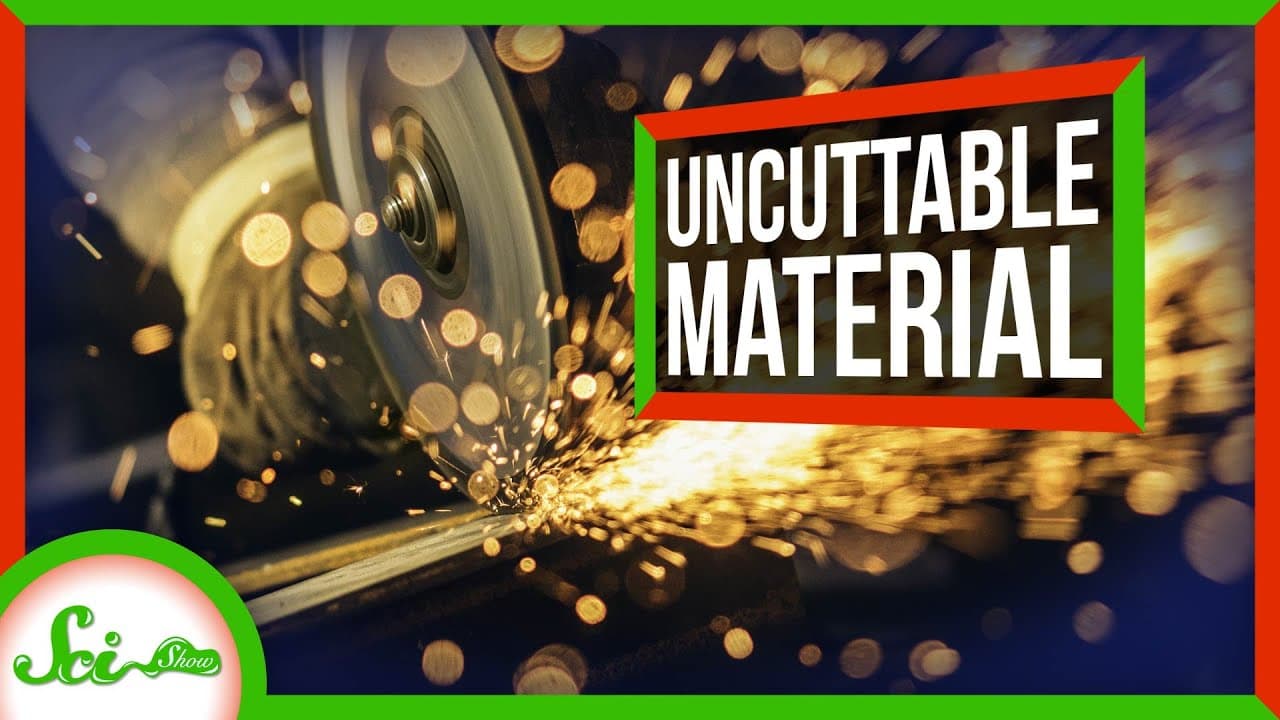
European researchers have developed a composite material called Proteus, which combines aluminum, steel alloy, titanium, and ceramics. It is six times less dense than steel but incredibly difficult to cut through.
Transcript
thanks to brilliant for supporting this episode go to brilliant.org scishow to check out their waves and light course in comic books heroes are often equipped with practically indestructible materials like adamantium or vibranium unfortunately as anyone who's ever had a bike lock snipped with bolt cutters can tell you we have not figured out how to... Read More
Key Insights
- 💦 Composites, such as Proteus, are made up of distinct materials that work together to provide enhanced properties.
- ⌛ Proteus combines aluminum, steel alloy, titanium, and ceramics, resulting in a material that is six times less dense than steel.
- 💇 Proteus possesses small particles of hardened aluminum foam and ceramic spheres that resist cutting tools and create vibrations.
- 💇 Vibrations caused by the ceramic spheres further wear down cutting discs, making Proteus difficult to cut.
- #️⃣ Proteus can be customized by adjusting the foaminess of the aluminum and the size or number of ceramic spheres.
- 💇 The resistance of Proteus to cutting makes it suitable for applications like bike locks, armored doors, and shoe soles.
- 💇 Proteus is not as indestructible as materials found in comic books, but it provides impressive cutting resistance.
Install to Summarize YouTube Videos and Get Transcripts
Explore YouTube Video Summarizer or Get YouTube Transcript Extractor
Questions & Answers
Q: How did the researchers create Proteus?
The researchers mixed powdered aluminum with titanium dihydride, creating tiny pockets within the aluminum by releasing gas when heated. Ceramic spheres were then embedded in the aluminum foam matrix.
Q: What makes Proteus difficult to cut through?
Proteus has small particles of hardened aluminum foam and ceramic spheres that act like rough sandpaper, resisting cutting tools. The vibrations caused by the ceramic spheres further wear down the cutting discs.
Q: Can Proteus be customized for different uses?
Yes, the foaminess of the aluminum and the size or number of ceramic spheres can be adjusted, making Proteus adaptable for various applications like bike locks, armored doors, or impenetrable shoe soles.
Q: How does Proteus compare to materials like adamantium or vibranium?
While not as indestructible as fictional materials like adamantium or vibranium, Proteus provides impressive cutting resistance and has the potential for a wide range of practical uses.
Summary & Key Takeaways
-
European researchers have created a composite material called Proteus that is highly resistant to cutting.
-
Proteus is a unique mixture of aluminum, steel alloy, titanium, and ceramic, and it is six times less dense than steel.
-
The material's resistance to cutting is due to small particles of hardened aluminum foam and ceramic spheres that behave like rough sandpaper and cause vibrations when in contact with cutting tools.
Read in Other Languages (beta)
Share This Summary 📚
Summarize YouTube Videos and Get Video Transcripts with 1-Click
Try YouTube Summary with ChatGPT & Claude or YouTube Transcript Generator
Explore More Summaries from SciShow 📚


Summarize YouTube Videos and Get Video Transcripts with 1-Click
Try YouTube Summary with ChatGPT & Claude or YouTube Transcript Generator