What is vertical farming? And what are the benefits? | Pioneers for Our Planet
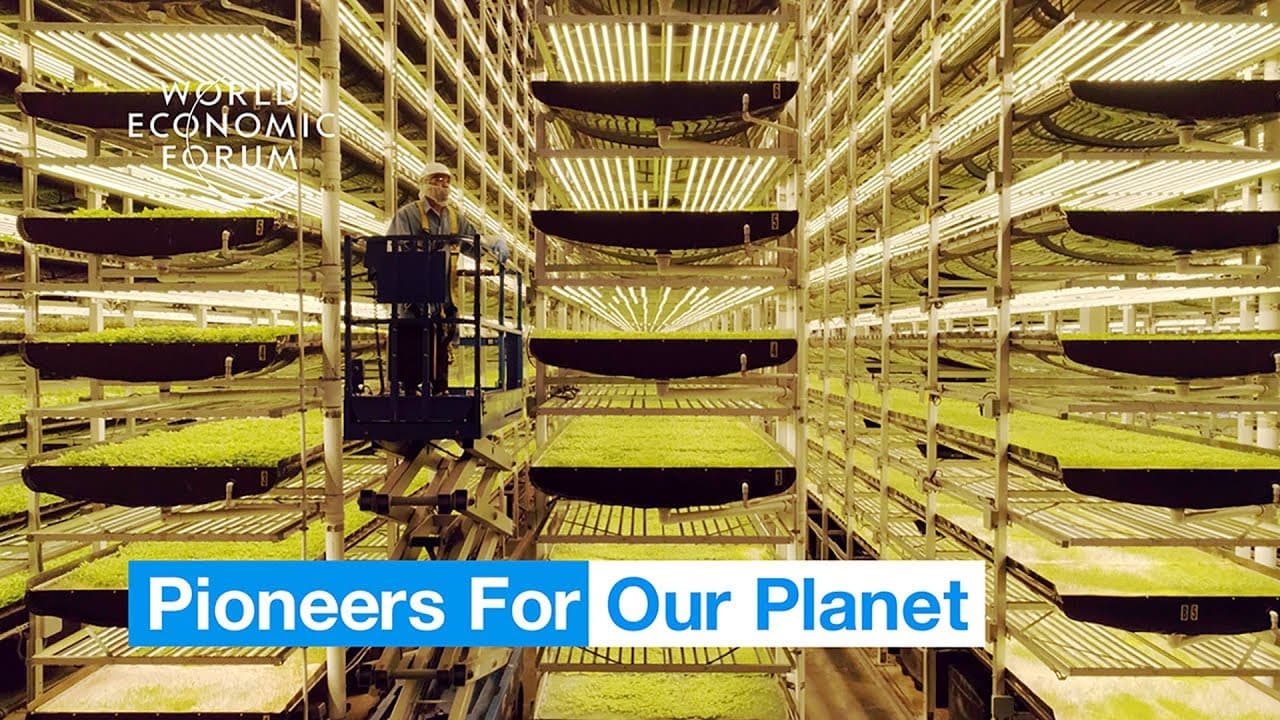
TL;DR
Vertical farming combines farming and technology for high productivity, nutrition, and sustainability in urban environments.
Transcript
on one hand we're a farming company on the other hand we're a technology company we grow a plan typically from seed to harvest and about 15 days versus what's 30 to 45 days in a greenhouse or in a field the benefit of vertical farming is our productivity is extremely high in a small footprint we have all these macro trends that should be a wake-up ... Read More
Key Insights
- ✋ Vertical farming combines technology and agriculture for high productivity.
- ♻️ Utilizing recycled materials promotes sustainability in farming practices.
- 🧑🌾 Controlled environments in vertical farms improve the nutritional value of produce.
- 👳 Vertical farming reduces carbon footprint and brings fresh produce to urban areas.
- 😋 Innovative farming methods like vertical farming can revolutionize the food supply chain.
- 🚦 Circular economy principles in vertical farming minimize waste and maximize resources.
- 😋 Vertical farming offers year-round fresh food availability, promoting food security.
Install to Summarize YouTube Videos and Get Transcripts
Explore YouTube Video Summarizer or Get YouTube Transcript Extractor
Questions & Answers
Q: How does vertical farming differ from traditional farming methods?
Vertical farming involves growing plants in stacked layers, utilizing technology to optimize growing conditions, resulting in faster and more efficient production compared to traditional methods that rely on outdoor fields or greenhouses.
Q: What are the key benefits of using recycled materials in vertical farming?
By using recycled materials, such as cloth made from recycled bottles, vertical farming promotes a circular economy, reduces waste, and maximizes resource efficiency, aligning with sustainability principles.
Q: How does vertical farming impact nutrition in produce?
By controlling environmental conditions, vertical farming can enhance the nutritional value of produce, offering consumers more nutritious food options while improving overall human health.
Q: How does vertical farming address challenges in the food supply chain?
Vertical farming brings fresh produce closer to urban populations, reducing carbon footprint, ensuring food safety, and meeting consumer demand for high-quality, locally sourced products.
Summary & Key Takeaways
-
Vertical farming merges agriculture and technology to produce plants quickly and efficiently.
-
By utilizing recycled materials and circular economy principles, waste is minimized, and resources are maximized.
-
This farming method offers nutritious produce, reduces carbon footprint, and ensures fresh food availability year-round in urban areas.
Read in Other Languages (beta)
Share This Summary 📚
Summarize YouTube Videos and Get Video Transcripts with 1-Click
Try YouTube Summary with ChatGPT & Claude or YouTube Transcript Generator
Explore More Summaries from World Economic Forum 📚

Summarize YouTube Videos and Get Video Transcripts with 1-Click
Try YouTube Summary with ChatGPT & Claude or YouTube Transcript Generator