Empowering Puffins | National Geographic
TL;DR
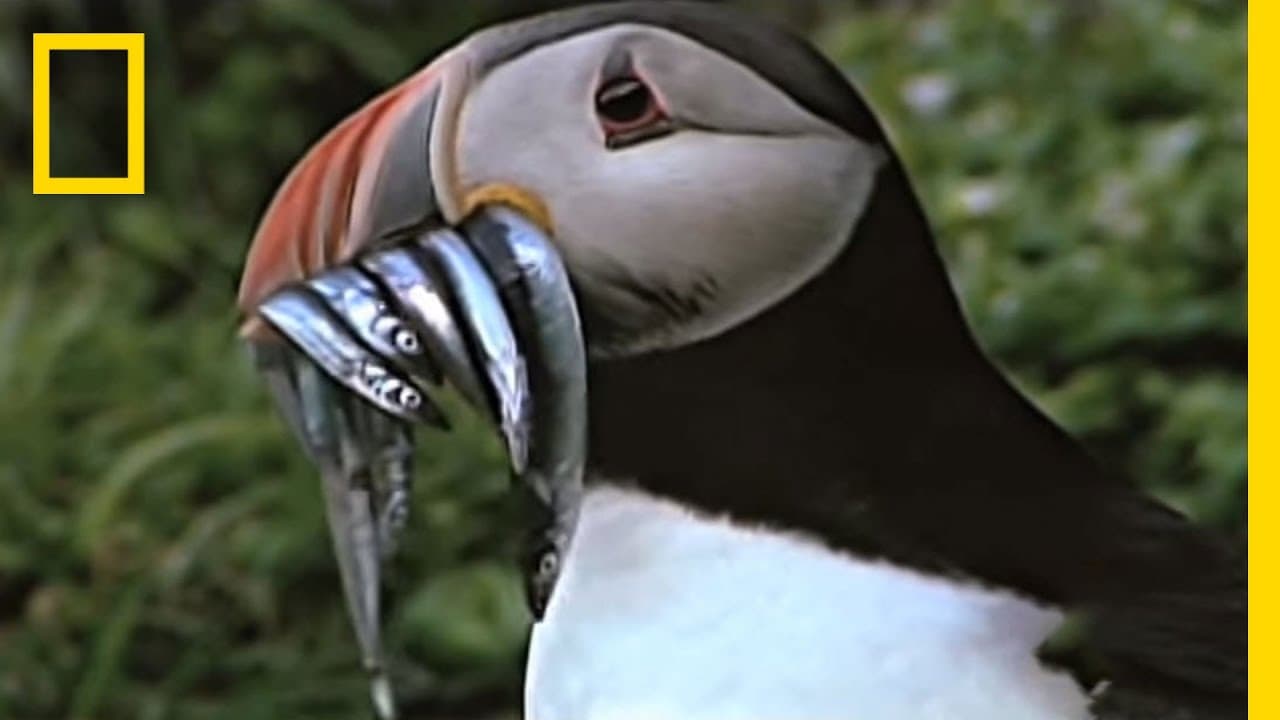
Puffins in Iceland are facing a severe decline due to a lack of their favorite food, the sand lance, possibly linked to climate change.
Transcript
on a sunny summer day Iceland's Westman Islands seemed a vision of serenity but despite the Placid appearance this is in fact one of the most volatile places on earth volcanic activity runs rampant in Iceland earthquakes and eruptions occur frequently and the land above and below the sea is in a constant state of flux the landscape is not the only ... Read More
Key Insights
- 😋 Climate change is impacting the food supply of Atlantic puffins in Iceland.
- 🥪 The decline in the sand lance population is affecting not just puffins but other seabirds in the region.
- 😋 Puffins are failing to breed successfully due to the lack of their preferred food sources.
- 🪡 Conservation efforts may be needed to protect the remaining puffin population.
- 💱 Researchers are monitoring the puffin population and their breeding behaviors to understand the impact of climate change.
- 🌊 Changing ocean temperatures are creating challenges for seabird populations in the Westman Islands.
- 🇦🇽 Puffins are a critical part of the local culture in the Westman Islands.
Install to Summarize YouTube Videos and Get Transcripts
Explore YouTube Video Summarizer or Get YouTube Transcript Extractor
Questions & Answers
Q: What is causing the decline in the Atlantic puffin population in Iceland?
The decline in the puffin population is primarily due to the scarcity of their favorite food, the sand lance, believed to be linked to climate change and changing ocean temperatures.
Q: Why are the puffins failing to breed in the Westman Islands?
Puffins are unable to breed effectively as the sand lance, a critical food source for their chicks, is not readily available in the areas where puffins traditionally nested.
Q: How are researchers observing the impact of climate change on the puffins?
Researchers are monitoring the puffin population's decline and breeding failures, attributing these changes to the loss of the sand lance and the increasing ocean temperatures in Iceland.
Q: What actions are being taken to address the decline in the puffin population?
Conservation efforts are being considered to protect the remaining puffin population and potentially help them find new nesting grounds if their current habitat and food supply continue to decline.
Summary & Key Takeaways
-
The Westman Islands in Iceland, known for their volcanic activity, are experiencing a decline in the Atlantic puffin population.
-
Puffins, important to the local culture, are failing to breed due to the scarce supply of the sand lance, their main food source.
-
Climate change, causing ocean temperature increases, is believed to be impacting the puffins' food supply and breeding success.
Read in Other Languages (beta)
Share This Summary 📚
Summarize YouTube Videos and Get Video Transcripts with 1-Click
Try YouTube Summary with ChatGPT & Claude or YouTube Transcript Generator
Explore More Summaries from National Geographic 📚



Summarize YouTube Videos and Get Video Transcripts with 1-Click
Try YouTube Summary with ChatGPT & Claude or YouTube Transcript Generator