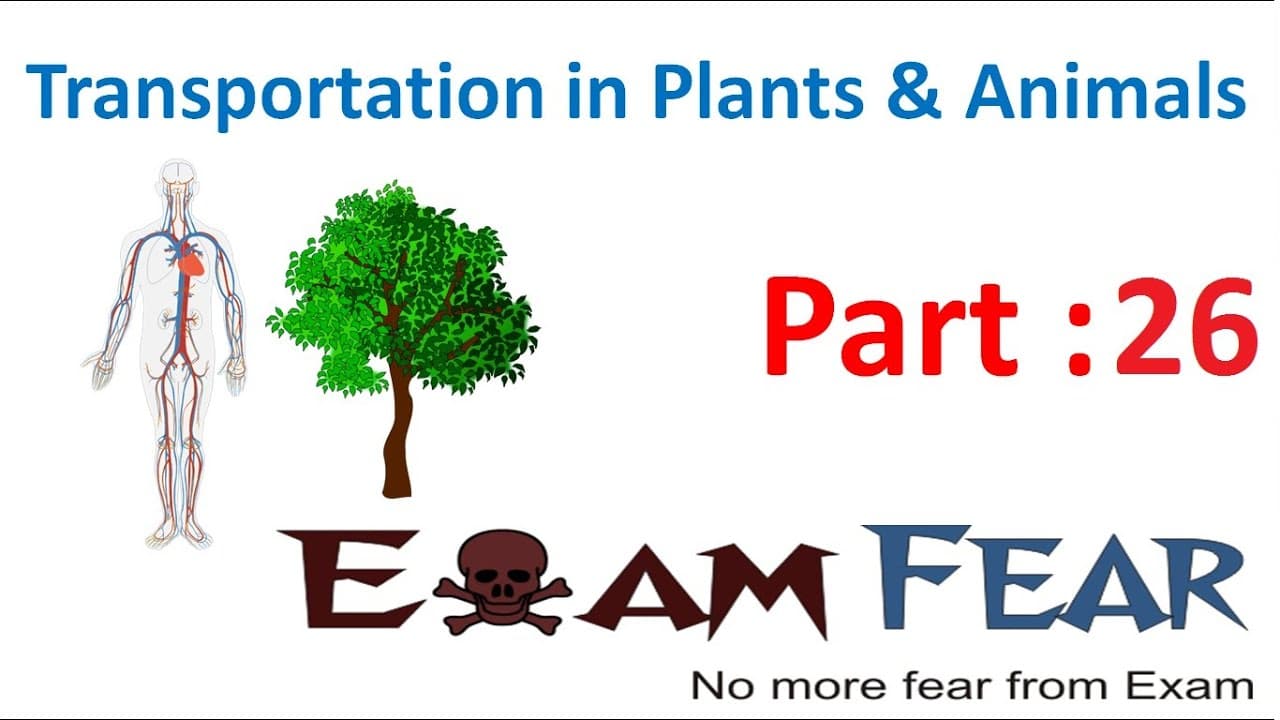
Biology Transport in Plants Animals Part 26 (Questions 2) Class 7 VII
TL;DR
Stomata in leaves act as windows for gaseous exchange and transpiration, while transpiration pull helps transport water and minerals in plants. Blood, composed of plasma, red and white blood cells, and platelets, is necessary for circulation, oxygen transport, waste removal, and immune function.
Transcript
hello friends this video on transport in plants and animals part 26 is brought to you by example.com no more fear from exam question number six water stomata give two functions of stomata so these pores are present on the surface of leaves and what do they do as we all know so if you look at these pores they act like the windows for the leaves so b... Read More
Key Insights
- 👻 Stomata on leaf surfaces act as windows for gaseous exchange and allow for transpiration, aiding in plant function.
- 💦 Transpiration pull is crucial for the upward transport of water and minerals, supporting photosynthesis and nutrient distribution in plants.
- 🛟 Blood serves as a medium for circulation, transporting nutrients, oxygen, and waste products throughout the body.
- 👨🦳 Components of blood, including red and white blood cells, plasma, and platelets, each have specific roles in maintaining bodily functions.
- ❤️ Oxygen transport by hemoglobin in red blood cells and the heart's pumping action ensure blood reaches all parts of the body.
Install to Summarize YouTube Videos and Get Transcripts
Explore YouTube Video Summarizer or Get YouTube Transcript Extractor
Questions & Answers
Q: What are the functions of stomata in leaves?
Stomata allow for gaseous exchange, facilitating the entry of oxygen and the release of carbon dioxide. They also enable transpiration, the loss of water through evaporation.
Q: How does transpiration serve useful functions in plants?
Transpiration creates a transpiration pull, aiding in the transport of water and dissolved minerals in an upward direction. This process provides water for photosynthesis and enables the distribution of nutrients to various plant parts.
Q: What are the components of blood?
Blood consists of plasma, which carries nutrients, hormones, and waste products. It also contains red blood cells that transport oxygen, white blood cells that fight against infections and build the immune system, and platelets that aid in blood clotting.
Q: Why is blood needed by all parts of the body?
Blood acts as a medium for circulation, transporting food, oxygen, and necessary substances to all cells of the body. It also carries waste products away from cells for disposal, helps fight infections, and contributes to overall body strength and defense mechanisms.
Q: What makes blood appear red?
The pigment hemoglobin, present in red blood cells, gives blood its red color. Hemoglobin also has a strong affinity for oxygen, facilitating its transport to various body parts.
Q: What is the function of the heart?
The heart acts as a pump, distributing blood to different parts of the body. It has four chambers - two auricles that receive blood and two ventricles that pump blood to various body tissues.
Q: Why is it necessary to excrete waste products?
Excretion is essential to remove toxic and harmful substances from the body, preventing the buildup of undesirable products. Without excretion, the body's immunity system weakens, making individuals more susceptible to diseases.
Summary & Key Takeaways
-
Stomata in leaves serve as windows for gaseous exchange, allowing for the exchange of oxygen and carbon dioxide, as well as transpiration, the loss of water through evaporation.
-
Transpiration pull, created by the loss of water through leaves, aids in the upward transport of water and dissolved minerals in plants, enabling photosynthesis and nutrient distribution.
-
Blood, consisting of plasma, red blood cells, white blood cells, and platelets, acts as a medium for circulation and performs vital functions such as transporting nutrients, oxygen, and waste, as well as supporting the immune system.
Read in Other Languages (beta)
Share This Summary 📚
Summarize YouTube Videos and Get Video Transcripts with 1-Click
Try YouTube Summary with ChatGPT & Claude or YouTube Transcript Generator
Explore More Summaries from LearnoHub - Class 11, 12 📚

Summarize YouTube Videos and Get Video Transcripts with 1-Click
Try YouTube Summary with ChatGPT & Claude or YouTube Transcript Generator