Architect Breaks Down 200 Years of NYC Mansions | Walking Tour | Architectural Digest
TL;DR
This video explores the history and evolution of New York City mansions, from the colonial era to modern-day, showcasing various architectural styles and design trends.
Transcript
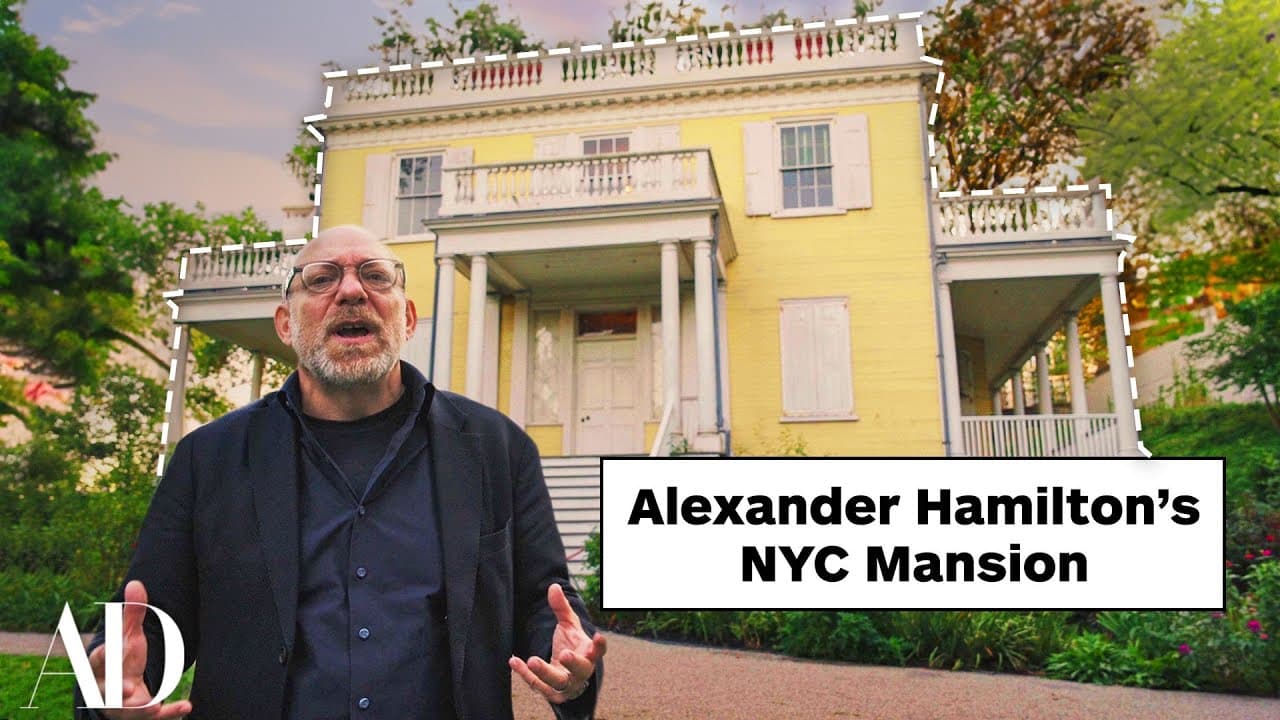
everybody knows about the Gilded Age mansions on Fifth Avenue in New York City but what came before them and how have New York City Mansions evolved since they fell out of fashion I'm Michael Whitner I've been an architect in New York City for over 35 years and today we're going to be doing a walking tour of 250 years of Manhattan mansions so befor... Read More
Key Insights
- 🏙️ Manhattan's mansion evolution showcases the transition from country estates to city fabrics, reflecting changing societal values and architectural trends.
- 🌲 The imitation of stone with wood in the Marus Jell Mansion highlights the desire to project wealth and longevity.
- 💋 The Federalist style marked the shift towards townhouse designs, with rectilinear shapes and the incorporation of modern elements.
- 😑 Architectural styles in mansions, such as Romanesque Revival and Gothic, became expressions of wealth and personal taste in the Gilded Age.
- 👳 Modernist architecture in the Kramer House rejected historical ornamentation, prioritized functionality, and integrated with the surrounding urban context.
- 🥶 Contemporary mansions, like the Spire Mansion, combine modernist simplicity with classical references, creating a blend of old and new.
- 🇳🇨 New York City mansions reflect the evolving socioeconomic landscape and artistic aspirations of wealthy residents throughout history.
Install to Summarize YouTube Videos and Get Transcripts
Explore YouTube Video Summarizer or Get YouTube Transcript Extractor
Questions & Answers
Q: What is the oldest existing mansion in Manhattan?
The Marus Jell Mansion, built in 1765, is the oldest existing mansion in Manhattan. It appears to be made of stone but is actually made of wood, imitating the architectural expression of wealth in Europe.
Q: How did the Federalist style contribute to the evolution of New York City mansions?
The Federalist style, exemplified by Alexander Hamilton's Gracie Mansion, showcased a more stripped-down version of the Georgian style. It marked the emergence of the townhouse style in Manhattan, characterized by rectilinear shapes, flat roofs, and the appearance of stoops and octagonal bays.
Q: What architectural styles influenced the Bal Mansion?
The Bal Mansion, built in the Gilded Age, showcases an amalgamation of architectural styles including Romanesque Revival, Gothic, Flemish, French Chateau, and Renaissance. The result is a magnificent limestone mansion with ornate interiors, modern amenities, and a rejection of traditional mansion locations.
Q: How did modernist architecture redefine New York City mansions?
Modernist architecture, as seen in the Kramer House, prioritized functionality, hygiene, and simplicity. It rejected historical ornamentation and embraced new materials such as steel-framed windows, glass blocks, and stucco. It aimed to maximize natural light, openness, and urban integration while redefining the concept of wealth.
Summary & Key Takeaways
-
The video takes viewers on a walking tour of Manhattan, highlighting the oldest existing mansion, the Marus Jell Mansion, built in 1765, and its imitation of stone with wooden elements.
-
It discusses the Federalist style with the Alexander Hamilton's Gracie Mansion, showcasing the transition from Georgian architecture and the emergence of the townhouse style in Manhattan.
-
The tour also features the Bal Mansion, an extravagant limestone mansion from the Gilded Age, and the Kramer House, representing modernist architecture with its simplicity, functionality, and use of materials.
-
Lastly, the video showcases the Spire Mansion, a contemporary mansion that combines modernist elements with classical references and the use of limestone to create a sense of history.
Read in Other Languages (beta)
Share This Summary 📚
Summarize YouTube Videos and Get Video Transcripts with 1-Click
Try YouTube Summary with ChatGPT & Claude or YouTube Transcript Generator
Explore More Summaries from Architectural Digest 📚





Summarize YouTube Videos and Get Video Transcripts with 1-Click
Try YouTube Summary with ChatGPT & Claude or YouTube Transcript Generator