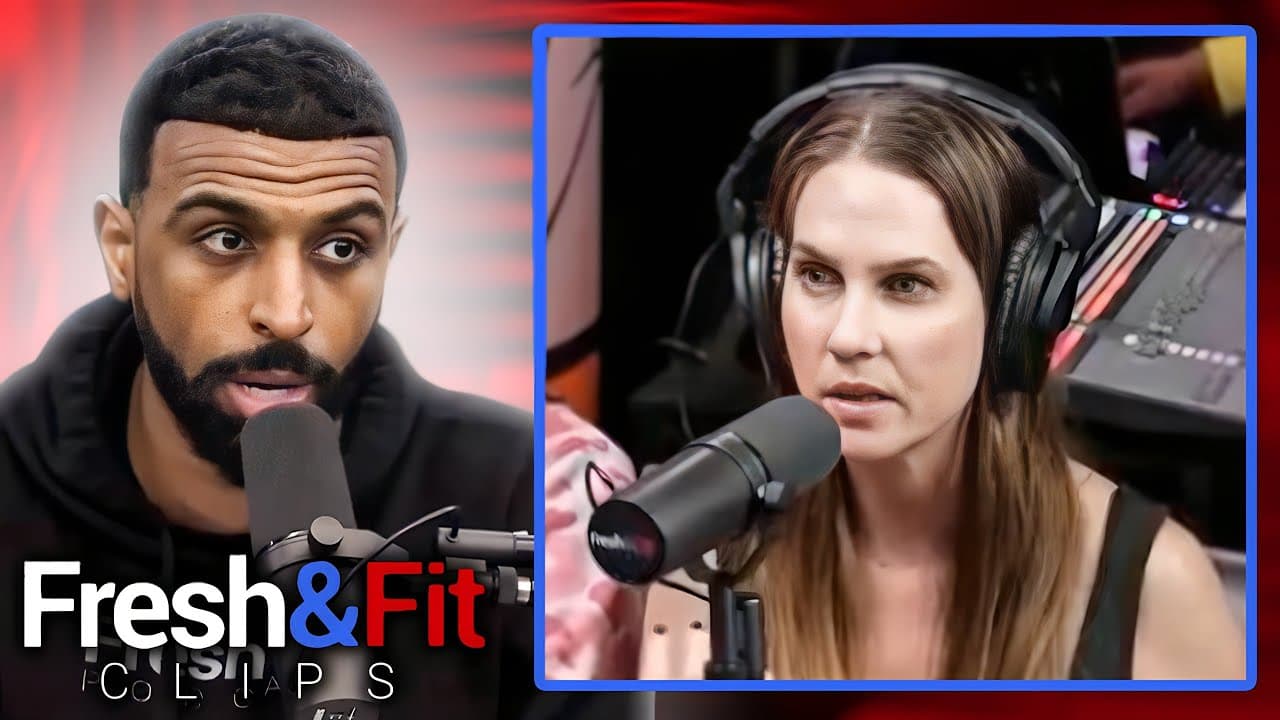
Myron DEBATED Why Their VOTE Will ENDANGER Men!
TL;DR
The conversation critiques female voting behavior lacking political knowledge and its implications on military service.
Transcript
I think you should women can't serve in the military with Selective Service or actually they don't have to serve in the military through selective service so I think with you not having skin in the game you shouldn't be able to put the commander-in chief in who could send us to war but you know what you know what I really is though what I was worri... Read More
Key Insights
- 🧔♀️ There is a prevalent belief among some participants that women tend to vote based on emotional appeal rather than political knowledge.
- 🖤 The lack of military service obligations for women is central to the argument about the fairness of their voting rights concerning national defense.
- 🎓 The discussion emphasizes the importance of political education for all voters, irrespective of gender, suggesting that an informed electorate is crucial for a functioning democracy.
- ❓ Anecdotes from individual experiences illustrate differing approaches to political engagement and highlight biases toward political candidates.
- 🤨 The concept of "skin in the game" raises ethical questions about who deserves the right to vote on issues that have life-and-death implications.
- 🗯️ Women's historical fight for the right to vote brings complexity into discussions about modern electoral responsibilities and privileges.
- 🤢 The dialogue reveals deep-seated gender perceptions and biases influencing political opinions, often complicating the discourse on equality and representation.
Install to Summarize YouTube Videos and Get Transcripts
Explore YouTube Video Summarizer or Get YouTube Transcript Extractor
Questions & Answers
Q: What is the main concern regarding women's voting behavior discussed in the content?
The discussion highlights that many women voters lack comprehensive knowledge of candidates and policies, which leads them to make decisions based purely on personal feelings rather than informed evaluations. This asserts that their voting might be influenced by superficial traits rather than substantive political positions, raising concerns about the implications for democracy.
Q: How does the conversation define "skin in the game" with regard to voting?
"Skin in the game" refers to the concept that only those who are directly impacted by specific policies, such as military draft laws, should have a voice in voting on these matters. The argument suggests that because women do not register for the Selective Service, they lack the same stakes in decisions that could lead to war, raising ethical questions about their voting rights.
Q: What example is used to illustrate the impact of voting on military service?
A specific example from the discussion is brought up involving a Ukrainian woman who has moved to the United States and is asked who she would vote for regarding the ongoing conflict. This scenario highlights the disconnect between those who have to face the consequences of a war and those who might vote from a safe distance, illustrating the argument about who should be able to vote regarding such serious topics.
Q: What implications does the panel suggest could arise from uninformed voting?
The panel implies that uninformed voting can lead to harmful consequences, such as the election of leaders who may make poor decisions regarding military action. If voters do not fully understand the policies or implications of their choices, they risk compromising national security and stability, potentially putting lives at risk due to inadequate consideration of the candidates.
Summary & Key Takeaways
-
The discussion revolves around the claim that women voters often lack in-depth knowledge of the candidates and their policies, leading to uninformed votes based on personal feelings rather than a thorough understanding of political implications.
-
Participants express opinions on women's rights to vote and argue whether those without direct involvement in military service, such as women not subject to the Selective Service, should have a say in warfare-related decisions.
-
The conversation highlights existing biases and contrasts in gender perspectives toward voting, military involvement, and a perceived lack of education among certain demographics, ultimately questioning the fairness of voting rights in the context of military service obligations.
Read in Other Languages (beta)
Share This Summary 📚
Summarize YouTube Videos and Get Video Transcripts with 1-Click
Try YouTube Summary with ChatGPT & Claude or YouTube Transcript Generator
Explore More Summaries from FreshandFit 📚

Summarize YouTube Videos and Get Video Transcripts with 1-Click
Try YouTube Summary with ChatGPT & Claude or YouTube Transcript Generator