English Grammar Preposition (English) Part 2: Simple and Compound Preposition
TL;DR
This video explains the difference between simple and compound prepositions, with examples and definitions.
Transcript
Hello friends this video on preposition part two is brought to you by exam fear.com no more fear from exam okay so now let us talk about types of preposition now broadly prepositions are of three types first we will talk about simple and compound prepositions simple that means something which is actually very simple so prepositions like U let's tak... Read More
Key Insights
- ❓ Prepositions can be categorized into simple and compound prepositions.
- 🔑 Simple prepositions are complete words by themselves, while compound prepositions are formed by adding a prefix to an existing word.
- 😃 Compound prepositions often start with the prefixes "a" or "b e," but there are exceptions.
- 🛟 Compound prepositions serve to convey relationships between nouns or pronouns and other elements in a sentence.
- ❓ Examples of compound prepositions include along, behind, around, below, beyond, without, outside, between, across, and about.
- 💁 Understanding the composition and formation of prepositions helps clarify their usage in sentences.
- 💁 The video content covers prepositions used in both simple and compound forms.
Install to Summarize YouTube Videos and Get Transcripts
Explore YouTube Video Summarizer or Get YouTube Transcript Extractor
Questions & Answers
Q: What are simple prepositions?
Simple prepositions are individual words that convey a relationship between a noun or pronoun and another word in a sentence. Examples include at, by, in, on, to, up, with, through, and of.
Q: How are compound prepositions formed?
Compound prepositions are created by adding a prefix to an existing word, which can be an adjective, noun, or adverb. The prefixes commonly used are a and b e, but there are other variations. Examples of compound prepositions include along, behind, around, below, beyond, without, outside, between, across, and about.
Q: How can you identify compound prepositions in a sentence?
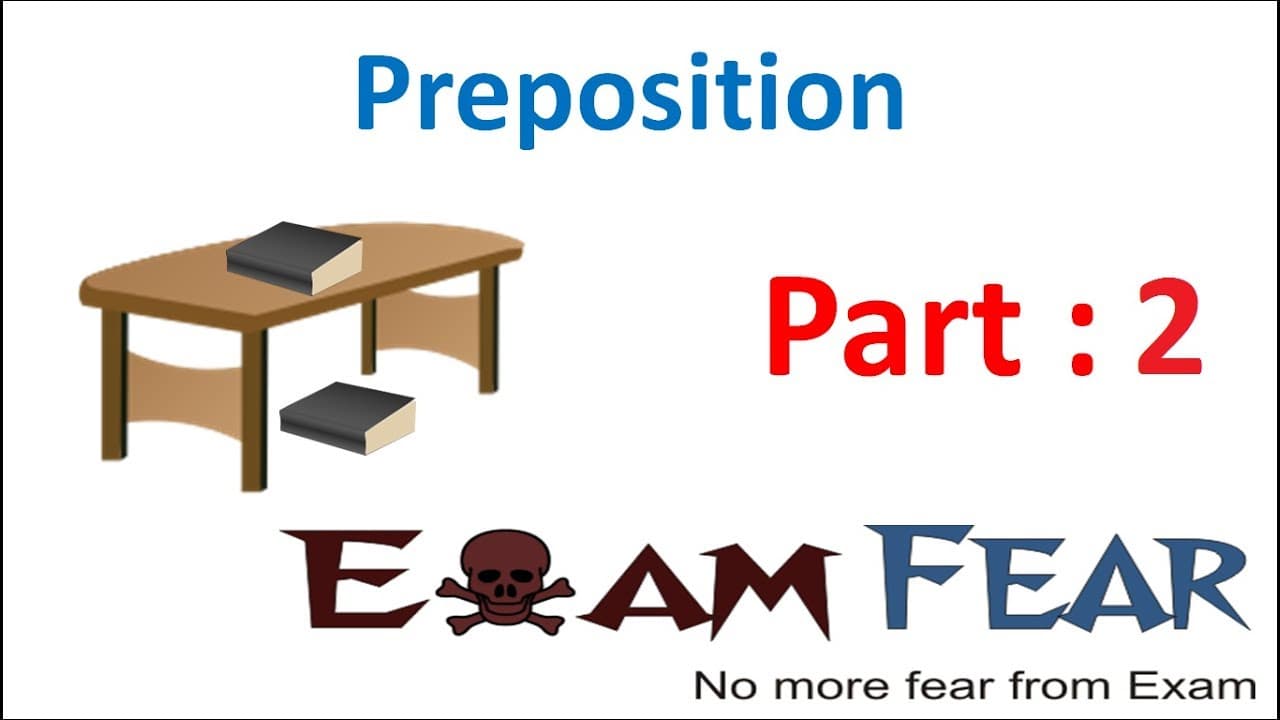
Compound prepositions are placed before a noun and indicate a relationship between the noun and another element in the sentence. For example, "The pen is placed above the book." In this sentence, "above" is a compound preposition formed by adding the prefix "a" before the word "bove."
Q: What is the difference between simple and compound prepositions?
Simple prepositions are single words, while compound prepositions are formed by adding a prefix to an existing word. Simple prepositions do not contain additional elements, whereas compound prepositions convey a specific relationship and are made up of a prefix and an adjective, adverb, or noun.
Summary & Key Takeaways
-
The video discusses the three types of prepositions: simple, compound, and complex.
-
Simple prepositions are individual words, such as at, by, and in.
-
Compound prepositions are formed by adding a prefix to an existing word, such as along, behind, and around.
Read in Other Languages (beta)
Share This Summary 📚
Summarize YouTube Videos and Get Video Transcripts with 1-Click
Try YouTube Summary with ChatGPT & Claude or YouTube Transcript Generator
Explore More Summaries from LearnoHub - Class 11, 12 📚


Summarize YouTube Videos and Get Video Transcripts with 1-Click
Try YouTube Summary with ChatGPT & Claude or YouTube Transcript Generator