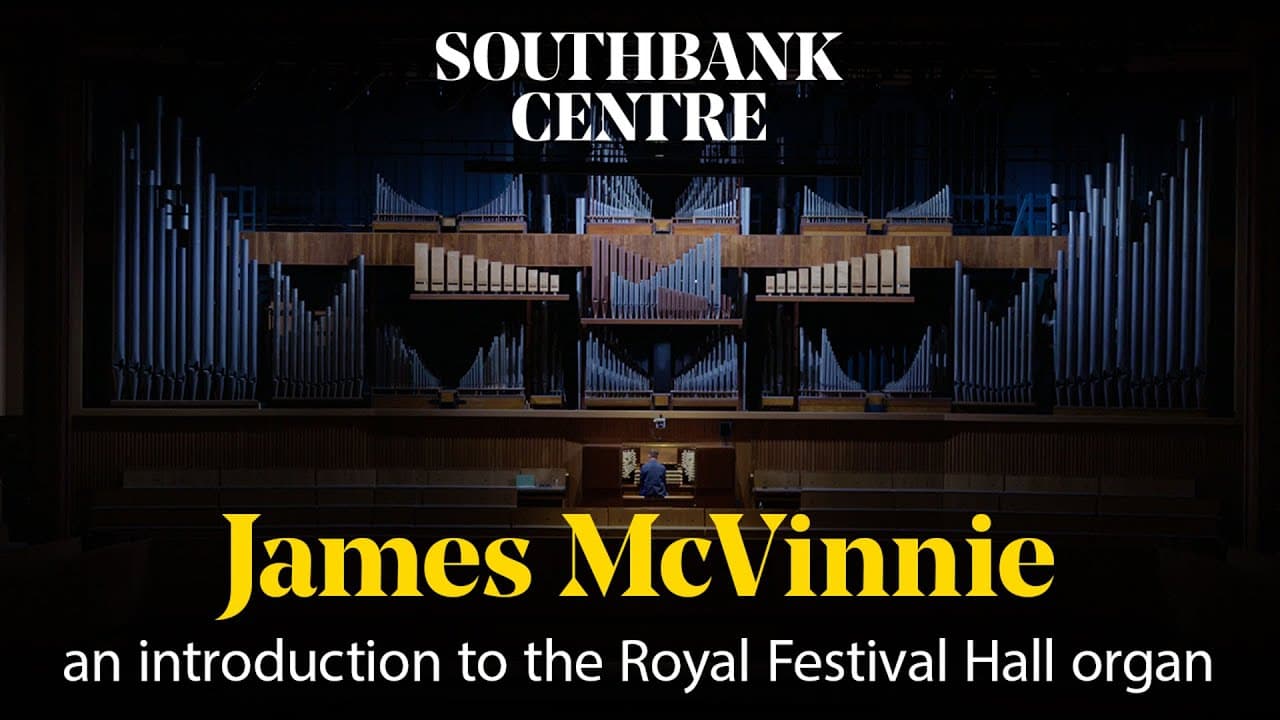
James McVinnie: an introduction to the Royal Festival Hall organ
TL;DR
Learning to play the elaborate Royal Festival Hall organ involves mastering the unique keyboards for hands and feet.
Transcript
how do you take in such a huge thing like the Royal Festival Hall organ at the first glance well it takes a long time to get to know the particularities of every instrument one of the first things that all organists have to do is change their shoes one of the main differences between uh the organ and any other keyboard instrument is that there's a ... Read More
Key Insights
- 🎮 Organ shoes with narrow soles aid in playing individual notes with precision to avoid multiple notes sounding simultaneously.
- 🤗 Organists must master the coordination between hands and feet, crucial in performing complex compositions like those by Bach.
- 👻 Organ stops provide dynamic control over the sound produced, allowing for a range of tones from traditional to contemporary styles.
- 🎼 The placement of pipes in different divisions of the organ creates a stereo effect, enhancing the spatial quality of the music.
- ✋ The Royal Festival Hall organ offers a wide variety of stop families, each representing different sound categories found in orchestras.
- 🎵 Understanding the distances between notes on the keyboards is essential for organists to navigate the instrument effectively.
- 🧡 Organ playing is likened to painting, where organists can choose from a range of colors (sounds) to create musical masterpieces.
Install to Summarize YouTube Videos and Get Transcripts
Explore YouTube Video Summarizer or Get YouTube Transcript Extractor
Questions & Answers
Q: What are some unique features of the Royal Festival Hall organ that differ from other keyboard instruments?
The Royal Festival Hall organ includes keyboards for both hands and feet, with specific organ shoes to navigate the two and a half octave foot keyboard. Organists must learn to combine hand and foot movements effectively, a challenge distinct to organ playing.
Q: How do organ stops function in adding dynamics to the music played?
Organ stops control the airflow to different sets of pipes, allowing organists to adjust the dynamics of the sound produced. The placement and type of stops can create varying effects, from traditional sounds to unique textures resembling orchestral instruments.
Q: What is the significance of the different families of stops on the organ?
The different families of stops on the organ represent various sound categories, such as principal choruses, flute stops, and string family. Organists can create rich musical textures by combining stops from different families, akin to using a painter’s palette to mix colors.
Q: How does the layout of the keyboards impact the overall sound of the organ?
The layout of the keyboards on the Royal Festival Hall organ contributes to a stereo effect during performances. Each keyboard division has a distinct placement of pipes, creating a spatial dimension to the music that enhances the listener’s experience.
Summary & Key Takeaways
-
Mastering the Royal Festival Hall organ requires understanding the different keyboards for hands and feet, including changing into specific organ shoes.
-
Combining the hands and feet is a challenge for organists, evident in pieces like Bach's compositions that require coordination between manuals and pedals.
-
The organ offers a wide range of sounds, from traditional organ choruses to soft flute stops and string family, allowing intricate musical expressions.
Read in Other Languages (beta)
Share This Summary 📚
Summarize YouTube Videos and Get Video Transcripts with 1-Click
Try YouTube Summary with ChatGPT & Claude or YouTube Transcript Generator
Explore More Summaries from Southbank Centre 📚






Summarize YouTube Videos and Get Video Transcripts with 1-Click
Try YouTube Summary with ChatGPT & Claude or YouTube Transcript Generator