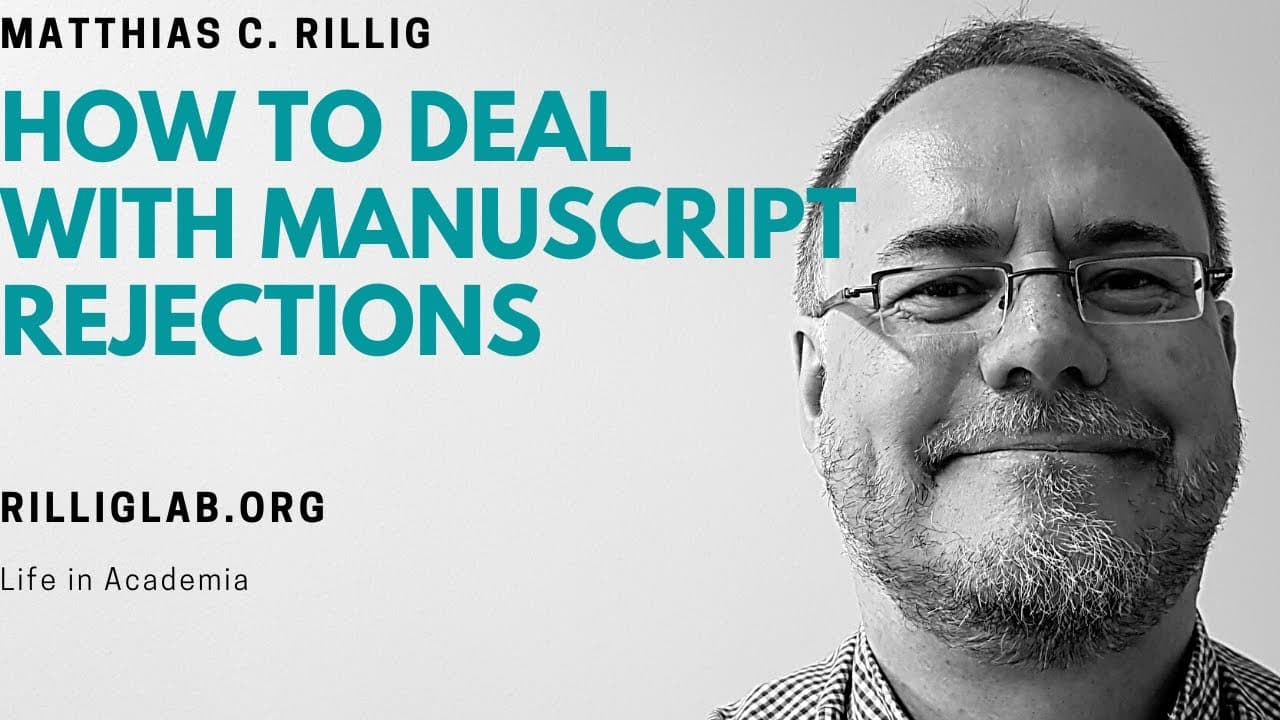
How to deal with manuscript rejections. #academic #publishing #rejection
TL;DR
Manuscript rejections are common and should not be taken personally. There are two types of rejections: desk rejections and rejections after full peer review. In both cases, it is important to consider reviewer comments and either submit to another journal or send a rebuttal if necessary.
Transcript
hey let's talk about manuscript rejections and how to deal with them so first of all when your manuscript gets rejected and i'll talk about the different kinds of rejections in just a second you should realize it's not you that's being rejected but it's just that paper and even though it hurts i think it's important to always remember that point al... Read More
Key Insights
- 😥 Manuscript rejections are common, and all researchers experience them at some point.
- 🖤 Desk rejections occur when the editor decides not to send the manuscript for peer review, usually due to a lack of fit or excitement for the journal.
- 👻 Rejections after full peer review happen when the editor decides whether to allow a revision or reject the paper based on reviewer comments.
- 💬 Authors should consider reviewer comments and make necessary improvements before submitting to another journal.
- 😥 Sending a polite rebuttal to the editor is an option if authors strongly feel that reviewers misunderstood a point.
- 👂 Mental preparation and creating a ranked list of desirable journals can help authors cope with rejections.
- 🥶 Informing and obtaining approval from co-authors regarding alternative journal options can streamline the submission process.
Install to Summarize YouTube Videos and Get Transcripts
Explore YouTube Video Summarizer or Get YouTube Transcript Extractor
Questions & Answers
Q: How should authors perceive manuscript rejections?
Manuscript rejections are common and should not be taken personally. They are a normal part of the publishing process and do not reflect the author's worth as a researcher.
Q: What are the two types of manuscript rejections?
The two types of rejections are desk rejections, where the editor decides not to send the manuscript for peer review, and rejections after full peer review, where the editor makes a decision based on reviewer comments.
Q: What should authors do after a desk rejection?
After a desk rejection, authors should not argue with the editor's decision. Instead, they should consider submitting the manuscript to another journal.
Q: How should authors proceed after a rejection after full peer review?
After a rejection after full peer review, authors have two options. They can make the necessary improvements based on reviewer comments and submit the revised manuscript to another journal. Alternatively, if they strongly believe reviewers misunderstood a point, they can send a polite rebuttal to the editor.
Summary & Key Takeaways
-
Manuscript rejections are a normal part of the publishing process and should not be seen as a reflection of personal worth.
-
There are two types of rejections: desk rejections (where the editor decides not to send the manuscript for peer review) and rejections after full peer review (where the editor determines whether to allow a revision or reject the paper based on reviewer comments).
-
When facing rejection, authors have two options: submit to another journal, taking into account reviewer comments, or send a rebuttal if they feel strongly about a misunderstanding or incorrect assessment.
Read in Other Languages (beta)
Share This Summary 📚
Summarize YouTube Videos and Get Video Transcripts with 1-Click
Try YouTube Summary with ChatGPT & Claude or YouTube Transcript Generator
Explore More Summaries from Life in academia 📚



Summarize YouTube Videos and Get Video Transcripts with 1-Click
Try YouTube Summary with ChatGPT & Claude or YouTube Transcript Generator