DS0103EN Data Preparation Case Study 4:14
TL;DR
This video discusses the process of data preparation using a case study on congestive heart failure, including defining the condition, aggregating transactional data, and creating variables for predictive modeling.
Transcript
welcome to data science methodology 101 from understanding to preparation data preparation case study in a sense data preparation is similar to washing freshly picked vegetables insofar as unwanted elements such as dirt or imperfections are removed so now let's look at the case study related to applying data preparation concepts in the case study a... Read More
Key Insights
- 😷 Defining a medical condition precisely can be a complex task, requiring identification of relevant diagnosis codes.
- 🥰 Evaluating timing is crucial in determining readmission criteria for medical conditions like congestive heart failure.
- 👶 Aggregating transactional data at the patient level is necessary for modeling and requires creating new variables.
- ❓ Consideration of comorbidities and literature review are important for comprehensive data preparation.
- 💁 The data preparation stage involves merging transactional data with demographic information to create a comprehensive patient table for modeling.
- 🚰 The resulting patient table contains multiple columns representing attributes and variables.
- 🥰 The dependent variable for the case study is congestive heart failure readmission within 30 days.
Install to Summarize YouTube Videos and Get Transcripts
Explore YouTube Video Summarizer or Get YouTube Transcript Extractor
Questions & Answers
Q: What is the initial step in the data preparation stage for the congestive heart failure case study?
The initial step is to define congestive heart failure precisely by identifying the diagnosis-related group codes associated with the condition.
Q: How is readmission criteria defined for congestive heart failure patients?
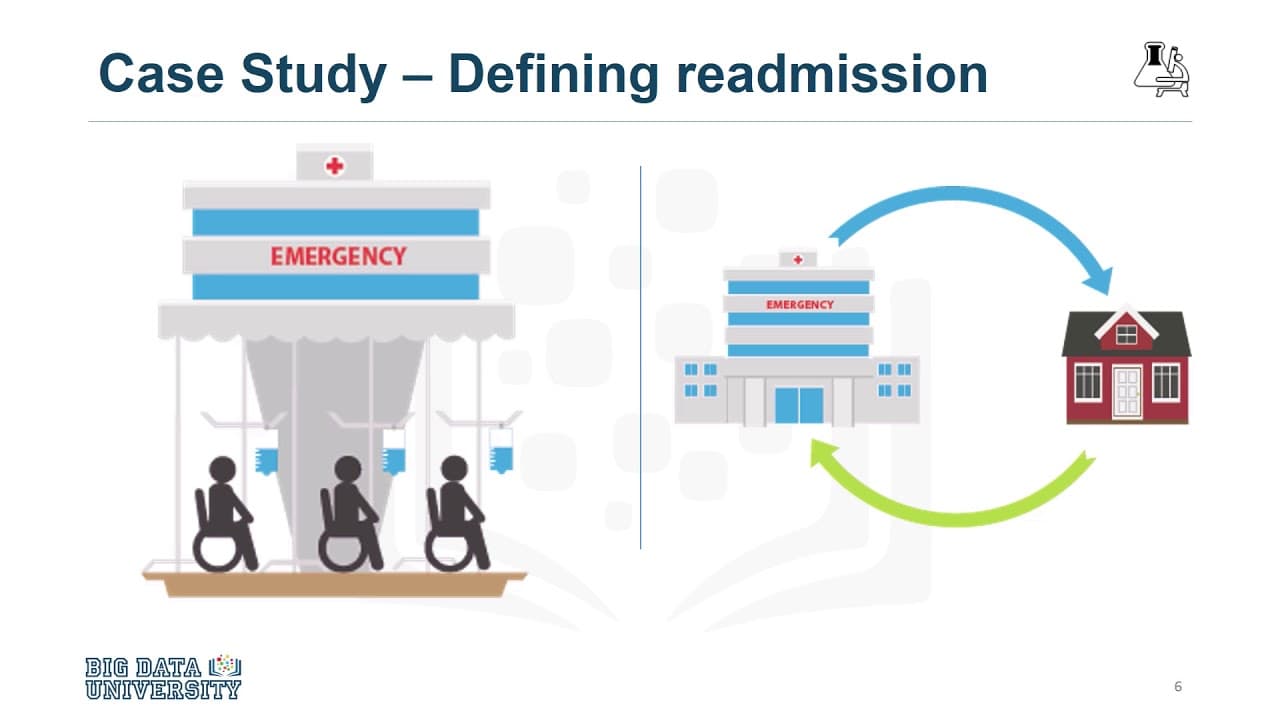
The timing of events is evaluated to determine if a readmission is an index admission or a congestive heart failure-related readmission. A 30-day window is set as the relevant period for readmission.
Q: What is the process of aggregating transactional records?
Transactional records, including claims, diagnoses, procedures, prescriptions, etc., are aggregated at the patient level, creating a single record for each patient. This is necessary for modeling purposes.
Q: What additional steps were taken in the data preparation stage?
A literary review on congestive heart failure was conducted, and new indicators for conditions and procedures were added. The transactional data was also merged with demographic information to create a comprehensive patient table.
Key Insights:
- Defining a medical condition precisely can be a complex task, requiring identification of relevant diagnosis codes.
- Evaluating timing is crucial in determining readmission criteria for medical conditions like congestive heart failure.
- Aggregating transactional data at the patient level is necessary for modeling and requires creating new variables.
- Consideration of comorbidities and literature review are important for comprehensive data preparation.
- The data preparation stage involves merging transactional data with demographic information to create a comprehensive patient table for modeling.
- The resulting patient table contains multiple columns representing attributes and variables.
- The dependent variable for the case study is congestive heart failure readmission within 30 days.
- The data preparation stage resulted in a cohort of 2343 patients, which was split into training and testing sets for building and validating the model.
Summary & Key Takeaways
-
Data preparation is like washing vegetables, where unwanted elements are removed. In this case study, the first step is to define congestive heart failure and identify diagnosis codes.
-
The next step involves defining readmission criteria for congestive heart failure patients and evaluating the timing of events. A 30-day window is set for readmission.
-
Transactional records are then aggregated at the patient level, creating a single record. New columns are created to represent information such as frequency of visits and comorbidities.
Read in Other Languages (beta)
Share This Summary 📚
Summarize YouTube Videos and Get Video Transcripts with 1-Click
Try YouTube Summary with ChatGPT & Claude or YouTube Transcript Generator
Explore More Summaries from Cognitive Class 📚

Summarize YouTube Videos and Get Video Transcripts with 1-Click
Try YouTube Summary with ChatGPT & Claude or YouTube Transcript Generator