How to Do Issue Management
TL;DR
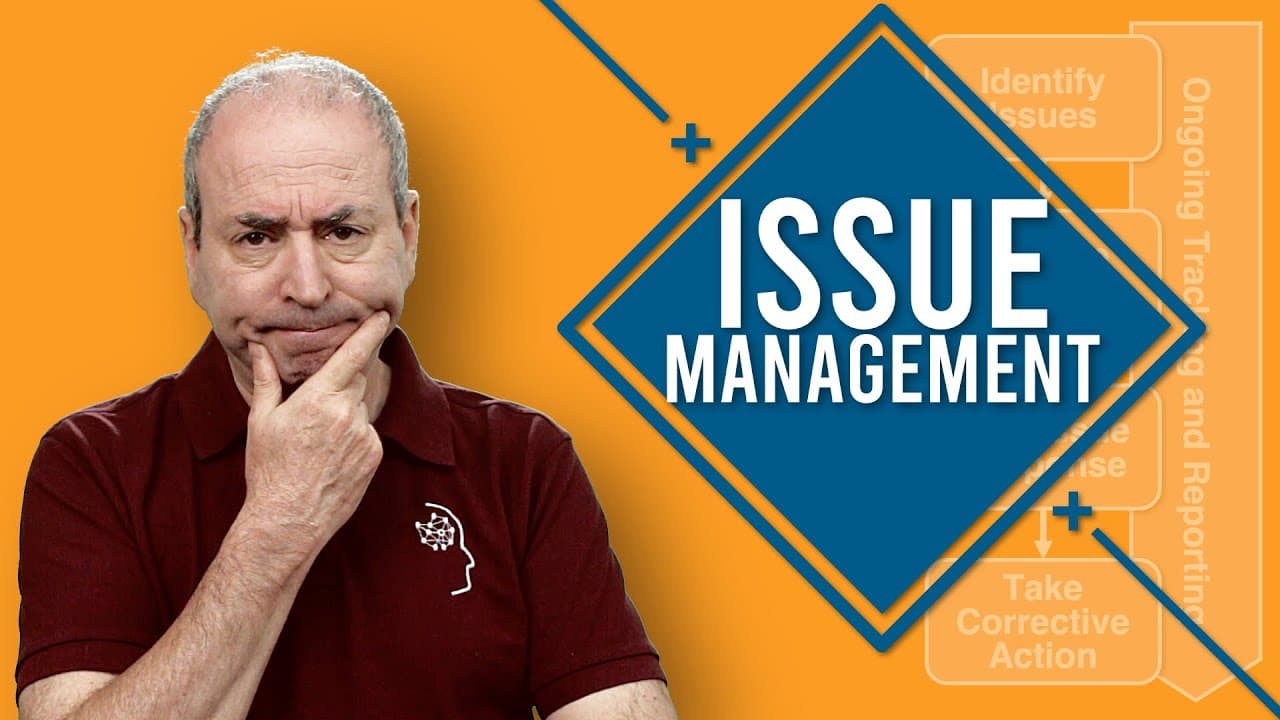
Issue management is crucial for project success and involves identifying, analyzing, planning, taking corrective action, and tracking issues that arise during the project.
Transcript
with any project things will happen that you didn't expect so issue management is an important skill so how do you do issue management let's start by answering a question what are issues risks are familiar risks are uncertainty that can have an effect on outcome uncertainty is in the nature of risks issues however are about certainty they are thing... Read More
Key Insights
- ✳️ Issues are certain events that have already happened or will happen, different from risks that are uncertainties.
- 😤 Creating a culture of vigilance encourages team members to report concerns and issues.
- ❓ Analyzing issues involves understanding their impact, categorizing, prioritizing, and determining controllability.
- 🍵 Escalation of issues may be necessary for larger, difficult-to-handle problems.
- 😫 Planning the issue response includes assigning responsibility, setting deadlines, and communicating the issue and response to stakeholders.
- 🌱 Corrective action involves problem-solving, detailed planning, and potential changes to the project plan, budget, or schedule.
- 📽️ Ongoing tracking and reporting of issues is essential for project governance and transparency.
Install to Summarize YouTube Videos and Get Transcripts
Explore YouTube Video Summarizer or Get YouTube Transcript Extractor
Questions & Answers
Q: What is the difference between risks and issues in project management?
Risks are uncertainties that can affect project outcomes, while issues are certain events that have already happened or will happen, and can impact project delivery.
Q: How can project managers create a culture of vigilance for issue reporting?
Project managers should make it easy and comfortable for team members to report concerns and issues, avoiding a blame culture and celebrating those who bring issues to the forefront.
Q: What factors should be considered when analyzing the severity of an issue?
Impact on schedule, budget, quality, stakeholder perceptions, and other project aspects should be considered to understand the severity and priority of an issue.
Q: When should project managers escalate an issue to governance tiers?
Larger, substantial issues that cannot be resolved within the project's scope or budget should be escalated to governance tiers, involving sponsors, clients, or project board members.
Summary & Key Takeaways
-
Issue management is distinct from risk management as it deals with certainty—things that have already happened or are certain to happen and can affect project outcomes.
-
Creating a culture of vigilance among the team is essential, where reporting concerns and issues is encouraged and celebrated.
-
Analyzing issues involves understanding their impact, categorizing, prioritizing, and determining their controllability.
Read in Other Languages (beta)
Share This Summary 📚
Summarize YouTube Videos and Get Video Transcripts with 1-Click
Try YouTube Summary with ChatGPT & Claude or YouTube Transcript Generator
Explore More Summaries from Online PM Courses - Mike Clayton 📚





Summarize YouTube Videos and Get Video Transcripts with 1-Click
Try YouTube Summary with ChatGPT & Claude or YouTube Transcript Generator